


✔ 100% Authentic Product
👁️ Viewed 2338 times
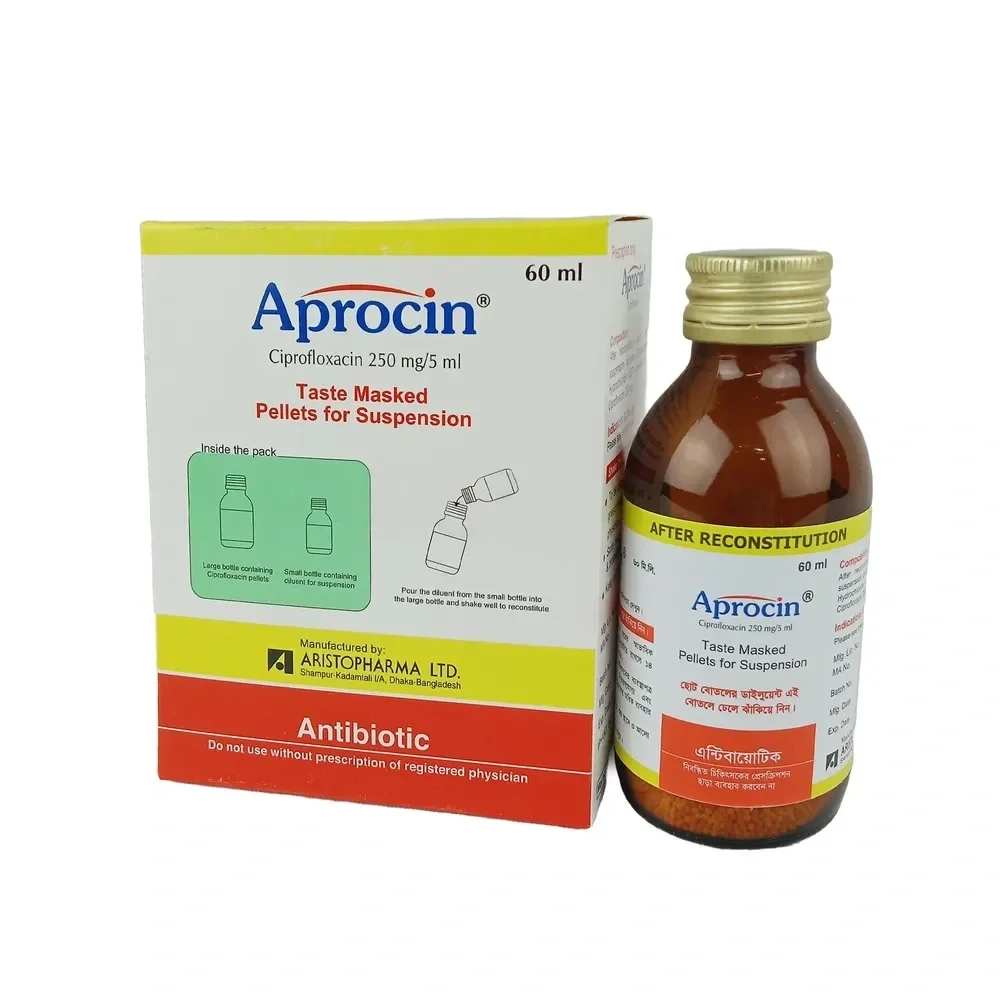
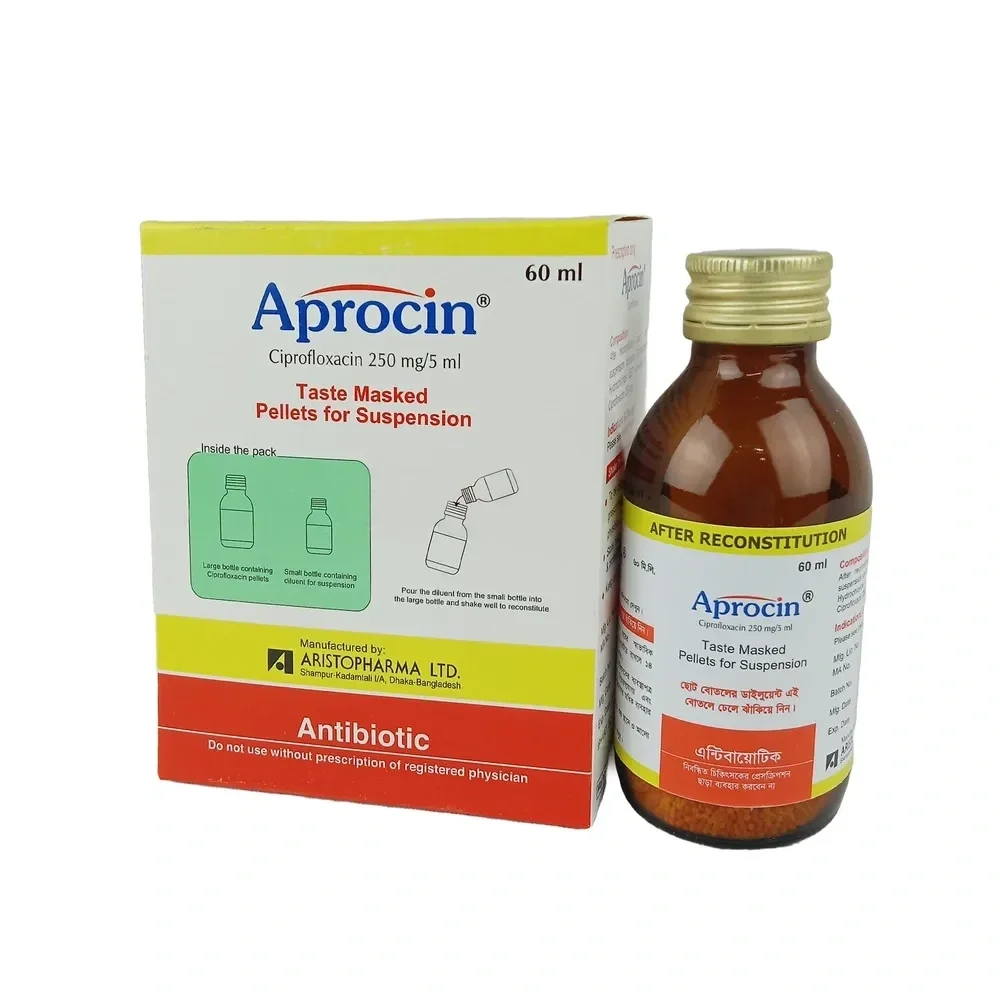
Aprocin Powder for Suspension 60ml
Ciprofloxacin is a synthetic fluoroquinolone antibacterial agent with broad-spectrum activity. It is particularly active against many Gram-negative aerobic bacteria, including Enterobacteriaceae and Pseudomonas aeruginosa. It also has activity against several Gram-positive bacteria, although many streptococcal species may show reduced susceptibility.
Ciprofloxacin produces a bactericidal effect by inhibiting bacterial DNA gyrase and related enzymes required for DNA replication and repair, ultimately preventing bacterial growth and survival.
After oral administration, ciprofloxacin is rapidly absorbed from the gastrointestinal tract and widely distributed throughout body tissues and fluids. Its elimination half-life is approximately 3.5 hours. A substantial proportion of the administered dose is eliminated in the urine as unchanged drug and active metabolites.
Discount Price: ৳ 95
MRP:
৳
100.32
5%
off

100% Genuine Products, Guaranteed

Safe & Secure Payments, Always

Fast, Secure & Efficient Delivery

Proper Packaging
 Cash on Delivery - All over Bangladesh
 Regular Delivery: 24-48 Hours, Dhaka City* Charge Tk.39-59
- Regular Delivery: 48-96 Hours, Other Cities* Charge Tk.99-125
 ফ্রি ডেলিভারিঃ - ১৪৯৯ টাকা+ অর্ডারে, ঢাকা
শহরে
ফ্রি ডেলিভারিঃ - ১৪৯৯ টাকা+ অর্ডারে, ঢাকা
শহরে- ফ্রি ডেলিভারিঃ - ৪৯৯৯ টাকা+ অর্ডারে, ঢাকার
বাহিরে
📲 মোবাইল অ্যাপ অর্ডারে সাশ্রয় বেশী
-
Google Play Store থেকে ডাউনলোড
-
Apple Store থেকে ডাউনলোড
100% Genuine Products, Guaranteed
Safe & Secure Payments, Always
Fast, Secure & Efficient Delivery
Proper Packaging
- Cash on Delivery - All over Bangladesh
- Regular Delivery: 24-48 Hours, Dhaka City* Charge Tk.39-59
- Regular Delivery: 48-96 Hours, Other Cities* Charge Tk.99-125
- ফ্রি ডেলিভারিঃ - ১৪৯৯ টাকা+ অর্ডারে, ঢাকা
শহরে
- ফ্রি ডেলিভারিঃ - ৪৯৯৯ টাকা+ অর্ডারে, ঢাকার
বাহিরে
- Google Play Store থেকে ডাউনলোড
- Apple Store থেকে ডাউনলোড
📲 মোবাইল অ্যাপ অর্ডারে সাশ্রয় বেশী
✅ Description:
Aprocin is an antibiotic used to treat a wide range of bacterial infections caused by ciprofloxacin-sensitive organisms, including single or mixed infections. It may also be effective against certain bacteria that are resistant to other antibiotics, such as aminoglycosides, penicillins, and cephalosporins.
Following oral administration, ciprofloxacin reaches effective antibacterial concentrations in the blood, body tissues, and urine. It may therefore be used for infections involving the urinary, respiratory, gastrointestinal, biliary, skin and soft tissues, bones and joints, pelvic organs, and other susceptible sites.
Depending on the severity and suspected organisms, Aprocin may be used alone or in combination with other antibiotics when clinically appropriate.
Aprocin may be used for the treatment of susceptible bacterial infections such as:
- Severe systemic infections: Septicaemia, bacteraemia, peritonitis, and infections in immunocompromised patients or critically ill patients, including infected burns.
- Respiratory tract infections: Lobar and bronchopneumonia, acute and chronic bronchitis, acute exacerbation of cystic fibrosis, bronchiectasis, and empyema.
- Urinary tract infections: Urethritis, cystitis, pyelonephritis, prostatitis, and epididymitis.
- Skin and soft-tissue infections: Infected ulcers, wound infections, abscesses, cellulitis, erysipelas, infected burns, and otitis externa.
- Gastrointestinal infections: Enteric fever and bacterial infectious diarrhoea.
- Biliary tract infections: Cholangitis, cholecystitis, and gallbladder empyema.
- Intra-abdominal infections: Peritonitis and intra-abdominal abscesses.
- Bone and joint infections: Osteomyelitis and septic arthritis.
- Pelvic infections: Salpingitis, endometritis, and pelvic inflammatory disease.
- Ear, nose and throat infections: Otitis media, sinusitis, mastoiditis, and tonsillitis.
- Gonorrhoea: Certain urethral, rectal, and pharyngeal infections caused by susceptible organisms.
Ciprofloxacin is generally not considered a first-choice antibiotic for children and adolescents. It may, however, be used for specific serious infections when the physician considers the benefits to outweigh the potential risks.
In elderly patients, renal function should be considered when determining the appropriate dose.

Relevant Products
Same generic alternatives, ranked by customer interest
Ciprocin 500 Tablet 1 Strip
Cipro-A 0.3% Ear/Eye Drops 5ml
Ciprocin Suspension

Neofloxin 500mg Tablet

Bactin Ophthalmic Solution

Aprocin 0.3% Eye Ointment 3gm Tube
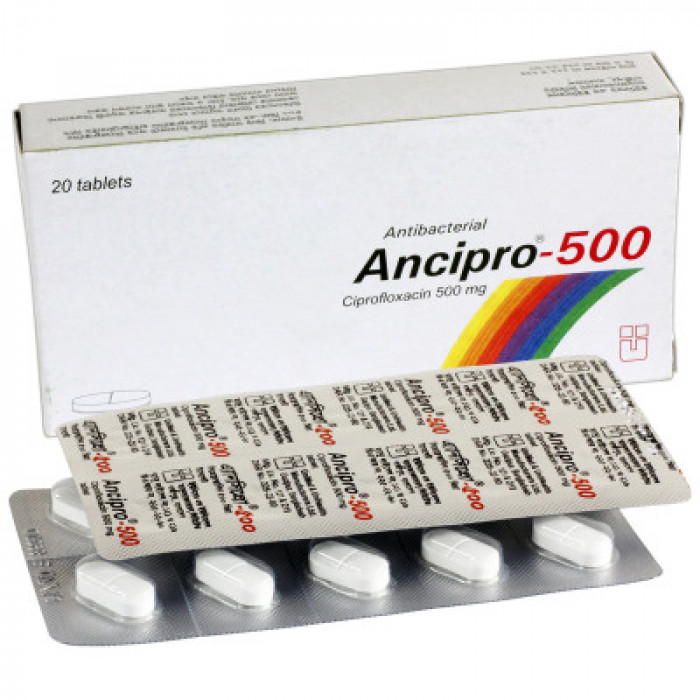
Ancipro 500mg Tablet

Aprocin 0.3% Eye/Ear Drop 10ml
More From Aristopharma Limited
Popular products from this manufacturer/brand
Docopa 200 Tablet 1 Strip

Neso 500/20mg Tablet

Aristoderm 0.05%+1%+0.1% Cream 10g
Optimox 400mg Tablet
Docopa Syrup 100ml
Afrin 0.025% Nasal Drops
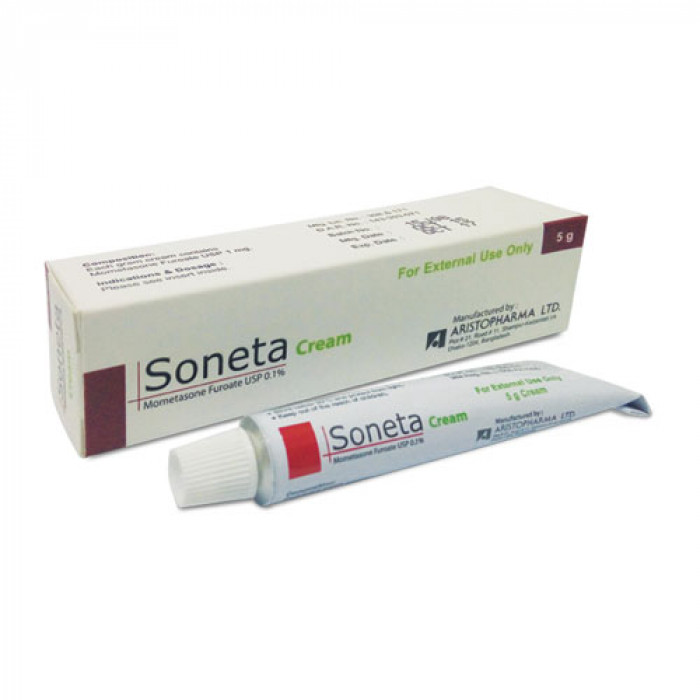
Soneta 0.1% Cream
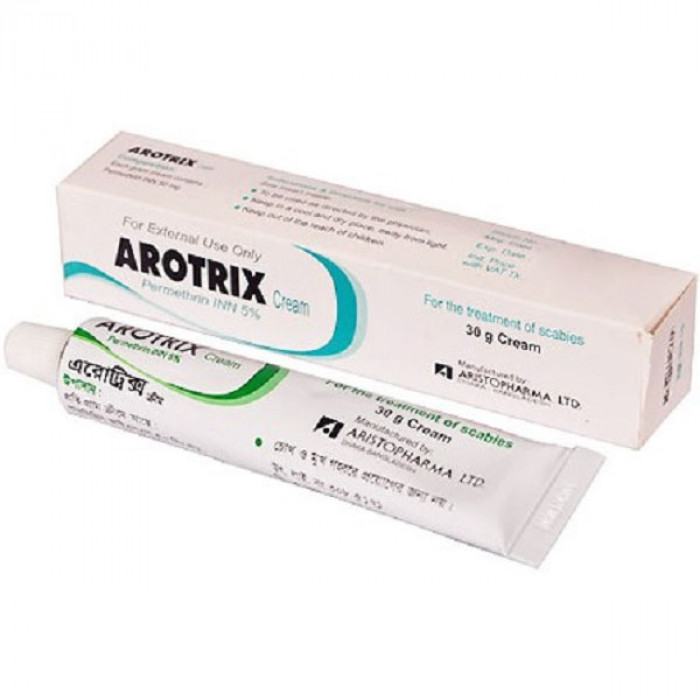
Arotrix 5% Cream 30gm
Related Posts



✔️ Dosage and Administration
The dose should be determined by the treating physician based on the type and severity of infection, susceptibility of the causative organism, patient's age and weight, and renal function.
Adults:
The usual oral dosage range is 100–750 mg twice daily, depending on the infection.
Urinary tract infections:
250–500 mg twice daily, depending on severity.
Respiratory tract infections:
250–500 mg twice daily for most upper and lower respiratory tract infections. For confirmed Streptococcus pneumoniae infection, higher doses may be required as directed by the physician.
Gonorrhoea:
A single dose may be used where appropriate according to current treatment recommendations and susceptibility.
Other infections:
500–750 mg twice daily may be used depending on the severity and type of infection.
Cystic fibrosis with pseudomonal respiratory infection:
Adults may require 750 mg twice daily under specialist supervision.
Renal impairment:
Dose adjustment may be necessary in patients with significant renal impairment. The dosage should be individualized according to renal function.
Elderly patients:
Dose selection should take renal function and other medical conditions into consideration.
Children and adolescents:
Ciprofloxacin is generally not a first-choice antibiotic in children because of concerns regarding effects on developing joints. However, it may be prescribed for specific serious infections when the expected benefits outweigh the potential risks. Pediatric dosing must be determined by a specialist.
Duration of treatment:
Treatment duration depends on the type and severity of infection, clinical response, and microbiological findings. The prescribed course should be followed exactly.
✔️ Side Effects:
- Nausea
- Diarrhoea
- Vomiting
- Dyspepsia
- Abdominal pain
- Headache
- Dizziness
- Fatigue
✔️ Drug and Food Interactions
Ciprofloxacin absorption can be significantly reduced by products containing magnesium, aluminium, calcium, iron, or zinc, as well as sucralfate.
- Take ciprofloxacin at least 2 hours before or 6 hours after these products, unless otherwise directed.
- Avoid taking ciprofloxacin at the same time as milk or yoghurt alone because absorption may be reduced.
- Calcium consumed as part of a normal meal generally has less effect on ciprofloxacin absorption.
- Ciprofloxacin may be taken with or without food unless otherwise instructed.
✔️ Pregnancy and Lactation
Ciprofloxacin is generally not recommended during pregnancy unless the physician determines that the potential benefits clearly outweigh the possible risks.
Ciprofloxacin can pass into breast milk. Breastfeeding should therefore be discussed with a healthcare professional before treatment.
✔️ Aprocin is contraindicated in patients with:
- Known hypersensitivity to ciprofloxacin or other quinolone/fluoroquinolone antibiotics.
- A previous serious allergic reaction to ciprofloxacin or another fluoroquinolone.
✔️ Aprocin should be used cautiously in patients with:
- A history of seizures or conditions that may increase seizure risk
- Central nervous system disorders
- Significant renal impairment
- Liver disease
- Diabetes or a history of blood glucose abnormalities
- A history of tendon disorders associated with quinolone use
Patients should drink adequate fluids during treatment unless fluid restriction has been medically advised.
Stop treatment and seek medical advice if symptoms such as severe rash, allergic reaction, tendon pain or swelling, severe diarrhoea, neurological symptoms, or significant changes in mental status occur.
✔️ Storage:
Store below 30°C, protected from light and moisture. Keep out of reach of children.
⚠️Disclaimer:
At ePharma, we’re committed to providing accurate and accessible health information. However, all content is intended for informational purposes only and should not replace medical advice from a qualified physician. Please consult your healthcare provider for personalized guidance. We aim to support, not substitute, the doctor-patient relationship.
📦Pricing Information, Availability:
Product Availability & Pricing Notice
Please note that pricing, availability, and service offerings are subject to change due to: Market fluctuations, Manufacturer or supplier adjustments, Product discontinuation or temporary unavailability, Advertising errors. All orders depend on stock availability and staff resources. If services are provided on a time-and-materials basis, any shared estimates are for planning purposes only.



Reliable
All products displayed on ePharma are procured from govt. approved pharmaceuticals and verified licensed pharmacies from 2016.

Secure
ePharma uses Secure Sockets Layer (SSL) 128-bit 🔒 encryption and is Payment Card Industry DataSecurity Standard (PCI DSS) compliant.

Affordable
Find affordable medicine substitutes, save up to 50% on health products, up to 30% off on doctor consultations.

Social
Providing health care services under the health and beauty category with more than 170K Facebook audience and 10M+ reach.







Get more features!
Download the app now
✓ Doctor consultation ✓ 24/7 helpline

