Nipah Virus Symptoms & Prevention: Why Raw Date-Palm Sap Is Risky
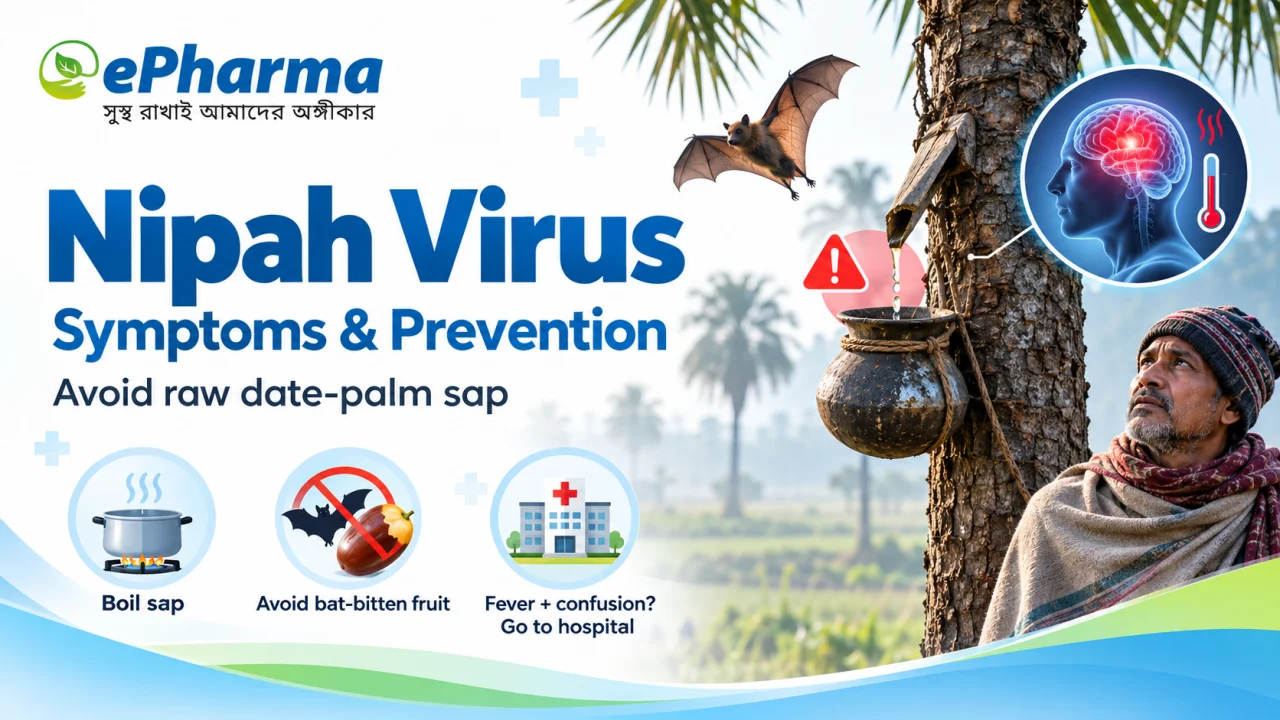
Learn Nipah virus symptoms, incubation, transmission, raw date-palm sap risk, prevention, diagnosis, supportive care and urgent warning signs.
A glass of fresh date-palm sap on a winter morning can feel like a harmless seasonal tradition. With Nipah virus, however, raw date-palm sap is one of the most important exposure risks in Bangladesh. The virus can pass from fruit bats to people through contaminated food or sap, and it can also spread between people through close contact.
Nipah can begin like an ordinary fever. That is why the most useful clue is often not the fever itself but the exposure history: raw date-palm sap or tari, fruit contaminated by bats, or close contact with a suspected or confirmed Nipah patient during the previous days or weeks.
Keep the winter tradition—skip the raw sap
Bangladesh has reported small Nipah outbreaks repeatedly, with most cases occurring between December and April. WHO’s 2026 Bangladesh outbreak report described a fatal Naogaon case in a woman who had repeatedly consumed raw date-palm sap before developing fever and neurological symptoms.
The practical message is simple: do not drink raw date-palm sap. WHO recommends boiling freshly collected date-palm juice before drinking it.
What is Nipah virus?
Nipah virus is a zoonotic virus, meaning it can spread from animals to humans. Fruit bats of the Pteropodidae family are the natural host. Human infection can range from no symptoms at all to severe respiratory disease and encephalitis, or inflammation of the brain.
WHO estimates that the case-fatality rate for Nipah infection can range from 40% to 75%, depending on the outbreak and access to diagnosis and clinical care. It is uncommon, but potentially very severe.
What are the symptoms of Nipah virus infection?
| Stage | Possible symptoms |
|---|---|
| Early illness | Fever and headache; fatigue, drowsiness, vomiting or weakness may also occur |
| Neurological involvement | Confusion, unusual drowsiness, seizures or loss of consciousness; these may signal encephalitis |
| Respiratory involvement | Cough, breathing difficulty or pneumonia-like illness |
| Sometimes | Some infected people may have no symptoms |
Symptoms alone cannot confirm Nipah. Dengue, influenza, typhoid, meningitis, encephalitis and other infections can present with overlapping features. Diagnosis depends on exposure history, clinical assessment and laboratory testing.
How long after exposure do symptoms appear?
WHO states that the incubation period is usually 3–14 days, although rare cases with incubation up to 45 days have been reported. Feeling well for a few days after raw-sap exposure therefore does not completely rule out risk.
How does Nipah virus spread?
- From bats through contaminated food or sap: raw date-palm sap and fruit contaminated by infected bats are well-recognized routes.
- From person to person: close-contact transmission has been reported among family members, caregivers and in healthcare settings.
- From infected animals: transmission from infected animals has also occurred in some countries.
WHO analyses of Bangladesh outbreaks document both raw date-palm sap/tari exposure and person-to-person spread.
Raw sap, boiled sap, jaggery and winter foods: what is safer?
| Food or drink | What to do | Why |
|---|---|---|
| Raw date-palm sap | Avoid | WHO recognizes raw date-palm juice as a Nipah transmission route |
| Tari / fermented raw sap | Avoid | It is still based on raw sap exposure |
| Fresh sap that has been thoroughly boiled | Boil before drinking | WHO specifically recommends boiling freshly collected sap |
| Jaggery / date-palm molasses | Choose properly heat-processed, hygienically handled products | Heat processing lowers risk compared with raw sap, although hygiene still matters |
| Cooked pitha or payesh made with jaggery | A properly cooked food is a lower-risk choice | It does not involve drinking raw sap directly |
| Fruit with signs of bat bites | Discard | WHO recommends discarding fruit showing signs of bat bites |
WHO also recommends reducing bat access to sap-collection sites. Protective coverings can help, but they should not be treated as a guarantee that raw sap is safe. The safer rule remains: do not drink it raw; boil before drinking.
What should you do if someone in the family may have Nipah?
- Seek hospital or qualified clinical care promptly.
- Tell the clinician clearly about raw-sap exposure, bat-contaminated fruit or contact with a suspected/confirmed Nipah patient.
- Avoid unprotected contact with saliva, respiratory secretions and other body fluids.
- Follow healthcare-team instructions on masks, PPE and hand hygiene during caregiving.
- Limit close contact and follow any isolation or monitoring instructions from the public-health team.
WHO has documented close-contact transmission in both households and healthcare settings, so the idea that Nipah spreads only through food is incorrect.
How is Nipah diagnosed?
Nipah infection cannot be confirmed by symptoms alone. WHO notes that RT-PCR and ELISA antibody testing may be used. Samples from suspected cases require trained handling in appropriately equipped laboratories.
Is there a treatment or vaccine for Nipah?
There is currently no approved specific drug or vaccine for Nipah virus infection. Treatment focuses on early, high-quality supportive care, including oxygen when needed, respiratory support, management of neurological complications, hydration, nutrition and other organ support when required. WHO notes that early supportive care can improve survival.
When should you seek urgent hospital care?
If there has been relevant exposure in the previous weeks—such as raw date-palm sap/tari, bat-bitten fruit or close contact with a Nipah patient—and any of the following develop, seek urgent care:
- fever with severe headache or rapidly worsening weakness
- confusion, abnormal behaviour or unusual drowsiness
- seizures
- loss of consciousness or difficulty waking
- breathing difficulty
Tell the hospital about the exposure history immediately. That information can help clinicians make faster decisions about isolation, testing and supportive treatment.
Common myths
| Myth | Reality |
|---|---|
| “A small amount of raw sap is harmless.” | Raw date-palm sap is a documented route of Nipah transmission in Bangladesh. |
| “Nipah spreads only from bats, not between people.” | Person-to-person transmission through close contact is documented. |
| “If the collection pot is covered, raw sap is completely safe.” | Reducing bat access helps, but WHO still recommends boiling freshly collected sap. |
| “Antibiotics can treat Nipah.” | Nipah is a viral infection; there is no approved specific antiviral treatment. |
| “Nipah is just a fever.” | It can involve the brain and lungs, including severe encephalitis. |
| “Nipah happens only in winter.” | Most Bangladesh cases are seasonal, but infection can occur outside the typical period. |
Related reading
- How Often Can You Take Paracetamol?
- How to Use a Digital Thermometer Correctly
- How to Make ORS Correctly for Child Diarrhoea
Frequently asked questions
What are the symptoms of Nipah virus infection?
It can begin with fever and headache, followed by confusion, unusual drowsiness, seizures, loss of consciousness, cough or breathing difficulty in severe cases.
How does Nipah virus spread?
It can spread through bat-contaminated raw date-palm sap or fruit, infected animals, and close contact with an infected person.
Should raw date-palm sap be avoided?
Yes. WHO recommends boiling freshly collected date-palm juice before drinking it.
Is date-palm jaggery safer than raw sap?
Properly heat-processed and hygienically handled jaggery is a lower-risk choice than drinking raw sap. WHO specifically advises boiling fresh sap.
What is the incubation period for Nipah?
Usually 3–14 days according to WHO, with rare reports of incubation up to 45 days.
Is there a vaccine or specific medicine for Nipah?
No approved vaccine or specific treatment is currently available. Early supportive care is important.
Which tests can diagnose Nipah?
RT-PCR and ELISA antibody testing may be used, depending on the stage of illness and sample availability.
When should someone go to hospital?
After relevant exposure, fever with confusion, seizures, unusual drowsiness, loss of consciousness or breathing difficulty needs urgent assessment.
Sources
- World Health Organization — Nipah virus fact sheet.
- World Health Organization — Nipah virus infection, Bangladesh (Disease Outbreak News).
- Bangladesh IEDCR reporting on Nipah surveillance and prevention.
- Bangladesh news reporting on family clusters and seasonal risk communication.
This article is for general health information. If Nipah is suspected, seek hospital care promptly and tell the clinical team about raw-sap, fruit or contact exposure. Outbreak counts can change; use current WHO, IEDCR and health-authority updates for the latest situation.
[executed on device: Aziz-MacBook.local (e21e2c25-9602-4c8d-b57a-8ddf9e985cd7)]
Related Products