


✔ 100% Authentic Product
👁️ Viewed 4053 times
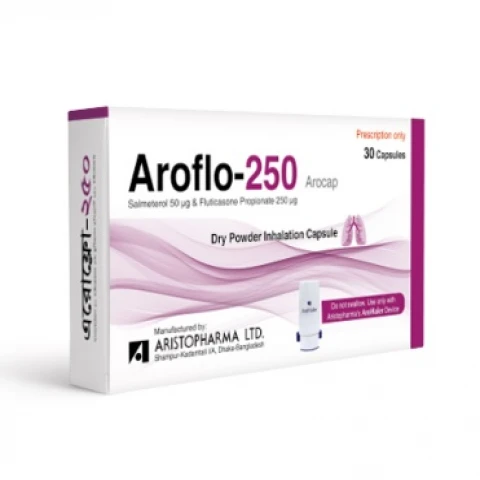
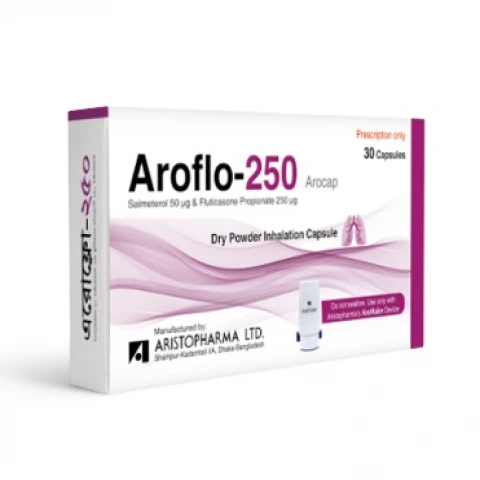
Aroflo 50mcg+250mcg Arocap 1 Strip
Aroflo is a combination inhaler containing salmeterol xinafoate and fluticasone propionate. It is used as a regular maintenance treatment for asthma when treatment with both a long-acting β2-agonist (LABA) and an inhaled corticosteroid (ICS) is appropriate.
It may be prescribed for:
- Patients whose asthma is not adequately controlled with an inhaled corticosteroid together with an as-needed short-acting β2-agonist.
- Patients whose asthma is already well controlled with both an inhaled corticosteroid and a long-acting β2-agonist.
Aroflo is a maintenance medicine and should be used regularly. It is not intended to provide rapid relief during an acute asthma attack.
Patients should keep their prescribed fast-acting rescue inhaler, such as salbutamol, available for sudden symptoms.
Discount Price: ৳ 114
MRP:
৳
120
5%
off

100% Genuine Products, Guaranteed

Safe & Secure Payments, Always

Fast, Secure & Efficient Delivery

Proper Packaging
 Cash on Delivery - All over Bangladesh
 Regular Delivery: 24-48 Hours, Dhaka City* Charge Tk.39-59
- Regular Delivery: 48-96 Hours, Other Cities* Charge Tk.99-125
 ফ্রি ডেলিভারিঃ - ১৪৯৯ টাকা+ অর্ডারে, ঢাকা
শহরে
ফ্রি ডেলিভারিঃ - ১৪৯৯ টাকা+ অর্ডারে, ঢাকা
শহরে- ফ্রি ডেলিভারিঃ - ৪৯৯৯ টাকা+ অর্ডারে, ঢাকার
বাহিরে
📲 মোবাইল অ্যাপ অর্ডারে সাশ্রয় বেশী
-
Google Play Store থেকে ডাউনলোড
-
Apple Store থেকে ডাউনলোড
100% Genuine Products, Guaranteed
Safe & Secure Payments, Always
Fast, Secure & Efficient Delivery
Proper Packaging
- Cash on Delivery - All over Bangladesh
- Regular Delivery: 24-48 Hours, Dhaka City* Charge Tk.39-59
- Regular Delivery: 48-96 Hours, Other Cities* Charge Tk.99-125
- ফ্রি ডেলিভারিঃ - ১৪৯৯ টাকা+ অর্ডারে, ঢাকা
শহরে
- ফ্রি ডেলিভারিঃ - ৪৯৯৯ টাকা+ অর্ডারে, ঢাকার
বাহিরে
- Google Play Store থেকে ডাউনলোড
- Apple Store থেকে ডাউনলোড
📲 মোবাইল অ্যাপ অর্ডারে সাশ্রয় বেশী
✅ Description:
Aroflo combines two medicines with complementary actions. Salmeterol is a long-acting β2-adrenergic agonist that produces prolonged relaxation of airway smooth muscle, helping maintain open airways and prevent asthma symptoms. Fluticasone propionate is an inhaled corticosteroid that reduces inflammation within the airways, helping control symptoms and reduce the frequency and severity of asthma exacerbations.
Salmeterol
Salmeterol is a selective, long-acting β2-adrenoceptor agonist with a duration of action of approximately 12 hours. Its long side chain interacts with an exo-site on the β2 receptor, contributing to its prolonged bronchodilating effect.
By stimulating β2 receptors in airway smooth muscle, salmeterol promotes bronchodilation and helps protect against bronchospasm and asthma symptoms.
Fluticasone Propionate
Fluticasone propionate is a potent glucocorticoid with primarily local anti-inflammatory activity when administered by inhalation. It acts within the lungs to suppress airway inflammation, thereby reducing asthma symptoms and helping prevent exacerbations.
At recommended inhaled doses, systemic corticosteroid effects are considerably lower than those associated with systemic corticosteroid therapy.

Relevant Products
Same generic alternatives, ranked by customer interest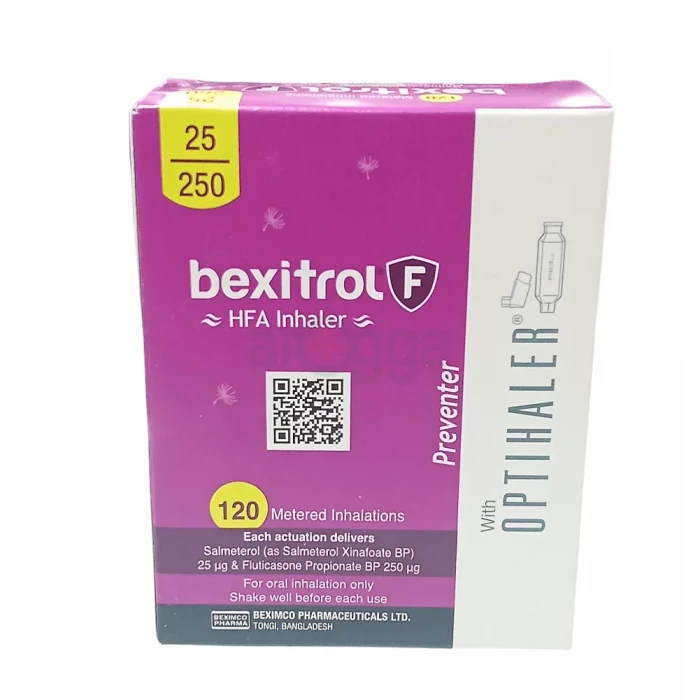
Bexitrol F 25/250 HFA Inhaler
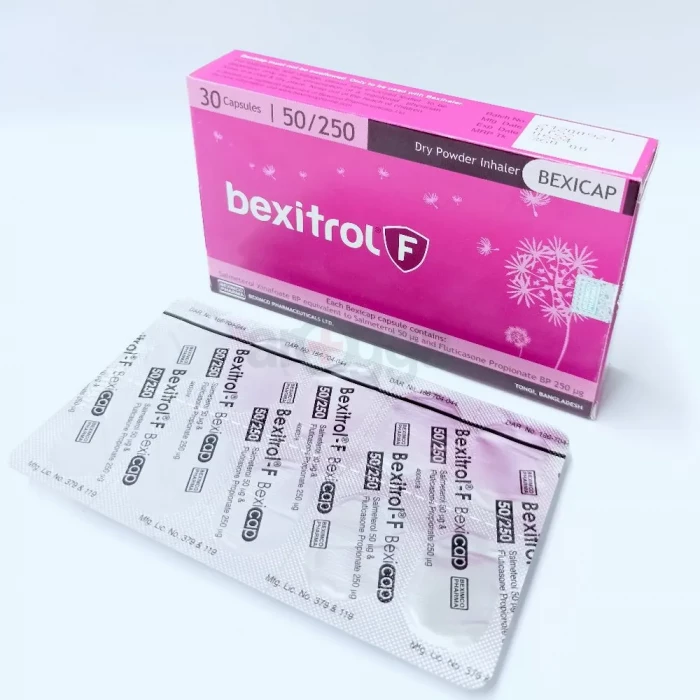
Bexitrol F 50/250 Bexicap (10pcs)
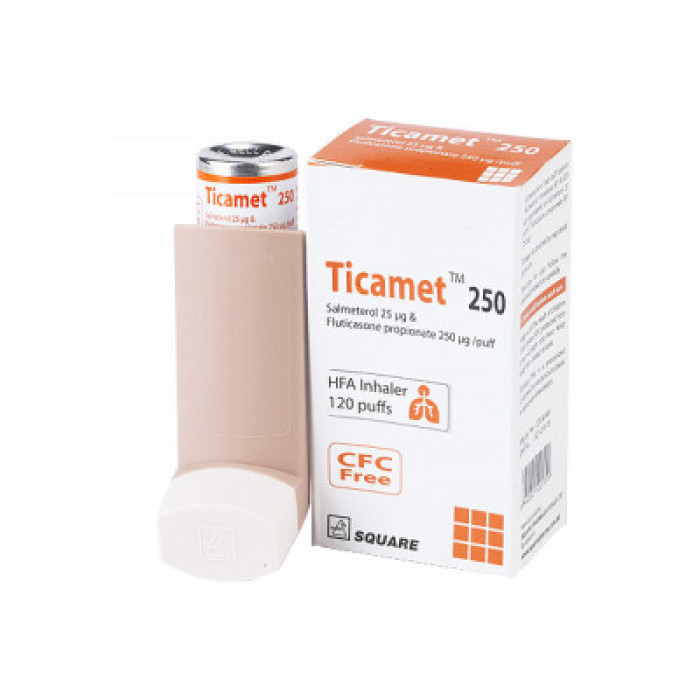
Ticamet 250 HFA Inhaler
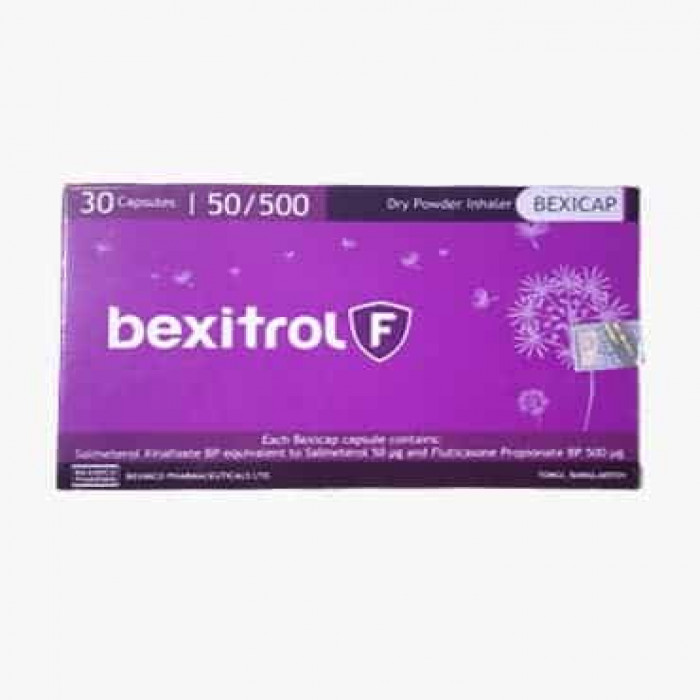
Bexitrol F 50/500mcg Bexicap Inhalation Capsule 1 Strip
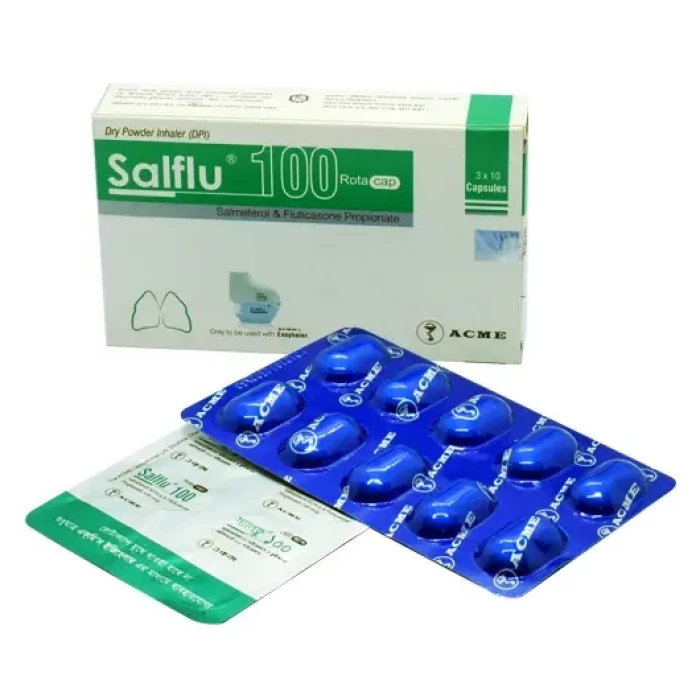
Salflu 100 Rotacap 10pcs

Salflu 250 Rotacap | 1 Strip
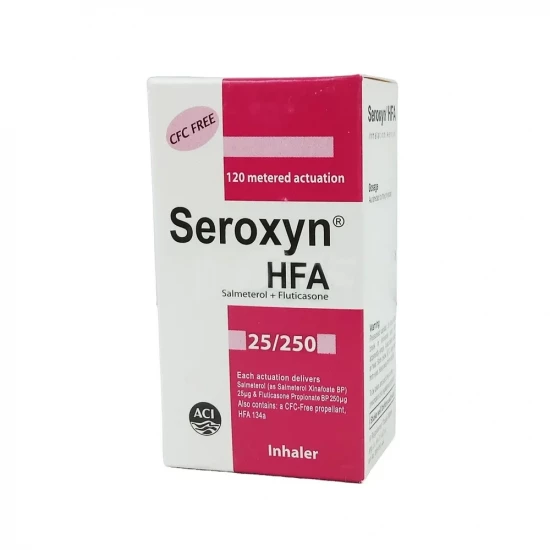
Seroxyn HFA 25/250 Inhaler | 120 Metered Actuation
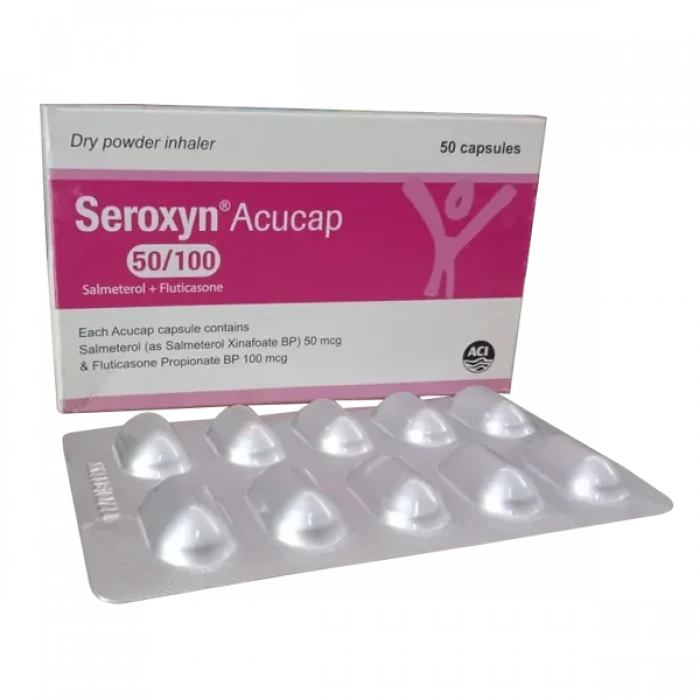
Seroxyn 50/100 Acucap
More From Aristopharma Limited
Popular products from this manufacturer/brand
Ketozol 2% Medicated Anti-Dandruff Scalp Shampoo 100ml
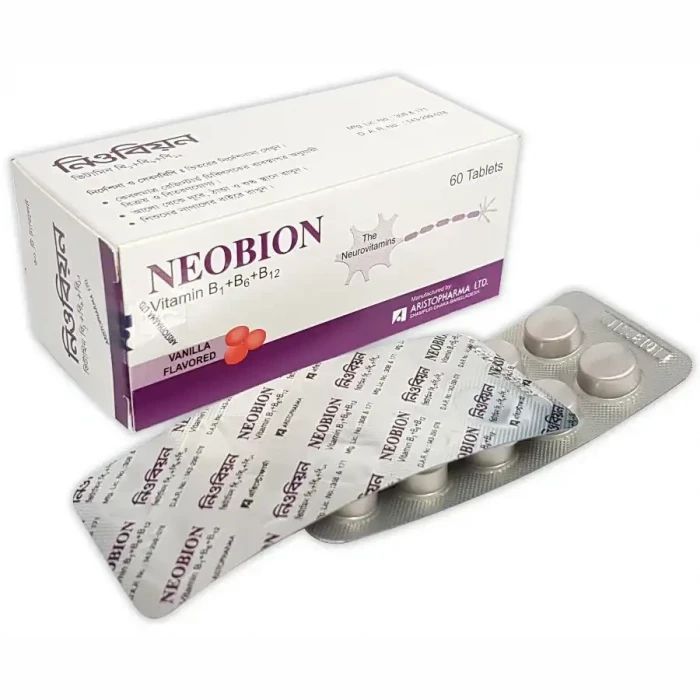
Neobion 100mg+200mg+200mcg Tablet
Rupa 10mg Tablet
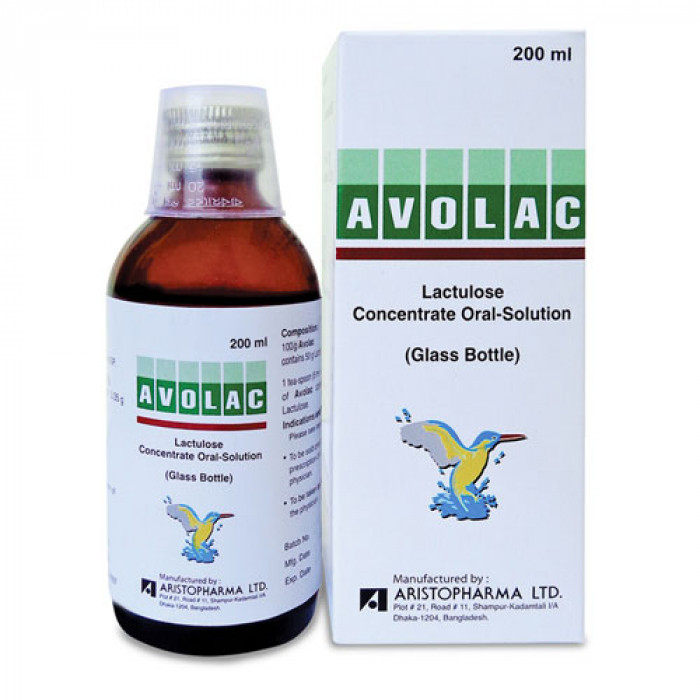
Avolac Oral Solution 200ml
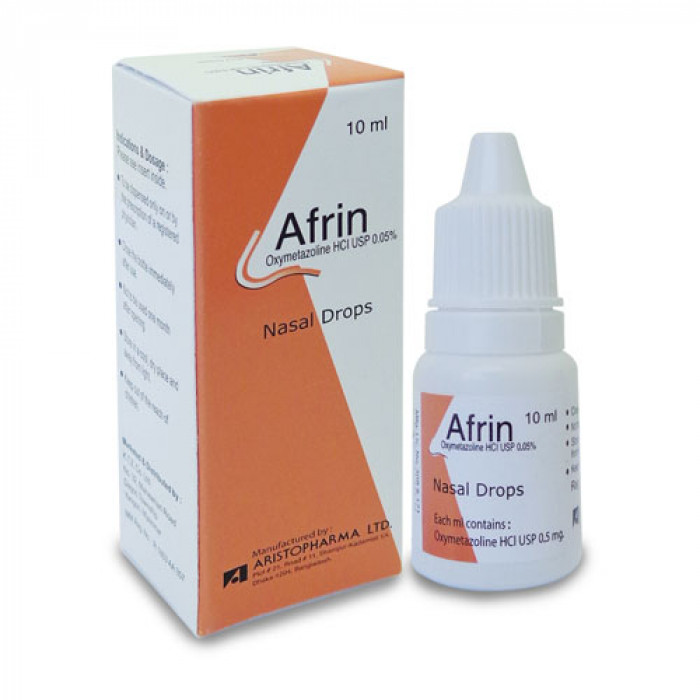
Afrin 0.05% Nasal Drops

Rabe 20mg Tablet
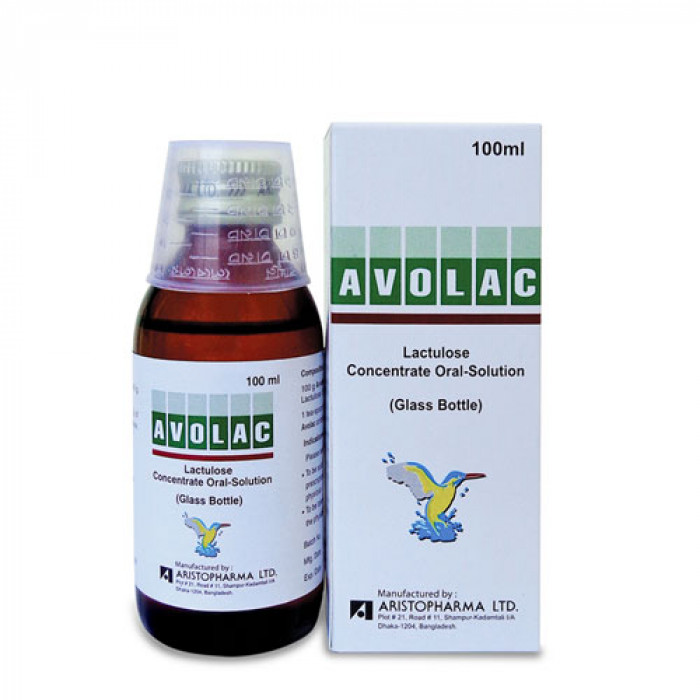
Avolac Oral Solution 100ml
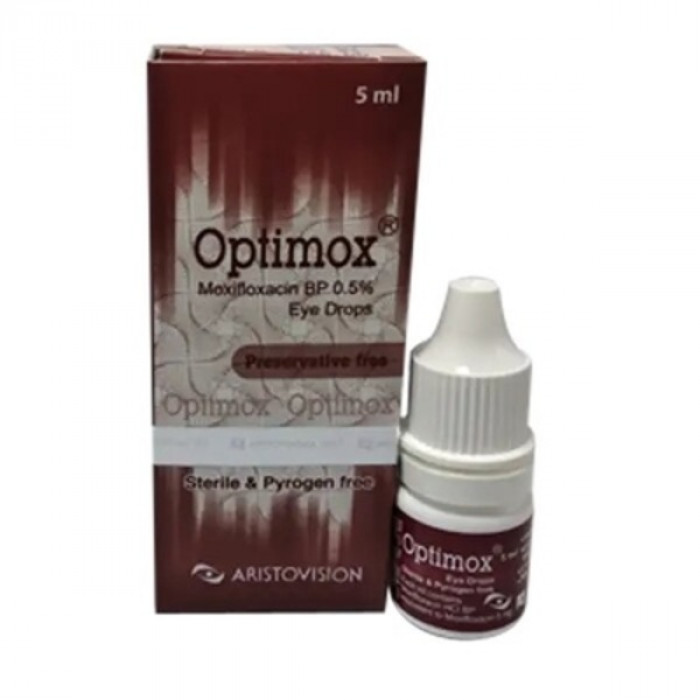
Optimox 0.5% Eye Drops 5ml
কীভাবে অর্ডার করবেন?How to Order?
How to Orderওয়েবসাইট থেকে অর্ডার করার সহজ ভিডিও গাইড।
অ্যাপ থেকে অর্ডারের সহজ ভিডিও গাইড
অ্যাপ ডাউনলোডDownload ePharma App বিস্তারিত গাইড ›Detailed App Ordering GuideRelated Posts


✔️ Dosage & Administration
Inhalation Capsule – Asthma
Adults and adolescents 12 years and older:
- 50 mcg + 100 mcg or 50 mcg + 250 mcg, twice daily.
- Doses should preferably be taken in the morning and evening, approximately 12 hours apart.
- The starting strength should be selected according to asthma severity.
- The maximum recommended strength is 50 mcg salmeterol + 500 mcg fluticasone propionate twice daily.
Children 4–11 years:
- For asthma not adequately controlled with an inhaled corticosteroid: 50 mcg + 100 mcg twice daily, approximately 12 hours apart.
Inhalation Capsule – COPD
- 50 mcg salmeterol + 250 mcg fluticasone propionate twice daily, approximately 12 hours apart.
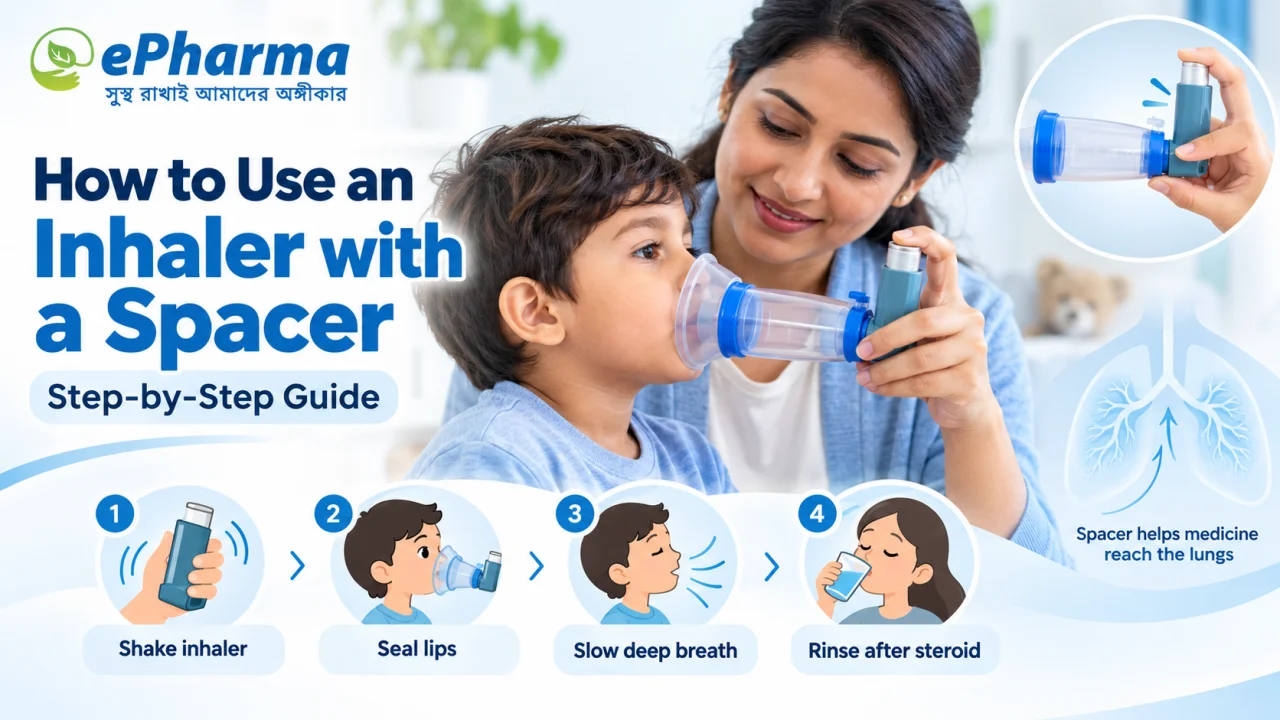
- Rinse the mouth with water after each inhalation.
Elderly patients:
No routine dosage adjustment is generally required.
Renal impairment:
Dose adjustment is generally not required.
Hepatic impairment:
There is limited information regarding use in patients with hepatic impairment. Medical supervision is recommended.
✔️ Drug Interactions
Although inhaled administration generally produces relatively low systemic concentrations, clinically important interactions can occur with certain medicines.
β-blockers:
Both non-selective and selective β-blockers may reduce the bronchodilating effect of salmeterol and can potentially trigger bronchospasm. They should generally be avoided in patients with asthma unless there is a compelling medical reason for their use.
Strong CYP3A4 inhibitors:
Medicines such as ketoconazole and ritonavir may increase systemic exposure to fluticasone propionate and potentially increase corticosteroid-related adverse effects. Concomitant use should be carefully evaluated by the physician.
Inform your doctor about all prescription medicines, over-the-counter medicines, and supplements you are taking.
✔️ Side Effects
Because Aroflo contains both salmeterol and fluticasone propionate, adverse effects associated with either component may occur.
Salmeterol-related effects may include:
- Tremor
- Palpitations
- Headache
- Muscle cramps
- Throat or oropharyngeal irritation
- Arthralgia
- Rash
- Edema
- Angioedema
- Cardiac arrhythmias, including atrial fibrillation, supraventricular tachycardia, or extra-systoles
These β2-agonist-related effects are often temporary and may decrease with continued regular treatment.
Fluticasone propionate-related effects may include:
- Hoarseness
- Oral or throat candidiasis (thrush)
- Local irritation
- Skin hypersensitivity reactions
- Rare facial or oropharyngeal edema
Rinsing the mouth with water after inhalation can help reduce the risk of oral candidiasis and hoarseness.
✔️ Pregnancy & Lactation
Pregnancy:
Aroflo should be used during pregnancy only when the expected benefit to the mother outweighs any potential risk to the fetus. There is limited clinical experience with the combined use of salmeterol and fluticasone propionate during human pregnancy.
Lactation:
Use during breastfeeding should be considered only when the expected maternal benefit outweighs potential risk to the infant. Systemic concentrations after inhalation are generally low, and consequently exposure through breast milk is expected to be low. However, adequate human data regarding the presence of these medicines in breast milk are limited.
✔️ Aroflo should not be used in patients with:
- Known hypersensitivity to salmeterol xinafoate, fluticasone propionate, or any component of the formulation.
- Acute severe asthma or status asthmaticus requiring intensive treatment.
- Acute asthma symptoms requiring immediate bronchodilator therapy as the primary treatment.
✔️ Precautions & Warnings
Asthma
- Aroflo should not be initiated during an acute asthma exacerbation or when asthma is unstable or rapidly worsening.
- It should not be used as a rescue medicine for sudden breathing difficulty.
- Patients should have their prescribed short-acting rescue bronchodilator available.
- If symptoms remain uncontrolled or worsen after starting treatment, medical advice should be obtained promptly.
- Do not discontinue maintenance therapy without consulting the treating physician.
Paradoxical Bronchospasm
Inhaled medicines can rarely cause paradoxical bronchospasm, characterized by an immediate worsening of wheezing or breathing difficulty after inhalation. If this occurs, use the prescribed rapid-acting bronchodilator immediately, discontinue Aroflo, and seek medical evaluation for alternative treatment.
COPD
Patients with COPD receiving salmeterol/fluticasone therapy may have an increased risk of pneumonia. Symptoms of pneumonia and COPD exacerbation can be similar, so new or worsening respiratory symptoms, fever, or changes in sputum should be assessed by a healthcare professional.
Corticosteroid-related Effects
Although inhaled corticosteroids generally produce fewer systemic effects than oral corticosteroids, systemic effects may occur, especially with high doses or prolonged treatment.
Possible effects include:
- Adrenal suppression
- Cushingoid features or Cushing's syndrome
- Reduced bone mineral density
- Cataracts
- Glaucoma
- Growth retardation in children
- Very rarely, behavioral or psychological disturbances in children and adolescents
Treatment should therefore be reviewed regularly, with the corticosteroid dose maintained at the lowest dose that effectively controls symptoms.
Use in Children
Inhaled corticosteroids may temporarily reduce growth velocity in children. The long-term effect of this reduction on final adult height is not fully established. Children receiving prolonged corticosteroid treatment should have their growth monitored regularly.
✔️ Storage:
- Store below 30°C.
- Protect from direct sunlight and excessive heat.
- Do not puncture, break, or burn the pressurized canister, even when it appears empty.
- Keep away from moisture and extreme temperatures.
- Avoid contact of the medication with the eyes.
- Keep out of reach of children.
⚠️Disclaimer:
At ePharma, we’re committed to providing accurate and accessible health information. However, all content is intended for informational purposes only and should not replace medical advice from a qualified physician. Please consult your healthcare provider for personalized guidance. We aim to support, not substitute, the doctor-patient relationship.
📦Pricing Information, Availability:
Product Availability & Pricing Notice
Please note that pricing, availability, and service offerings are subject to change due to: Market fluctuations, Manufacturer or supplier adjustments, Product discontinuation or temporary unavailability, Advertising errors. All orders depend on stock availability and staff resources. If services are provided on a time-and-materials basis, any shared estimates are for planning purposes only.


Reliable
All products displayed on ePharma are procured from govt. approved pharmaceuticals and verified licensed pharmacies from 2016.

Secure
ePharma uses Secure Sockets Layer (SSL) 128-bit 🔒 encryption and is Payment Card Industry DataSecurity Standard (PCI DSS) compliant.

Affordable
Find affordable medicine substitutes, save up to 50% on health products, up to 30% off on doctor consultations.

Social
Providing health care services under the health and beauty category with more than 170K Facebook audience and 10M+ reach.







Get more features!
Download the app now
✓ Doctor consultation ✓ 24/7 helpline