



✔ 100% Authentic Product
👁️ Viewed 43 times
Vonofix 20mg Tablet
Vonoprazan may be prescribed for:
- Gastric ulcer
- Duodenal ulcer
- Reflux esophagitis
- Prevention of recurrence of gastric or duodenal ulcers during low-dose aspirin therapy
- Prevention of recurrence of gastric or duodenal ulcers during NSAID therapy
- As an adjunct to H. pylori eradication therapy in conditions such as:
- Gastric ulcer
- Duodenal ulcer
- H. pylori gastritis
- Gastric MALT lymphoma
- Idiopathic thrombocytopenic purpura
- H. pylori-positive stomach following endoscopic resection of early gastric cancer
Discount Price: ৳ 94
MRP:
৳
100
6%
off

100% Genuine Products, Guaranteed

Safe & Secure Payments, Always

Fast, Secure & Efficient Delivery

Proper Packaging
 Cash on Delivery - All over Bangladesh
 Regular Delivery: 24-48 Hours, Dhaka City* Charge Tk.39-59
- Regular Delivery: 48-96 Hours, Other Cities* Charge Tk.99-125
 ফ্রি ডেলিভারিঃ - ১৪৯৯ টাকা+ অর্ডারে, ঢাকা
শহরে
ফ্রি ডেলিভারিঃ - ১৪৯৯ টাকা+ অর্ডারে, ঢাকা
শহরে- ফ্রি ডেলিভারিঃ - ৪৯৯৯ টাকা+ অর্ডারে, ঢাকার
বাহিরে
📲 মোবাইল অ্যাপ অর্ডারে সাশ্রয় বেশী
-
Google Play Store থেকে ডাউনলোড
-
Apple Store থেকে ডাউনলোড
100% Genuine Products, Guaranteed
Safe & Secure Payments, Always
Fast, Secure & Efficient Delivery
Proper Packaging
- Cash on Delivery - All over Bangladesh
- Regular Delivery: 24-48 Hours, Dhaka City* Charge Tk.39-59
- Regular Delivery: 48-96 Hours, Other Cities* Charge Tk.99-125
- ফ্রি ডেলিভারিঃ - ১৪৯৯ টাকা+ অর্ডারে, ঢাকা
শহরে
- ফ্রি ডেলিভারিঃ - ৪৯৯৯ টাকা+ অর্ডারে, ঢাকার
বাহিরে
- Google Play Store থেকে ডাউনলোড
- Apple Store থেকে ডাউনলোড
📲 মোবাইল অ্যাপ অর্ডারে সাশ্রয় বেশী
✅ Description:
Vonoprazan is a potassium-competitive acid blocker (P-CAB) that suppresses gastric acid secretion. It is used for the treatment of acid-related gastrointestinal conditions, including gastric and duodenal ulcers and reflux esophagitis. It can also be used to help prevent ulcer recurrence associated with low-dose aspirin or NSAID therapy and as part of combination therapy for Helicobacter pylori (H. pylori) eradication.

Relevant Products
Same generic alternatives, ranked by customer interest
Vonix 20mg Tablet 1 Strip

Vontac 20

Voniza 10
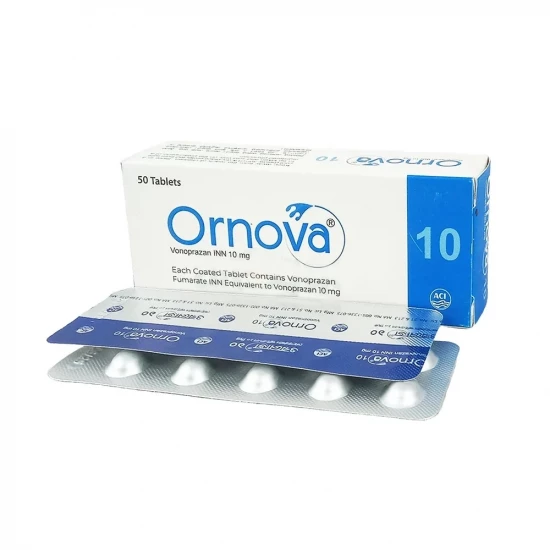
Ornova 10 | 10pcs

Vonliv 20 Tablet 1 Strip
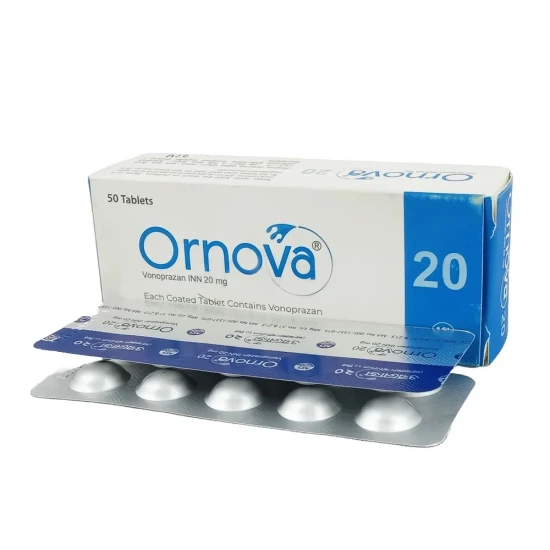
Ornova 20 | 1 Strip
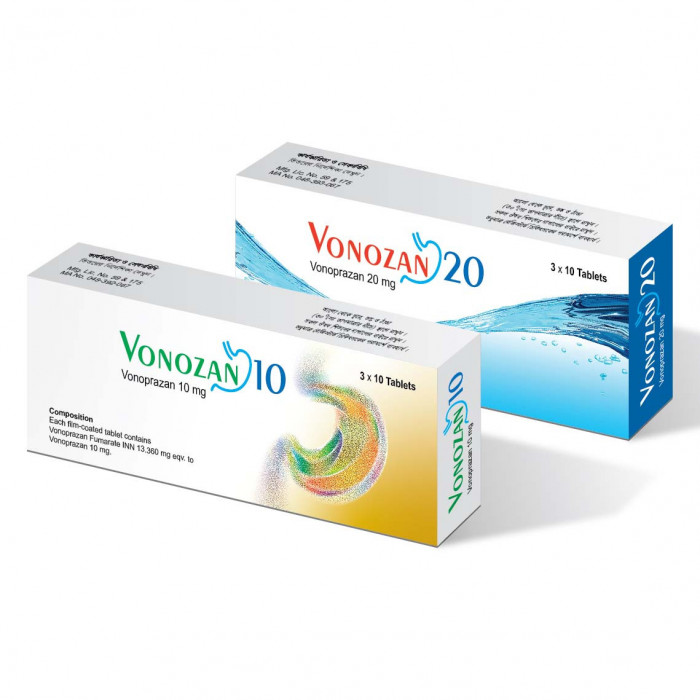
Vonozan 10 Tablet 1 Strip
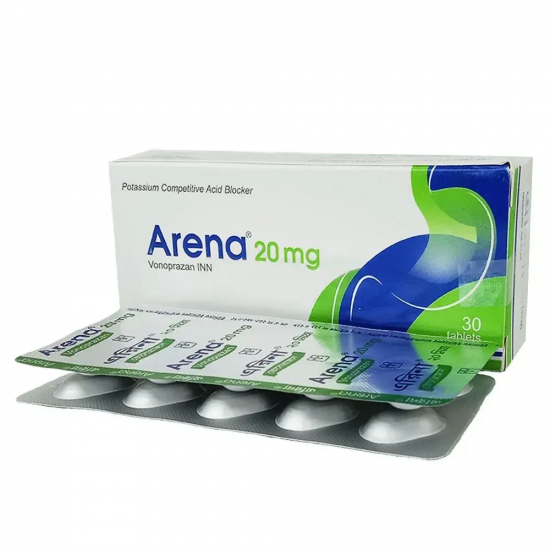
Arena 20, 1 Strip
More From Aristopharma Limited
Popular products from this manufacturer/brand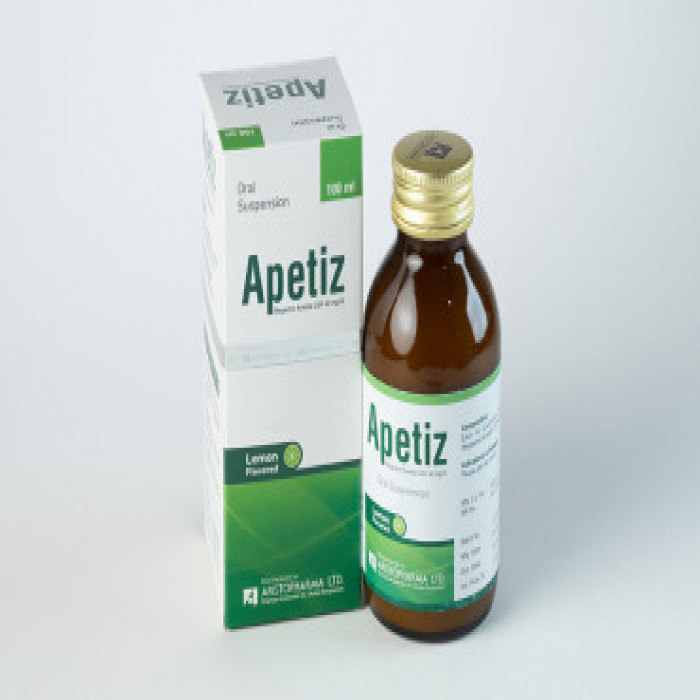
Apetiz Syrup 200ml
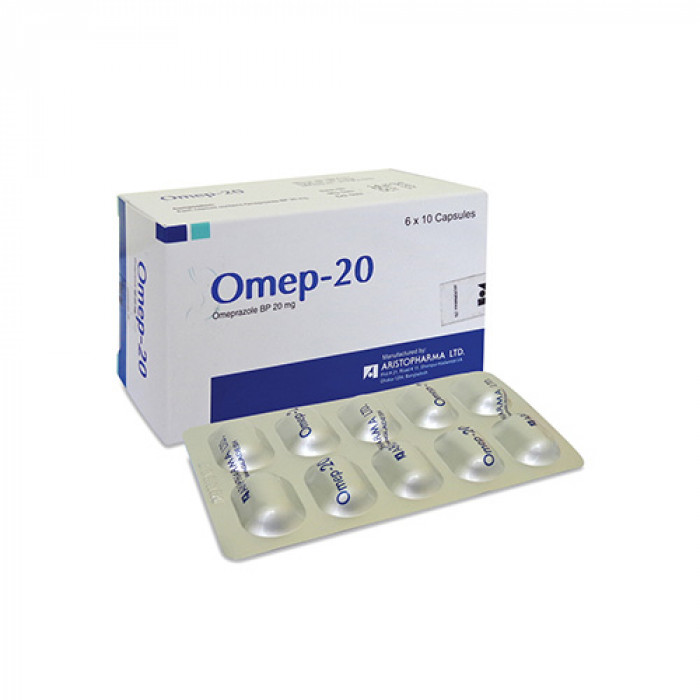
Omep 20mg Capsule 10Pcs
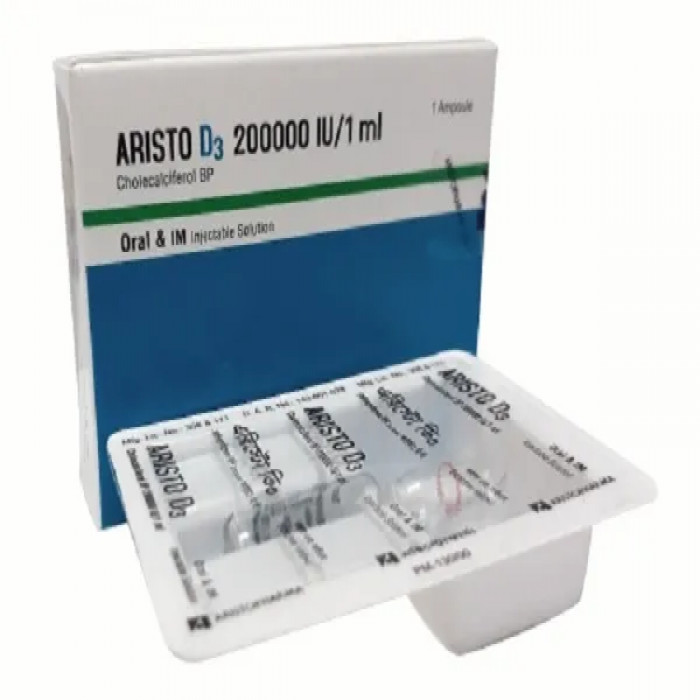
Aristo D3 200000 IU/1ml Injection

Goodbac -3S Capsule 4Billion
Audicare 0.3%+1%+0.025%+2% Ear Drops 10ml
Aristo Gold Tablet (30pcs Pot)
Cutin 5mg Capsule 10pcs
Wikijet 2.5mg/0.5ml Pre-Filled Syringe
Related Posts



✔️ Pharmacology / How Vonoprazan Works
Vonoprazan belongs to the potassium-competitive acid blocker (P-CAB) class. Unlike conventional proton pump inhibitors, it does not require activation by gastric acid.
It works by reversibly and competitively inhibiting the H⁺/K⁺-ATPase proton pump in gastric parietal cells. By blocking the final step of gastric acid secretion, Vonoprazan produces potent and sustained suppression of stomach acid production.
Because Vonoprazan is strongly basic and accumulates at the site of acid secretion, it can maintain significant inhibition of gastric acid production and support healing of acid-related damage in the upper gastrointestinal tract.
✔️ Side Effects:
- Diarrhea
- Constipation
- Nausea
- Abdominal distension or bloating
- Skin rash
- Urticaria (hives)
- Drug eruption
- Hypersensitivity reactions
- Eosinophilia
- Edema
- Increased liver enzymes
- Abnormal liver-function tests
- Increased AST
- Increased ALT
- Increased ALP
- Increased LDH
- Increased gamma-glutamyl transferase (GGT)
✔️ Dosage & Administration
Vonoprazan may be taken with or without food, and its administration does not need to be specifically timed around meals.
Gastric Ulcer
The usual adult dose is:
20 mg once daily for 8 weeks.
Duodenal Ulcer
The usual adult dose is:
20 mg once daily for 6 weeks.
Reflux Esophagitis
The usual adult dose is:
20 mg once daily for 4 weeks.
If adequate healing is not achieved, treatment may be continued for a longer period, but generally not beyond 8 weeks.
Maintenance Treatment of Reflux Esophagitis
For patients with recurrent reflux esophagitis who require maintenance therapy:
10 mg once daily is generally recommended.
If the response is inadequate, the dose may be increased to:
20 mg once daily.
Long-term maintenance therapy should be reserved for patients who experience recurrent disease and genuinely require continued acid suppression.
Prevention of Ulcer Recurrence During Low-Dose Aspirin Therapy
The usual adult dose is:
10 mg once daily.
Prevention of Ulcer Recurrence During NSAID Therapy
The usual adult dose is:
10 mg once daily.
H. pylori Eradication Therapy
Vonoprazan is used in combination with antibiotics for H. pylori eradication.
Initial Three-Drug Regimen
The following medicines are taken twice daily for 7 days:
- Vonoprazan 20 mg
- Amoxicillin hydrate 750 mg
- Clarithromycin 200 mg
The clarithromycin dose may be increased to 400 mg twice daily when clinically appropriate, but should not exceed this amount.
Alternative Three-Drug Regimen
If previous H. pylori eradication therapy using a proton pump inhibitor, amoxicillin, and clarithromycin has failed, an alternative regimen may be used:
- Vonoprazan 20 mg
- Amoxicillin hydrate 750 mg
- Metronidazole 250 mg
These medicines are administered twice daily for 7 days.
The complete H. pylori treatment regimen should be followed exactly as prescribed by the physician.
Use in Elderly Patients
Older patients may have reduced liver or kidney function and may therefore require careful monitoring during treatment. Vonoprazan should be used cautiously in elderly individuals according to their overall health and clinical condition.
Use in Children
The safety and effectiveness of Vonoprazan in children and adolescents under 18 years of age have not been established. Therefore, its use in this age group is generally not recommended unless specifically directed by a specialist.
✔️ Pregnancy & Lactation
Vonoprazan should be used during pregnancy only when the potential benefits clearly outweigh the possible risks, as adequate controlled human data are limited.
If you are pregnant, planning pregnancy, or breastfeeding, consult your doctor before taking this medicine. The effects of Vonoprazan on a breastfed infant have not been sufficiently established.
✔️ Interaction
Vonoprazan can interact with certain medicines and should not be combined with some antiretroviral agents, including atazanavir, nelfinavir, and rilpivirine, because changes in gastric acidity may affect their absorption and effectiveness.
Always inform your doctor or pharmacist about all prescription medicines, over-the-counter products, vitamins, and supplements you are taking before starting Vonoprazan.
✔️ Vonoprazan should not be used in patients with:
- Known hypersensitivity to Vonoprazan or any ingredient in the formulation
- Concurrent treatment with atazanavir sulfate
- Concurrent treatment with nelfinavir
- Concurrent treatment with rilpivirine hydrochloride
✔️ Precautions & Warnings
Treatment should be given for the shortest duration necessary and at the lowest effective dose appropriate for the patient's condition.
During prolonged treatment, the patient's clinical condition should be monitored regularly, and investigations such as endoscopy may be considered when clinically indicated.
For maintenance treatment of reflux esophagitis:
- Vonoprazan should generally be reserved for patients with recurrent or repeatedly worsening reflux esophagitis.
- Long-term maintenance should be avoided in patients who do not require continued therapy.
- If healing remains stable for an extended period and the risk of recurrence becomes low, the doctor may consider reducing the dose from 20 mg to 10 mg daily or discontinuing treatment.
Patients should inform their doctor about any persistent gastrointestinal symptoms, unexplained weight loss, difficulty swallowing, vomiting blood, or black stools.
✔️ Storage:
- Store below 30°C.
- Keep in a cool and dry place.
- Protect from light and moisture.
- Keep the medicine in its original packaging.
- Keep out of reach and sight of children.
⚠️Disclaimer:
At ePharma, we’re committed to providing accurate and accessible health information. However, all content is intended for informational purposes only and should not replace medical advice from a qualified physician. Please consult your healthcare provider for personalized guidance. We aim to support, not substitute, the doctor-patient relationship.
📦Pricing Information, Availability:
Product Availability & Pricing Notice
Please note that pricing, availability, and service offerings are subject to change due to: Market fluctuations, Manufacturer or supplier adjustments, Product discontinuation or temporary unavailability, Advertising errors. All orders depend on stock availability and staff resources. If services are provided on a time-and-materials basis, any shared estimates are for planning purposes only.



Reliable
All products displayed on ePharma are procured from govt. approved pharmaceuticals and verified licensed pharmacies from 2016.

Secure
ePharma uses Secure Sockets Layer (SSL) 128-bit 🔒 encryption and is Payment Card Industry DataSecurity Standard (PCI DSS) compliant.

Affordable
Find affordable medicine substitutes, save up to 50% on health products, up to 30% off on doctor consultations.

Social
Providing health care services under the health and beauty category with more than 170K Facebook audience and 10M+ reach.







Get more features!
Download the app now
✓ Doctor consultation ✓ 24/7 helpline

