


✔ 100% Authentic Product
👁️ Viewed 224 times
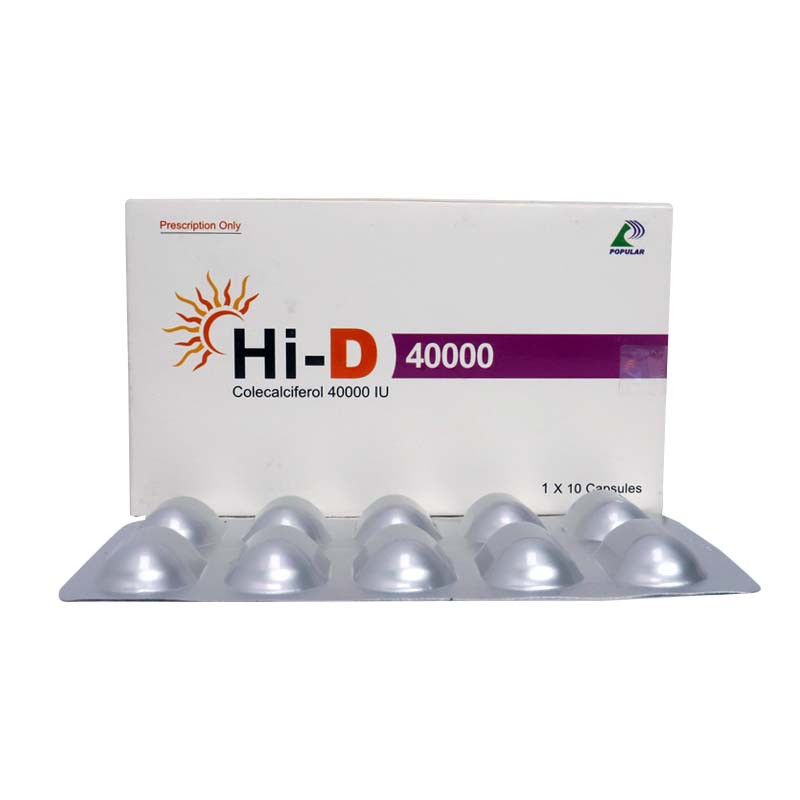
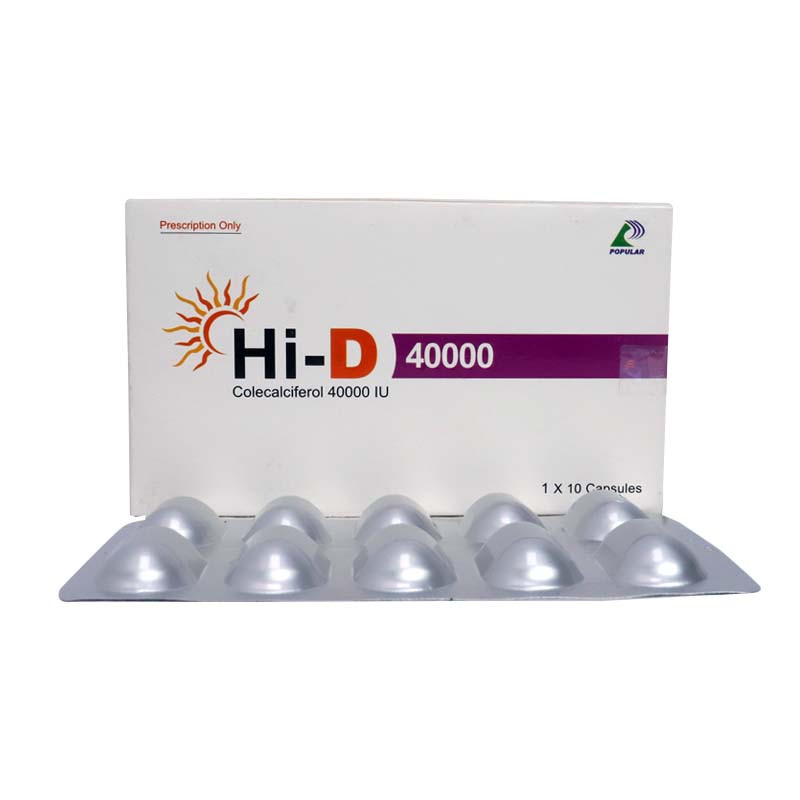
Hi-D 40000IU Capsule
Vitamin D3 deficiency can occur in people whose exposure to sunlight is limited and in those whose diet is deficient in vitamin D3.
- Hi-D is essential for the effective calcium and phosphate absorption required for healthy bones and teeth, preventing rickets, osteomalacia and osteoporosis.
- Hi-D is also essential to prevent pre-eclampsia during pregnancy and breast feeding as it is an essential nutrient for a growing infant.
- Hi-D has vital role on immunity boost up.
Discount Price: ৳ 333
MRP:
৳
350
5%
off

100% Genuine Products, Guaranteed

Safe & Secure Payments, Always

Fast, Secure & Efficient Delivery

Proper Packaging
 Cash on Delivery - All over Bangladesh
 Regular Delivery: 24-48 Hours, Dhaka City* Charge Tk.39-59
- Regular Delivery: 48-96 Hours, Other Cities* Charge Tk.99-125
 ফ্রি ডেলিভারিঃ - ১৪৯৯ টাকা+ অর্ডারে, ঢাকা
শহরে
ফ্রি ডেলিভারিঃ - ১৪৯৯ টাকা+ অর্ডারে, ঢাকা
শহরে- ফ্রি ডেলিভারিঃ - ৪৯৯৯ টাকা+ অর্ডারে, ঢাকার
বাহিরে
📲 মোবাইল অ্যাপ অর্ডারে সাশ্রয় বেশী
-
Google Play Store থেকে ডাউনলোড
-
Apple Store থেকে ডাউনলোড
100% Genuine Products, Guaranteed
Safe & Secure Payments, Always
Fast, Secure & Efficient Delivery
Proper Packaging
- Cash on Delivery - All over Bangladesh
- Regular Delivery: 24-48 Hours, Dhaka City* Charge Tk.39-59
- Regular Delivery: 48-96 Hours, Other Cities* Charge Tk.99-125
- ফ্রি ডেলিভারিঃ - ১৪৯৯ টাকা+ অর্ডারে, ঢাকা
শহরে
- ফ্রি ডেলিভারিঃ - ৪৯৯৯ টাকা+ অর্ডারে, ঢাকার
বাহিরে
- Google Play Store থেকে ডাউনলোড
- Apple Store থেকে ডাউনলোড
📲 মোবাইল অ্যাপ অর্ডারে সাশ্রয় বেশী
✅ Description:
The active form of Vitamin D3, Calcitriol, exerts its effect by binding to the Vitamin D receptors (VDRs), which are widely distributed through many body tissues.Vitamin D3 has a half life of about 50 days as it is fat soluble.Vitamin D3 is absorbed in the small intestine and bound to specific a-globulins and transported to the liver where it is metabolised to 25-hydroxy Vitamin D3 (Calcidiol). A second hydroxylation to 1,25-dihydroxy Vitamin D3 (Calcitriol) occurs in the kidney. This metabolite is responsible for the vitamin's ability to increase the absorption of calcium. Non-metabolised Vitamin D3 is stored in tissues such as fat and muscle.Vitamin D3 is eliminated via faeces and urine.
Dosage & Administration
For capsule: Adults:
- Treatment of Vitamin D3 deficiency: 40000 IU once weekly for 7 weeks. Doses for maintenance therapy are 1400-2000 IU/day. To confirm the target level of 25 hydroxyvitamin D, its measurement should be determined 3-4 months after initiating the maintenance therapy.
- Prevention of Vitamin D3 deficiency: 20000 IU every 4 weeks. Higher doses may be required in certain situations.
- In addition to specific therapy for osteoporosis: 20000 IU once a month.
For capsule: Children (12-18 years):
- Treatment of Vitamin D3 deficiency: 20000 IU once every 2 weeks for 6 weeks.
- Prevention of Vitamin D3 deficiency: 20000 IU every 6 weeks.
For film-coated tablet: 1000 IU (1-2 tablets) daily, or as directed by a physician. Take the medicine with food or within 1 hour after a meal.
Concomitant treatment with phenytoin or barbiturates can decrease the effect of vitamin D because of metabolic activation. Concomitant use of glucocorticoids can decrease the effect of vitamin D. The effectsof digitalis and other cardiac glycosides may be accentuated with the oral administration of calcium combined with vitamin D. Strict medical supervision is needed and, if necessary monitoring of ECG and calcium. Simultaneous treatment with ion exchange resins such as cholestyramine or laxatives such as paraffin oil may reduce the gastrointestinal absorption of vitamin D. The cytotoxic agent actinomycin and imidazole antifungal agents interfere with vitamin D activity by inhibiting the conversion of 25-hydroxyvitamin D to 1, 25-dihydroxyvitamin D by the kidney enzyme, 25-hydroxyvitamin D-1-hydroxylase.
Vitamin D3 is contraindicated in all diseases associated with hypercalcaemia. It is also contraindicated in patients with known hypersensitivity to Vitamin D3 (or medicines of the same class) and any of the excipients. It is contraindicated if there is evidence of Vitamin D3 toxicity.
Generally, all nutritional supplements are considered to be safe and well tolerated. However, few most common side effects can generally occur including hypocalcaemia syndrome or calcium intoxication (depending on the severity and duration of hypocalcaemia), occasional acute symptoms include anorexia, headache, nausea, vomiting, abdominal pain or stomach ache and constipation with the administration of colecalciferol.
Studies have shown safe use of doses up to 4000 IU during pregnancy. The recommended daily intake for pregnant women is 400 IU; however, in women who are considered to be Vitamin D3 deficient, a higher dose may be required. During pregnancy, women should follow the advice of their medical practitioner as their requirements may vary depending on the severity of their disease and their response to treatment
Vitamin D3 and its metabolites are excreted in breast milk. Overdose in infants induced by nursing mothers has not been observed; however, when prescribing additional vitamin D3 to a breast-fed child, the practitioner should consider the dose of any additional vitamin D3 given to the mother.
Plasma-calcium concentration should be monitored at intervals in patients receiving high doses of Vitamin D3, in renal impairment, and during pregnancy & lactation. People using Digoxin and Thiazide Diuretics should consult a health care practitioner before supplementing with Vitamin D3. People with liver or kidney disease, primary hyperthyroidism, lymphoma, tuberculosis, and granulomatous disease should consult a health care practitioner before supplementing with Vitamin D3.
Store in a cool (below 25°C) and dry place protected from light. Keep away from the reach of children.

Relevant Products
Same generic alternatives, ranked by customer interest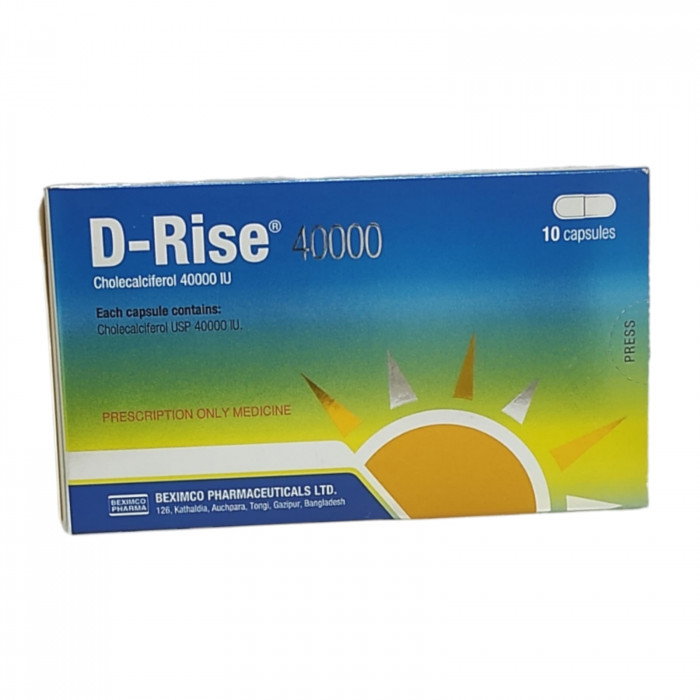
D-Rise 40000IU Capsule 1 Strip
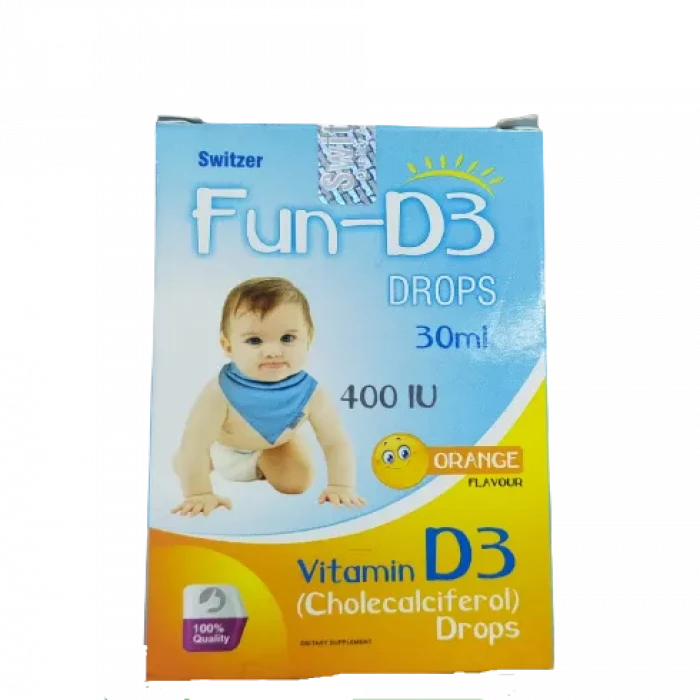
Fun D3 Drops 400IU
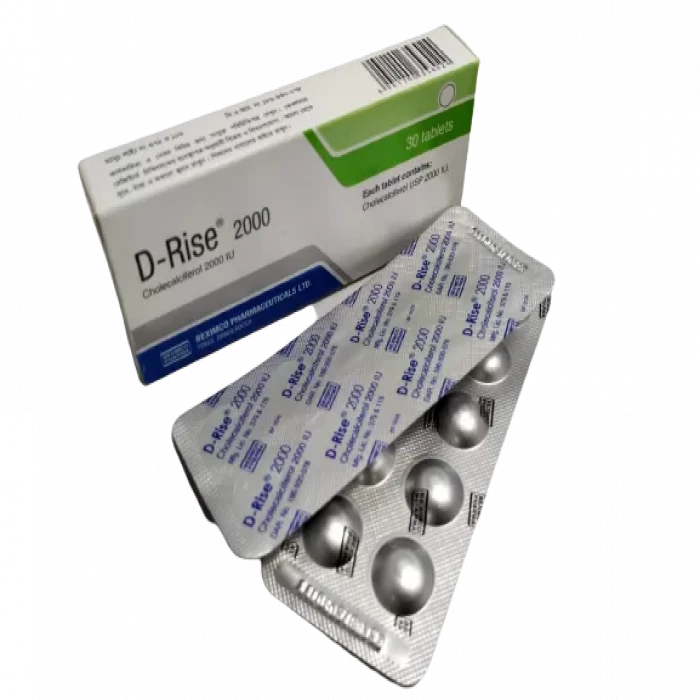
D-Rise 2000IU Tablet
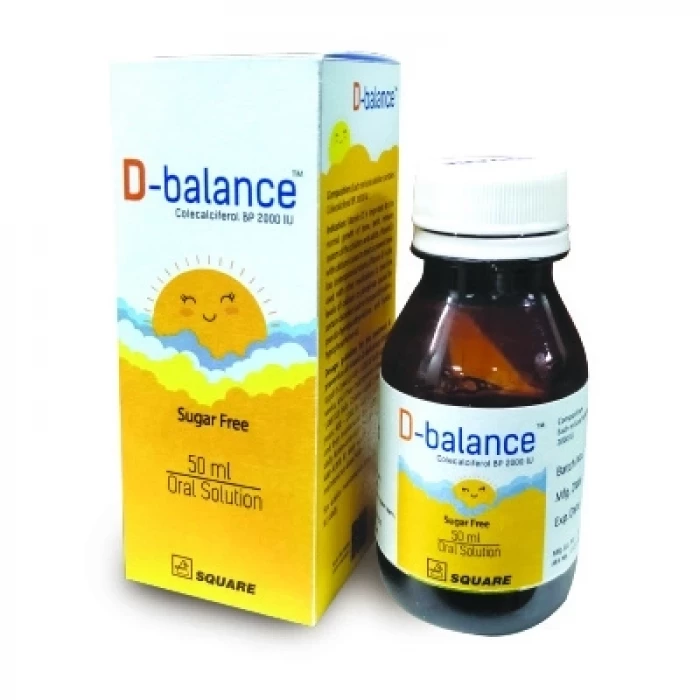
D-Balance Oral Solution 50ml Bottle
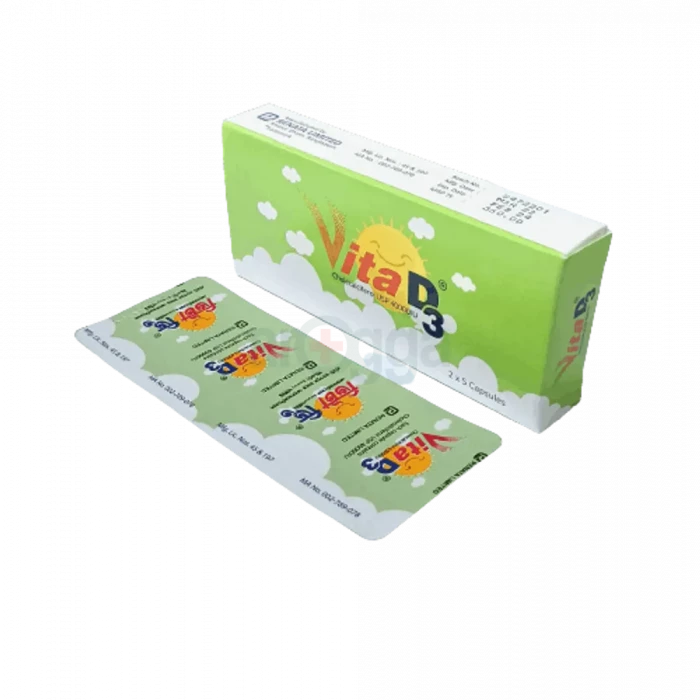
Vita D3 40000 IU Capsule 5pcs
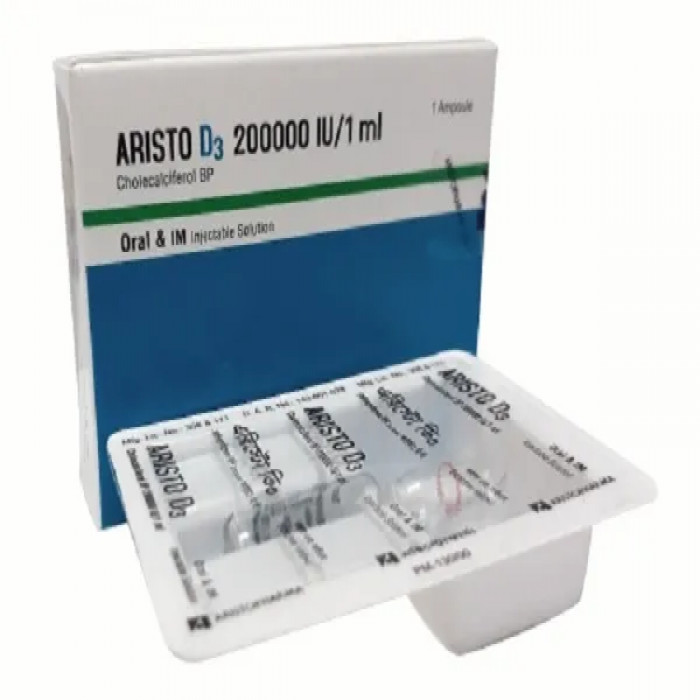
Aristo D3 200000 IU/1ml Injection
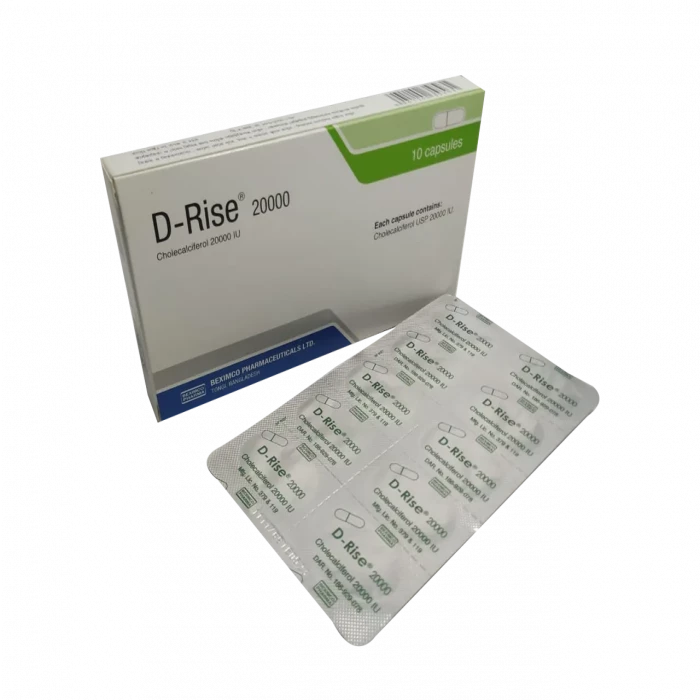
D-Rise 20000IU 1 Strip
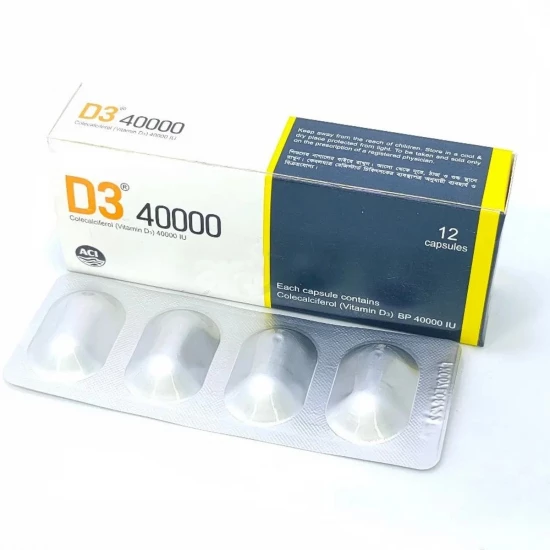
D3 40000IU Capsule | 1 Strip
More From Popular Pharmaceuticals Ltd.
Popular products from this manufacturer/brand
B126 Vitamin B1 + B6 + B12 Tablet 1 Strip
Bilastin 20mg Tablet 10Pcs
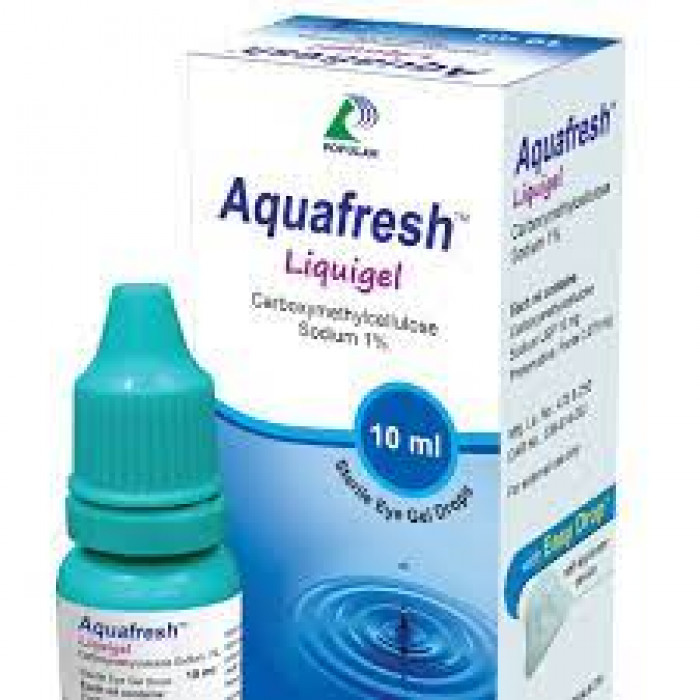
Aquafresh Liquigel Eye Drops 10ml
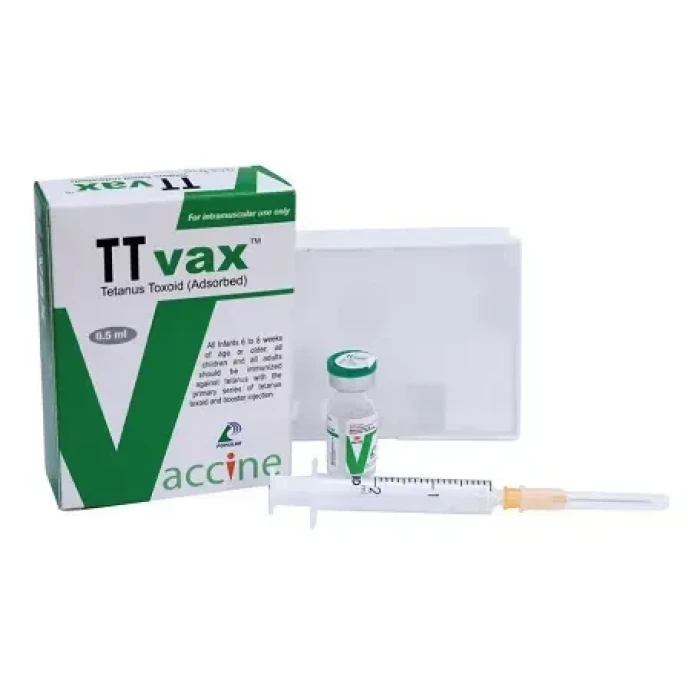
TTvax IM Injection 40IU/0.5ml
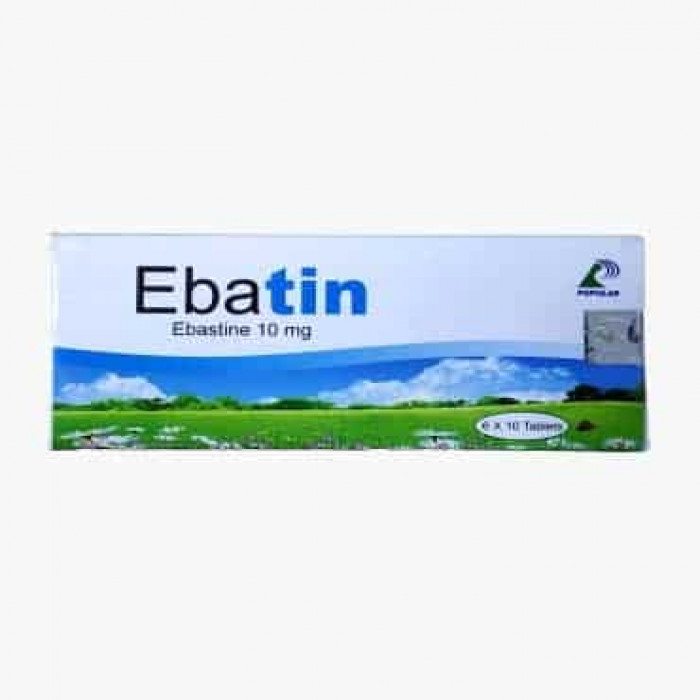
Ebatin 10mg Tablet 10Pcs
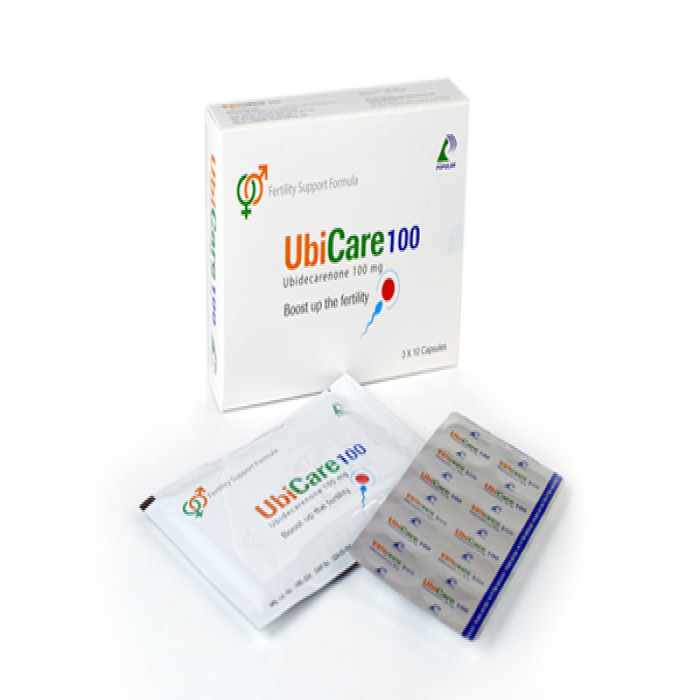
UbiCare 100mg Capsule
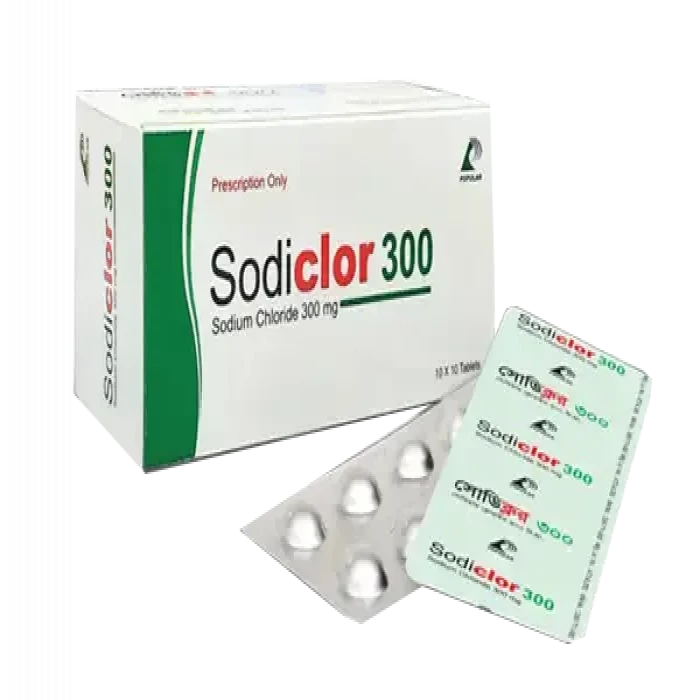
Sodiclor 300mg 10Pcs
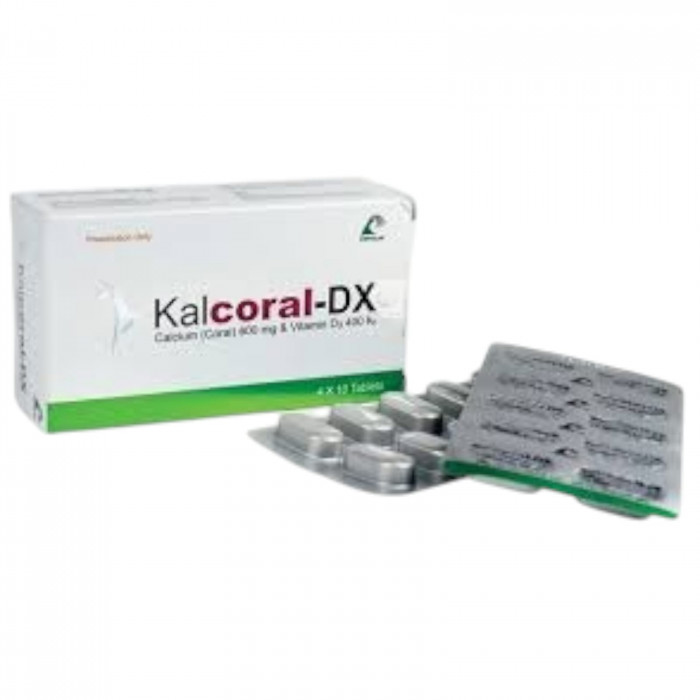
Kalcoral-DX | 600mg+400IU | Tablet
Related Posts


⚠️Disclaimer:
At ePharma, we’re committed to providing accurate and accessible health information. However, all content is intended for informational purposes only and should not replace medical advice from a qualified physician. Please consult your healthcare provider for personalized guidance. We aim to support, not substitute, the doctor-patient relationship.
📦Pricing Information, Availability:
Product Availability & Pricing Notice
Please note that pricing, availability, and service offerings are subject to change due to: Market fluctuations, Manufacturer or supplier adjustments, Product discontinuation or temporary unavailability, Advertising errors. All orders depend on stock availability and staff resources. If services are provided on a time-and-materials basis, any shared estimates are for planning purposes only.


Reliable
All products displayed on ePharma are procured from govt. approved pharmaceuticals and verified licensed pharmacies from 2016.

Secure
ePharma uses Secure Sockets Layer (SSL) 128-bit 🔒 encryption and is Payment Card Industry DataSecurity Standard (PCI DSS) compliant.

Affordable
Find affordable medicine substitutes, save up to 50% on health products, up to 30% off on doctor consultations.

Social
Providing health care services under the health and beauty category with more than 170K Facebook audience and 10M+ reach.







Get more features!
Download the app now
✓ Doctor consultation ✓ 24/7 helpline