Blood Sugar Chart: Fasting, OGTT, HbA1c & Diabetes Ranges
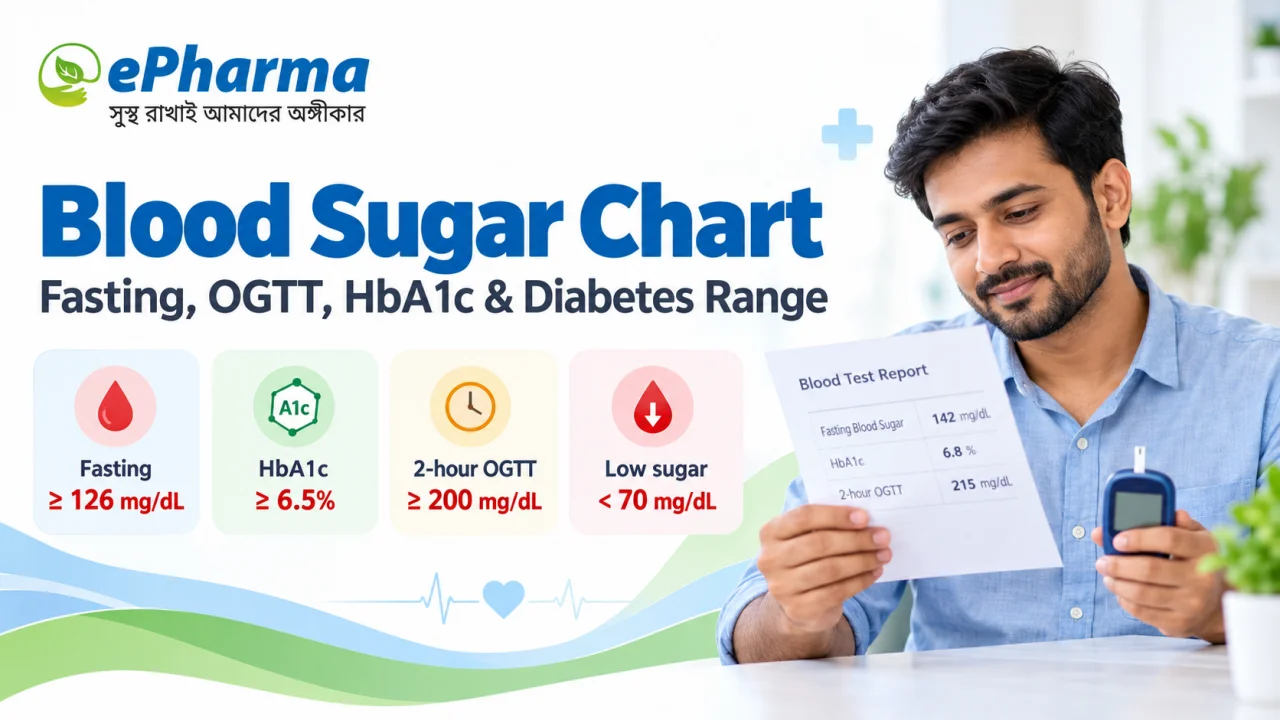
Understand fasting glucose, OGTT, random glucose and HbA1c ranges, mmol/L↔mg/dL conversion, treatment targets, pregnancy goals and low blood sugar.
A fasting glucose result of 6.8 mmol/L can be confusing: is it diabetes, prediabetes, or “almost normal”? The answer depends on which test was done, the unit, whether you were truly fasting, and whether an abnormal result has been confirmed.
This guide brings the key numbers together: fasting glucose, 2-hour OGTT, random glucose, HbA1c, mmol/L↔mg/dL conversion, the WHO vs ADA/CDC prediabetes difference, treatment targets and hypoglycaemia.
Blood sugar chart: normal, prediabetes and diabetes ranges
| Test | Normal | Prediabetes | Diabetes range |
|---|---|---|---|
| Fasting plasma glucose At least 8 hours with no calories | <100 mg/dL <5.6 mmol/L | 100–125 mg/dL 5.6–6.9 mmol/L ADA/CDC range | ≥126 mg/dL ≥7.0 mmol/L |
| 2-hour OGTT 2 hours after a 75-g glucose drink | <140 mg/dL <7.8 mmol/L | 140–199 mg/dL 7.8–11.0 mmol/L | ≥200 mg/dL ≥11.1 mmol/L |
| HbA1c | <5.7% | 5.7–6.4% | ≥6.5% |
| Random plasma glucose | There is no single “normal” cut-off that can be interpreted without context | ≥200 mg/dL (≥11.1 mmol/L) can be diagnostic when classic hyperglycaemia symptoms or hyperglycaemic crisis are present | |
Under current ADA 2026 criteria, fasting glucose ≥126 mg/dL, 2-hour OGTT ≥200 mg/dL and HbA1c ≥6.5% are in the diabetes range. A random plasma glucose ≥200 mg/dL supports diagnosis when classic symptoms such as excessive thirst, frequent urination or unexplained weight loss—or a hyperglycaemic crisis—are present. Without that context, confirmatory testing is needed.
mmol/L vs mg/dL: quick conversion
- mmol/L × 18 = mg/dL
- mg/dL ÷ 18 = mmol/L
| mmol/L | mg/dL | mmol/L | mg/dL |
|---|---|---|---|
| 3.9 | 70 | 7.8 | 140 |
| 4.4 | 80 | 10.0 | 180 |
| 5.6 | 100 | 11.1 | 200 |
| 6.1 | 110 | 13.9 | 250 |
| 7.0 | 126 | 16.7 | 300 |
Why do fasting prediabetes ranges differ?
| Guideline | Impaired fasting glucose / prediabetes |
|---|---|
| ADA / CDC | 100–125 mg/dL (5.6–6.9 mmol/L) |
| WHO | 110–125 mg/dL (6.1–6.9 mmol/L) |
So a fasting result of 100–109 mg/dL falls into the ADA/CDC prediabetes range but below the WHO impaired-fasting-glucose threshold. The practical message is still useful: review risk factors, lifestyle and follow-up testing. See our prediabetes guide.
Fasting glucose, OGTT and ordinary post-meal glucose are not the same test
| Reading | How it is done | Main use |
|---|---|---|
| Fasting plasma glucose | At least 8 hours with no calories | Screening and diagnosis |
| 2-hour OGTT | 2 hours after a 75-g glucose drink in a formal test | Diagnosis |
| 2-hour post-meal glucose | 2 hours after an ordinary meal | Mostly used to assess glucose control and meal response |
This distinction matters. The 200 mg/dL diagnostic threshold for a 2-hour OGTT should not be applied mechanically to an ordinary meal reading. If a post-meal result is high, clinicians may use fasting glucose, HbA1c or a formal OGTT to clarify the diagnosis.
What does HbA1c mean?
HbA1c reflects average glucose exposure over roughly the previous 2–3 months and does not require fasting.
- <5.7% — normal
- 5.7–6.4% — prediabetes
- ≥6.5% — diabetes range
HbA1c can be misleading in some situations, including certain anaemias, haemoglobin variants, recent blood loss or transfusion, pregnancy and some kidney conditions. Clinicians may rely more heavily on plasma glucose testing in those settings.
Can one abnormal test diagnose diabetes?
Usually not by itself. In the absence of unequivocal hyperglycaemia, ADA and NIDDK guidance calls for two abnormal results—either two different abnormal tests from the same sample or repeat testing. A home glucose meter is for monitoring, not for making the diagnosis.
For home testing technique, see our glucometer guide.
Does a random glucose of 200 always mean diabetes?
No. A random plasma glucose ≥200 mg/dL (11.1 mmol/L) can establish diabetes when classic hyperglycaemia symptoms or hyperglycaemic crisis are present. Without those features, repeat or confirmatory laboratory testing is needed.
What blood sugar targets are used after diabetes is diagnosed?
Diagnostic thresholds and treatment targets are different. Common goals for many nonpregnant adults include:
| Measurement | General target for many adults |
|---|---|
| HbA1c | <7% |
| Premeal glucose | 80–130 mg/dL (4.4–7.2 mmol/L) |
| Peak post-meal glucose | <180 mg/dL (<10.0 mmol/L) |
Targets should be individualized. Older adults, people with recurrent hypoglycaemia, advanced kidney disease or multiple serious conditions may need less stringent goals.
Pregnancy uses different targets
ADA 2026 guidance commonly uses the following goals for diabetes in pregnancy:
- Fasting: <95 mg/dL (<5.3 mmol/L)
- 1 hour after meals: <140 mg/dL (<7.8 mmol/L)
- 2 hours after meals: <120 mg/dL (<6.7 mmol/L)
Pregnancy targets are tighter and individualized. Gestational-diabetes diagnostic OGTT criteria are also different, so do not use the nonpregnant diagnostic chart in this article to diagnose pregnancy.
Where does your fasting number fall?
| Fasting glucose | Meaning | Practical next step |
|---|---|---|
| <70 mg/dL (<3.9) | Hypoglycaemia | Treat the low promptly; recurrent episodes need review |
| 70–99 mg/dL (3.9–5.5) | Normal fasting range | Periodic screening if risk factors are present |
| 100–109 mg/dL (5.6–6.0) | ADA/CDC prediabetes range; below WHO IFG threshold | Lifestyle review and follow-up testing |
| 110–125 mg/dL (6.1–6.9) | Prediabetes / IFG in both systems | Clinical review and lifestyle intervention |
| ≥126 mg/dL (≥7.0) | Diabetes diagnostic range | Confirm with appropriate laboratory testing unless hyperglycaemia is unequivocal |
How low is too low?
<70 mg/dL (3.9 mmol/L) is the common hypoglycaemia threshold. Symptoms can include sweating, shaking, palpitations, hunger, dizziness, blurred vision or confusion. A commonly used approach in a conscious person is 15–20 g of fast-acting carbohydrate followed by a glucose recheck after about 15 minutes. If the person is unconscious or cannot swallow safely, do not give food or drink by mouth; seek emergency care.
When should you seek medical advice?
- Repeated fasting glucose 100–125 mg/dL or HbA1c 5.7–6.4%
- Fasting ≥126, HbA1c ≥6.5% or formal 2-hour OGTT ≥200
- Random ≥200 with thirst, frequent urination or unexplained weight loss
- Repeated glucose <70
- Very high glucose with vomiting, abdominal pain, dehydration, deep/rapid breathing, marked drowsiness or confusion
Common myths
| Myth | Reality |
|---|---|
| “My meter says 8.0, so I have diabetes.” | Unit, timing and laboratory confirmation matter. |
| “A 2-hour reading of 200 after lunch is automatically a positive OGTT.” | An ordinary meal reading is not the same as a formal 75-g OGTT. |
| “Random 200 always proves diabetes.” | Current ADA criteria require classic symptoms/crisis context for a single random result; otherwise confirmation is needed. |
| “One HbA1c of 6.5% always settles the diagnosis.” | Confirmation is generally required unless hyperglycaemia is unequivocal. |
| “Fasting 100–109 is completely normal.” | It is in the ADA/CDC prediabetes range, though below the WHO IFG threshold. |
| “The lower the glucose, the better for everyone with diabetes.” | Targets are individualized; overly aggressive control can increase hypoglycaemia risk. |
Related reading
- Prediabetes: HbA1c, fasting glucose, symptoms and prevention
- How to use a glucometer correctly
- How to use an insulin pen
- Diabetic foot care
Frequently asked questions
What blood sugar level means diabetes?
In nonpregnant adults, fasting plasma glucose ≥126 mg/dL (7.0 mmol/L), 2-hour 75-g OGTT ≥200 mg/dL (11.1 mmol/L), or HbA1c ≥6.5% is in the diabetes range. Random ≥200 can be diagnostic with classic hyperglycaemia symptoms or crisis.
What is a normal fasting blood sugar?
<100 mg/dL (<5.6 mmol/L). ADA/CDC defines 100–125 as prediabetes, while WHO impaired fasting glucose starts at 110 mg/dL.
What should blood sugar be 2 hours after eating?
For diagnosis, the formal 75-g OGTT uses <140 normal, 140–199 prediabetes and ≥200 diabetes range. An ordinary meal reading is not a diagnostic OGTT. For many adults with diabetes, a common post-meal target is <180 mg/dL.
What HbA1c level means diabetes?
<5.7% is normal, 5.7–6.4% prediabetes and ≥6.5% diabetes range. Confirmation is usually needed unless hyperglycaemia is unequivocal.
How do I convert mmol/L to mg/dL?
Multiply mmol/L by 18. For example, 7.0 mmol/L × 18 = 126 mg/dL. To convert back, divide mg/dL by 18.
Can a home glucose meter diagnose diabetes?
No. Home meters are for monitoring. Diagnosis should be confirmed with laboratory plasma glucose or HbA1c testing.
What level is considered low blood sugar?
<70 mg/dL (<3.9 mmol/L) is the common hypoglycaemia threshold.
What are blood sugar targets in pregnancy?
Common goals are fasting <95 mg/dL, 1-hour post-meal <140 and 2-hour post-meal <120, with individual clinical guidance.
Sources
- American Diabetes Association — Standards of Care in Diabetes: Diagnosis and Classification, 2026.
- NIDDK — Diabetes & Prediabetes Tests; The A1C Test & Diabetes.
- WHO diagnostic criteria as summarized in pathology guidance.
- American Diabetes Association — Glycemic Goals and Diabetes in Pregnancy, 2026.
- International Diabetes Federation — Bangladesh diabetes data.
This article is for general health information. Do not diagnose diabetes or start/stop medicine based on a home meter or single report. Seek urgent medical care for severe hypoglycaemia, persistent very high glucose, vomiting, abdominal pain, breathing difficulty, confusion or unconsciousness.
Related Products