

Diabetic Foot Care: Daily Checks, Warning Signs and When to See a Doctor
A practical guide to daily diabetic foot checks, neuropathy and ulcer warning signs, safer nail and shoe care, winter precautions, and when to seek help.
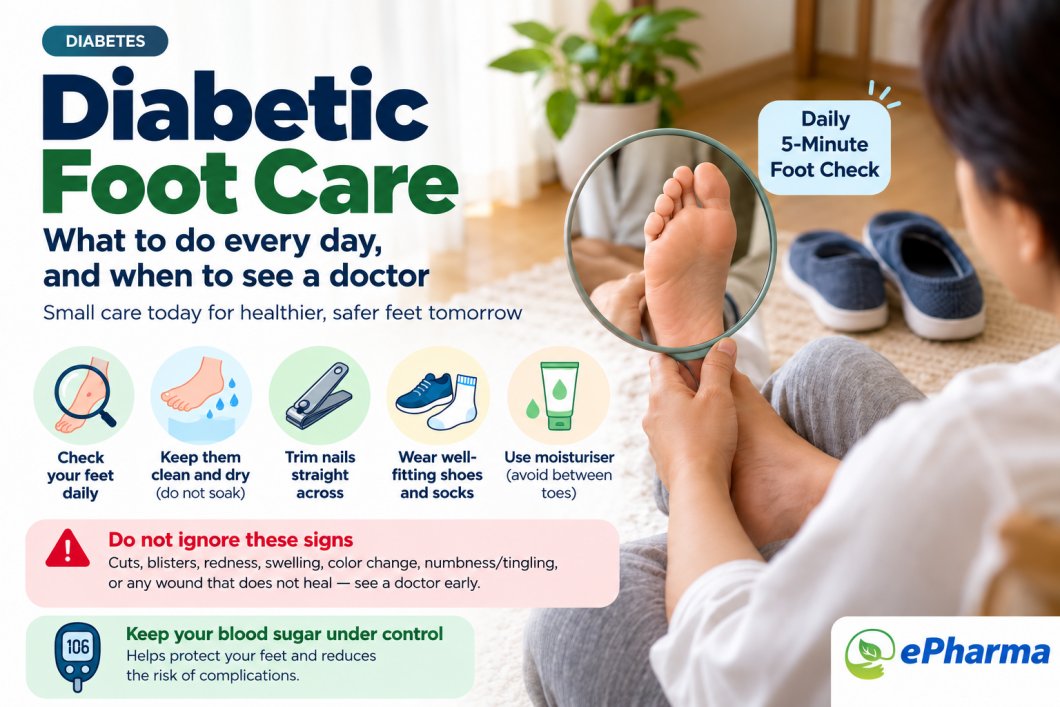
Quick answer: The most important diabetic foot-care habits are simple: check the tops, soles, heels and between the toes every day, never walk barefoot—even indoors, and get medical advice promptly for a blister, cut, red or warm spot, swelling, colour change, or a wound that is not starting to heal. Wash with warm—not hot—water, dry carefully, keep moisturizer away from the spaces between the toes, trim nails straight across, and wear well-fitting shoes and socks. Do not soak the feet, cut corns yourself, or use heating pads or hot-water bottles.
Foot problems in diabetes often do not begin with pain. That is exactly why they can be missed. If nerve sensation is reduced, you may not feel a pebble in a shoe, a blister from new footwear, or a small cut. If circulation is also reduced, the injury may heal more slowly. So “it does not hurt” does not necessarily mean “it is safe.”
Why does diabetes affect the feet?
Over time, high blood glucose can damage peripheral nerves. This may cause burning, tingling, pain, or loss of sensation. Diabetes can also reduce blood flow to the legs and feet, making wounds harder to heal. NIDDK and WHO both identify neuropathy and poor circulation as major contributors to foot ulcers and serious lower-limb complications.
Bangladeshi physicians quoted in Prothom Alo and The Daily Star Bangla make the same practical point: nerve and blood-vessel damage can turn a small unnoticed injury into a much larger problem.
Your 5-minute daily foot check
A good time is when you remove your shoes at night or after washing. Sit in good light and use a small hand mirror if you cannot see the soles clearly.
- Look at the tops, soles, heels and between the toes
- Check for cuts, blisters, cracks, redness, swelling, colour change, nail problems or discharge
- Compare the temperature of both feet with the back of your hand; notice any unusually warm area
- Run a hand inside your shoes before putting them on to check for stones, folds or rough edges
- Do not wait until the next day if you find a new concerning change
NIDDK notes that a warm spot can sometimes be an early sign that a blister or ulcer is developing.
How to wash and dry your feet safely
- Use warm, not hot, water: if sensation is reduced, test the temperature with your hand or a bath thermometer first.
- Do not soak: CDC and NIDDK specifically advise people with diabetes not to soak their feet.
- Use a gentle cleanser if needed.
- Dry carefully: especially between the toes.
- Moisturize the tops and bottoms: but not between the toes.
How to trim toenails
Trim toenails straight across rather than cutting deeply into the corners, then smooth sharp edges with an emery board. If your eyesight is poor, your hands are unsteady, your nails are very thick or deformed, or you have previous ulcers or significant neuropathy, ask a healthcare professional for help.
Shoes and socks: everyday protection
- Wear well-fitting, comfortable shoes
- Break in new shoes gradually and check for rubbing or blisters
- Check inside shoes for stones, folds or rough seams before putting them on
- Do not walk barefoot or in socks alone, even at home
- Choose comfortable, low-friction, moisture-managing socks
- Avoid very tight elastic and footwear that squeezes the toes or creates pressure points
Where should moisturizer go?
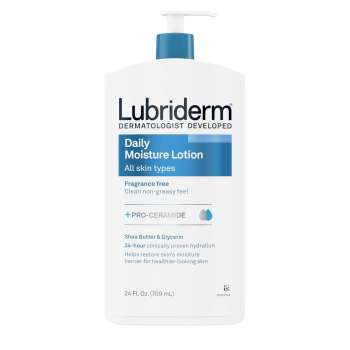
Dry cracked skin can create an entry point for infection. A fragrance-free moisturizer or simple emollient may be used on the tops and bottoms of the feet. Do not apply it between the toes, where extra moisture can increase the risk of fungal or bacterial infection.
Extra foot care in winter
Winter dryness can increase heel cracking. Keep the skin protected, but avoid direct heat from heating pads, electric blankets, room heaters placed close to the feet, or hot-water bottles. Neuropathy can make burns difficult to feel.
- Wear clean, dry socks
- Use a simple moisturizer or petrolatum-based emollient on dry heels, avoiding the spaces between the toes
- Do not soak the feet or use very hot water
- Do not trim cracks with a blade or razor
For broader seasonal skin care, see our Winter Skin Care guide, which also includes a separate diabetes foot-safety section.
Do not cut corns or calluses yourself
Corns and calluses can hide pressure injuries or ulcers underneath. Do not use blades, nail cutters, medicated corn plasters, or liquid corn removers. NIDDK warns that over-the-counter corn-removal products can damage the skin and increase infection risk, especially when sensation is reduced.
What is a diabetic foot ulcer?
A foot ulcer is an open sore or break in the skin that is not healing normally. It may occur at pressure points, under a callus, on a toe, or on the heel. With neuropathy, a significant ulcer may cause surprisingly little pain, which is why visual inspection matters.
What if one foot suddenly becomes red, hot and swollen?
A foot that becomes red, unusually warm, swollen, or starts changing shape—especially in someone with neuropathy—can be a warning sign of Charcot foot or serious infection. Seek prompt medical assessment even if pain is mild, and avoid unnecessary pressure on that foot until it has been assessed.
🚨 When should you seek medical care promptly?
- a cut, blister, or bruise that is not beginning to heal after a few days
- redness, warmth, swelling, or increasing pain
- pus, discharge, bad smell, or other signs of infection
- dried blood inside a callus
- black, blue, or markedly discoloured skin
- new or worsening burning, tingling, or numbness
- a suddenly red, hot, swollen foot
- any new skin break if you have a history of ulcer, amputation, poor circulation, or severe sensory loss
Seek urgent care for severe infection, black tissue, rapidly spreading redness, fever with a foot wound, or if you feel seriously unwell.
Blood glucose, smoking and activity matter too
- Keep glucose within your individualized target: good diabetes management helps reduce progression of nerve and vascular complications.
- Do not smoke: smoking can further reduce blood flow to the feet.
- Stay active as advised: clinician-approved physical activity is part of overall diabetes and circulation care.
For home monitoring, see How to Use a Glucometer Correctly.
How often should a clinician examine your feet?
Daily self-checks are not a substitute for professional examination. Current 2026 American Diabetes Association guidance recommends at least an annual foot evaluation for everyone living with diabetes. If there is sensory loss, previous ulceration or amputation, or another high-risk foot problem, inspection may be needed more frequently—including at every visit in some cases.
Useful items to keep at home
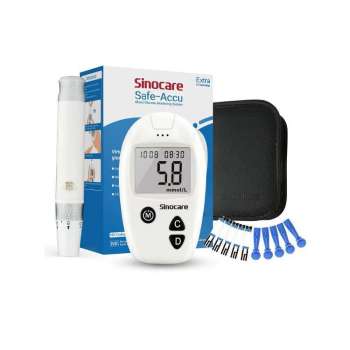
- glucometer, test strips and lancets
- a small hand mirror
- comfortable socks
- fragrance-free moisturizer or a simple emollient
- an emery board
- a bath thermometer if helpful
Avoid buying or using corn removers, medicated pads, wound creams, or antibiotics for a diabetic foot problem without professional advice.
Related reading
- How to Use a Glucometer Correctly
- Winter Skin Care: Dry Skin, Chapped Lips and Cracked Heels
- How to Measure Blood Pressure at Home
Frequently asked questions
What is diabetic foot?
It refers to foot problems caused or worsened by diabetes-related nerve damage and reduced circulation, increasing the risk of numbness, ulcers, infection, and delayed healing.
Why can foot wounds heal slowly in diabetes?
Reduced blood flow can slow healing, while neuropathy may allow repeated pressure or injury to continue unnoticed. Infection can delay healing further.
Can I walk barefoot at home?
No. CDC and NIDDK recommend protective footwear or slippers indoors as well as outdoors because small injuries may go unnoticed.
Can I soak my feet?
No. Wash in warm water and dry carefully, but avoid soaking.
How should I trim my toenails?
Trim straight across and smooth sharp edges with an emery board. If you cannot see or reach safely, ask for professional help.
Where should I put moisturizer?
Use it on the tops and bottoms of dry feet, but not between the toes.
Can I use a heating pad or hot-water bottle?
No. Reduced sensation can allow a burn to occur without you noticing it.
What should I do about burning, tingling, or numbness?
Tell your healthcare professional. These may be symptoms of peripheral neuropathy or circulation problems.
Can I cut a corn or callus myself?
No. Avoid blades and medicated corn-removal products; ask a clinician or podiatrist how it should be managed.
What does a red, hot, swollen foot mean?
It can signal Charcot foot, infection, or another serious problem. Seek prompt medical assessment even if pain is mild.
Sources
- U.S. NIDDK — Diabetes & Foot Problems
- U.S. CDC — Your Feet and Diabetes
- American Diabetes Association — 2026 guidance on diabetic peripheral neuropathy and foot evaluation
- World Health Organization — Diabetes Fact Sheet
- Prothom Alo — Dr. Rozana Rauf: diabetic foot care
- The Daily Star Bangla — Dr. Md. Joynul Abedin Deepu: foot care in diabetes
- Prothom Alo — Dr. A Hasnat Shaheen: winter foot care in diabetes
- Evercare Hospital Dhaka — Dr. Nazmul Islam: Diabetic Foot Care
Updated: 9 October 2026
Related Products