


✔ 100% Authentic Product
👁️ Viewed 293 times
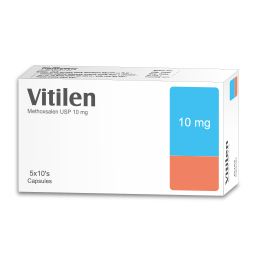
Vitilen 10mg Capsule
Vitilen is used to promote repigmentation in patients with idiopathic vitiligo. It is also indicated for the symptomatic management of severe, persistent, and disabling psoriasis that has not responded adequately to other treatment options and where the diagnosis has been confirmed by biopsy.
Vitilen should not be used in patients with:
- Hypersensitivity to psoralen compounds
- Photosensitive disorders such as:
- Lupus erythematosus
- Porphyria
- Erythropoietic protoporphyria
- Variegate porphyria
- Xeroderma pigmentosum
- Albinism
- Current or previous melanoma
- Invasive squamous cell carcinoma
- Aphakia (absence of the eye lens)
Discount Price: ৳ 95
MRP:
৳
100
5%
off

100% Genuine Products, Guaranteed

Safe & Secure Payments, Always

Fast, Secure & Efficient Delivery

Proper Packaging
 Cash on Delivery - All over Bangladesh
 Regular Delivery: 24-48 Hours, Dhaka City* Charge Tk.39-59
- Regular Delivery: 48-96 Hours, Other Cities* Charge Tk.99-125
 ফ্রি ডেলিভারিঃ - ১৪৯৯ টাকা+ অর্ডারে, ঢাকা
শহরে
ফ্রি ডেলিভারিঃ - ১৪৯৯ টাকা+ অর্ডারে, ঢাকা
শহরে- ফ্রি ডেলিভারিঃ - ৪৯৯৯ টাকা+ অর্ডারে, ঢাকার
বাহিরে
📲 মোবাইল অ্যাপ অর্ডারে সাশ্রয় বেশী
-
Google Play Store থেকে ডাউনলোড
-
Apple Store থেকে ডাউনলোড
100% Genuine Products, Guaranteed
Safe & Secure Payments, Always
Fast, Secure & Efficient Delivery
Proper Packaging
- Cash on Delivery - All over Bangladesh
- Regular Delivery: 24-48 Hours, Dhaka City* Charge Tk.39-59
- Regular Delivery: 48-96 Hours, Other Cities* Charge Tk.99-125
- ফ্রি ডেলিভারিঃ - ১৪৯৯ টাকা+ অর্ডারে, ঢাকা
শহরে
- ফ্রি ডেলিভারিঃ - ৪৯৯৯ টাকা+ অর্ডারে, ঢাকার
বাহিরে
- Google Play Store থেকে ডাউনলোড
- Apple Store থেকে ডাউনলোড
📲 মোবাইল অ্যাপ অর্ডারে সাশ্রয় বেশী
✅ Description:
Vitilen contains Methoxsalen, a photosensitizing agent that is used in combination with UVA light therapy (PUVA therapy). After oral administration, Methoxsalen enhances the skin’s sensitivity to UVA light (320–400 nm), allowing the treatment to stimulate skin pigmentation and manage certain skin disorders.
The medicine reaches peak blood levels within 1–3 hours and may remain active for up to 8 hours. It binds to serum albumin and is selectively absorbed by epidermal cells. Methoxsalen is rapidly metabolized, and approximately 95% is eliminated in the urine as metabolites within 24 hours.
Its exact mechanism is not fully understood, but upon activation by UVA light, Methoxsalen forms bonds with DNA, influencing cellular activity in melanocytes and keratinocytes, which contributes to repigmentation and therapeutic effects.
- Vitilen may increase blood concentrations of medicines metabolized by the CYP2A6 enzyme.
- Can enhance photosensitivity when used with other photosensitizing agents such as:
- Anthralin
- Coal tar preparations
- Nalidixic acid
- Other topical or systemic photosensitizers

Relevant Products
Same generic alternatives, ranked by customer interest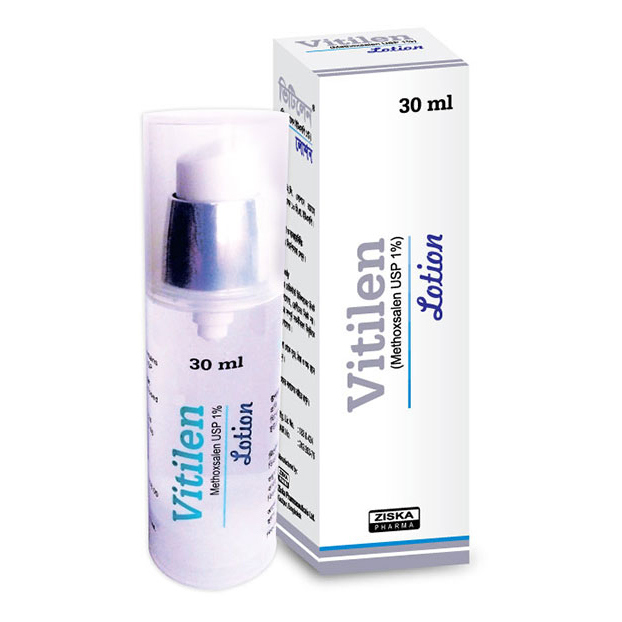
Vitilen 1% Lotion 30ml
More From Ziska Pharmaceuticals Ltd.
Popular products from this manufacturer/brand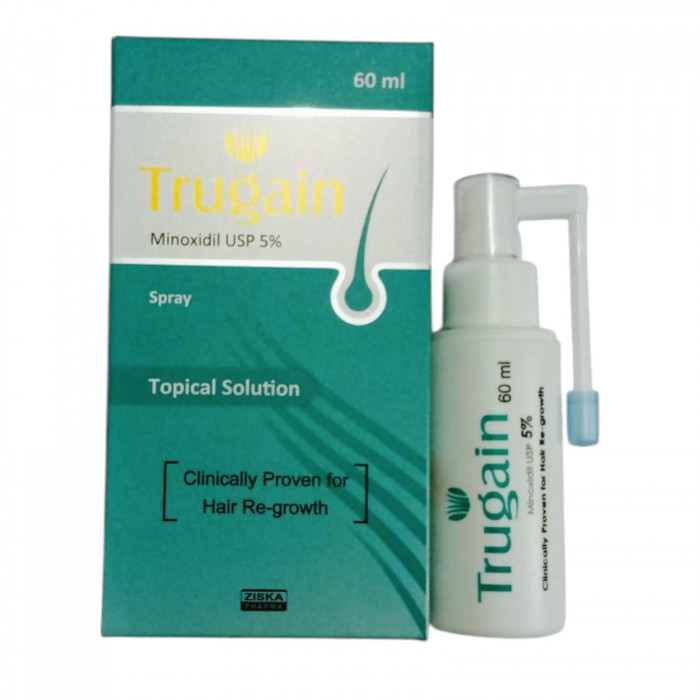
Trugain 5%
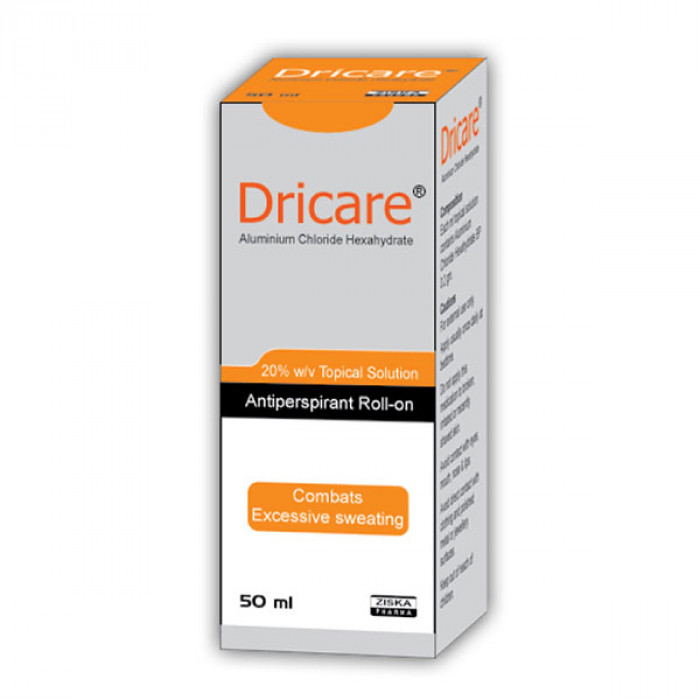
Dricare 20% Spray 50ml
Melatrin Cream 30gm
MM Kit
Dexilend 30mg Capsule
Freshlook Gel 10gm
Relaxo 25mg 10Pcs
Emurea 25% Cream 30gm
✔️ Dosage & Administration For Vitiligo
Vitiligo
- Take 20 mg (two 10 mg capsules) in a single dose with milk or food, 2–4 hours before exposure to UVA light or sunlight.
- Treatment should be given on alternate days only, never on two consecutive days.
Suggested sunlight exposure schedule:
| Session | Light Skin | Medium Skin | Dark Skin |
|---|---|---|---|
| 1st | 15 min | 20 min | 25 min |
| 2nd | 20 min | 25 min | 30 min |
| 3rd | 25 min | 30 min | 35 min |
| 4th | 30 min | 35 min | 40 min |
Further exposure should be increased gradually depending on skin response, redness, and tenderness.
✔️ Dosage & Administration For Psoriasis
Psoriasis
Capsules should be taken 2 hours before UVA exposure with food or milk.
| Body Weight | Dose |
|---|---|
| Less than 30 kg | 10 mg |
| 30–50 kg | 20 mg |
| 51–65 kg | 30 mg |
| 66–80 kg | 40 mg |
| 81–90 kg | 50 mg |
| 91–115 kg | 60 mg |
| More than 115 kg | 70 mg |
✔️ Side Effects
The most commonly reported adverse effect is nausea, affecting approximately 10% of patients. Taking the medication with food or milk may help reduce this effect.
Other possible side effects include:
- Nervousness
- Difficulty sleeping (insomnia)
- Mood changes or depression
✔️ Methoxsalen Lotion
The lotion should be applied by a healthcare professional to clearly defined vitiligo patches, followed by controlled UVA exposure. Initial exposure should be conservative and generally not exceed half of the minimal erythema dose. Treatments are usually given once weekly or less frequently, depending on the patient’s response.
Visible pigmentation may begin within a few weeks, but significant improvement often requires 6–9 months of treatment. Maintenance therapy may be necessary to preserve newly developed pigmentation.
Pediatric Use: Safety and effectiveness in children have not been established.
Administration Precautions
Individuals applying the lotion should wear gloves or finger protection to prevent accidental photosensitization and skin burns.
✔️ Overdose
In the event of an overdose, vomiting may be induced if appropriate, and the patient should remain in a dark environment for at least 24 hours to minimize the risk of severe photosensitivity reactions. This measure is most effective within the first few hours after ingestion.
✔️ Pregnancy & Lactation
Pregnancy: Classified as Pregnancy Category C. It should be used during pregnancy only if the potential benefits outweigh the possible risks.
Breastfeeding: It is unknown whether Methoxsalen passes into breast milk. Caution is advised when administering the medication to nursing mothers.
✔️ Precautions & Warnings
- Skin Burns: Severe burns may occur if recommended UVA or sunlight exposure guidelines are not strictly followed.
- Skin Cancer Risk: Long-term PUVA therapy may increase the risk of skin cancer, particularly in fair-skinned individuals or those with previous exposure to UV radiation, tar treatments, ionizing radiation, or arsenic.
- Eye Protection: Proper eye protection should be used during PUVA therapy to reduce the risk of cataracts.
- Patients should avoid sunbathing during the 24 hours before taking Vitilen and undergoing UV exposure.
✔️ Storage Condition
Store below 30°C, protected from light and moisture. Keep out of reach of children.
⚠️Disclaimer:
At ePharma, we’re committed to providing accurate and accessible health information. However, all content is intended for informational purposes only and should not replace medical advice from a qualified physician. Please consult your healthcare provider for personalized guidance. We aim to support, not substitute, the doctor-patient relationship.
📦Pricing Information, Availability:
Product Availability & Pricing Notice
Please note that pricing, availability, and service offerings are subject to change due to: Market fluctuations, Manufacturer or supplier adjustments, Product discontinuation or temporary unavailability, Advertising errors. All orders depend on stock availability and staff resources. If services are provided on a time-and-materials basis, any shared estimates are for planning purposes only.

Reliable
All products displayed on ePharma are procured from govt. approved pharmaceuticals and verified licensed pharmacies from 2016.

Secure
ePharma uses Secure Sockets Layer (SSL) 128-bit 🔒 encryption and is Payment Card Industry DataSecurity Standard (PCI DSS) compliant.

Affordable
Find affordable medicine substitutes, save up to 50% on health products, up to 30% off on doctor consultations.

Social
Providing health care services under the health and beauty category with more than 170K Facebook audience and 10M+ reach.







Get more features!
Download the app now
✓ Doctor consultation ✓ 24/7 helpline