


✔ 100% Authentic Product
👁️ Viewed 113 times
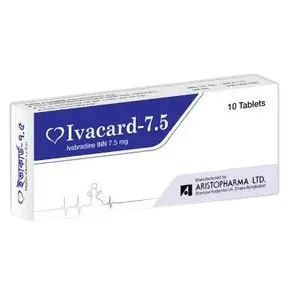
Ivacard 7.5mg Tablet 1 Strip
- Helps maintain an appropriate resting heart rate
- Reduces the heart's oxygen demand
- May improve symptoms associated with chronic heart failure
- Helps reduce episodes of stable angina
- May lower the risk of hospitalization in appropriately selected heart-failure patients
- If you miss a dose, skip it and take your next dose at the regularly scheduled time. Do not take an extra tablet or double the next dose to compensate for the missed dose.
Discount Price: ৳ 340
MRP:
৳
350
3%
off

100% Genuine Products, Guaranteed

Safe & Secure Payments, Always

Fast, Secure & Efficient Delivery

Proper Packaging
 Cash on Delivery - All over Bangladesh
 Regular Delivery: 24-48 Hours, Dhaka City* Charge Tk.39-59
- Regular Delivery: 48-96 Hours, Other Cities* Charge Tk.99-125
 ফ্রি ডেলিভারিঃ - ১৪৯৯ টাকা+ অর্ডারে, ঢাকা
শহরে
ফ্রি ডেলিভারিঃ - ১৪৯৯ টাকা+ অর্ডারে, ঢাকা
শহরে- ফ্রি ডেলিভারিঃ - ৪৯৯৯ টাকা+ অর্ডারে, ঢাকার
বাহিরে
📲 মোবাইল অ্যাপ অর্ডারে সাশ্রয় বেশী
-
Google Play Store থেকে ডাউনলোড
-
Apple Store থেকে ডাউনলোড
100% Genuine Products, Guaranteed
Safe & Secure Payments, Always
Fast, Secure & Efficient Delivery
Proper Packaging
- Cash on Delivery - All over Bangladesh
- Regular Delivery: 24-48 Hours, Dhaka City* Charge Tk.39-59
- Regular Delivery: 48-96 Hours, Other Cities* Charge Tk.99-125
- ফ্রি ডেলিভারিঃ - ১৪৯৯ টাকা+ অর্ডারে, ঢাকা
শহরে
- ফ্রি ডেলিভারিঃ - ৪৯৯৯ টাকা+ অর্ডারে, ঢাকার
বাহিরে
- Google Play Store থেকে ডাউনলোড
- Apple Store থেকে ডাউনলোড
📲 মোবাইল অ্যাপ অর্ডারে সাশ্রয় বেশী
✅ Description:
Ivacard 7.5 mg Tablet contains ivabradine, a prescription medicine that lowers the heart rate. It is used in appropriately selected patients with chronic stable angina and chronic heart failure. By slowing the heart rate, it reduces the heart's workload and oxygen requirement, allowing the heart to function more efficiently.
Ivacard 7.5 is generally taken twice daily with meals, preferably at consistent times each day. Do not stop the medicine or change the dose without consulting your doctor, even if you feel better.
- Take Ivacard 7.5 exactly as prescribed by your doctor.
- It is usually taken twice daily, once in the morning and once in the evening.
- Take each dose with food.
- Swallow the tablet whole with water. Do not crush or chew it unless specifically instructed.
- Take the medicine at approximately the same times every day.
- Do not change the dose or discontinue treatment without medical advice.
- Avoid grapefruit and grapefruit juice during treatment unless your doctor specifically advises otherwise.

Relevant Products
Same generic alternatives, ranked by customer interest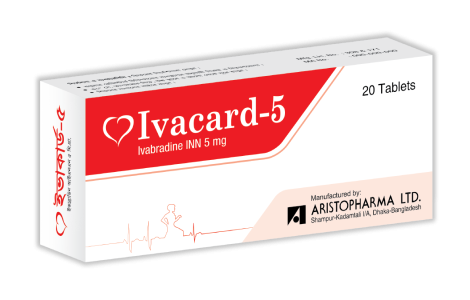
Ivacard 5mg Tablet 1 Strip
More From Aristopharma Limited
Popular products from this manufacturer/brand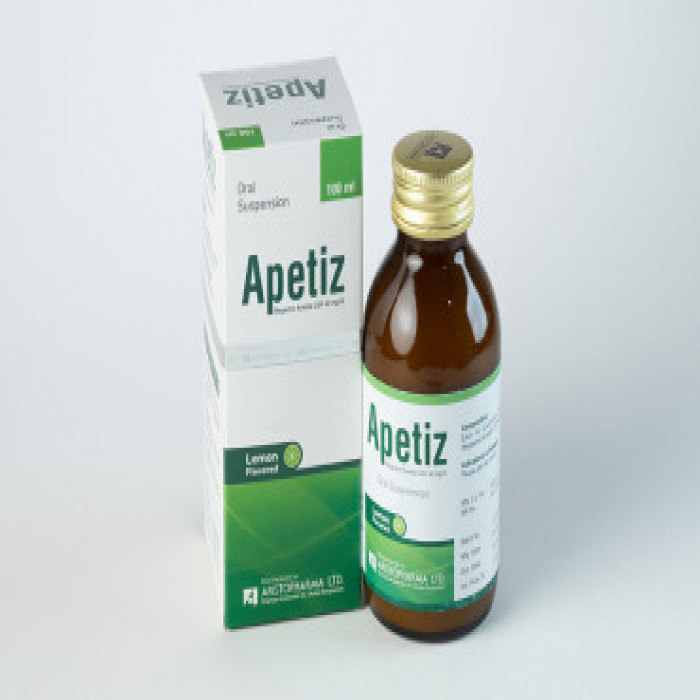
Apetiz Syrup 200ml
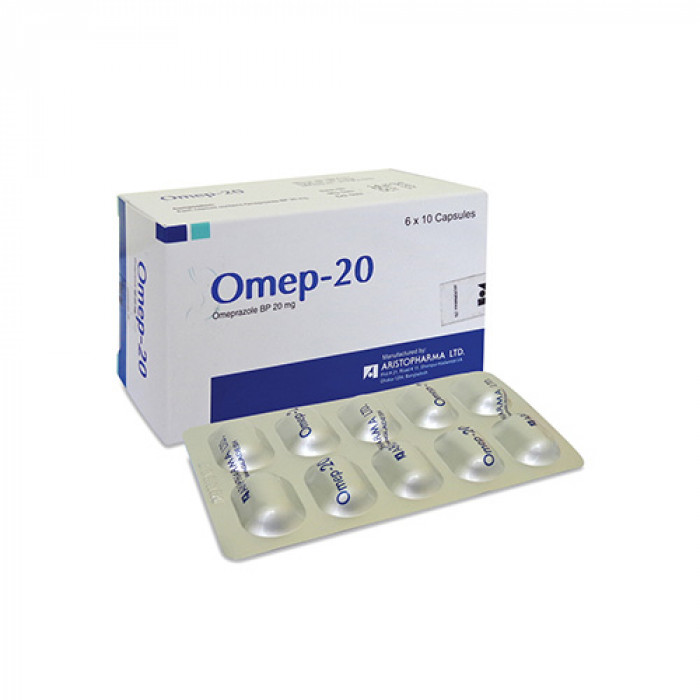
Omep 20mg Capsule 1 Strip
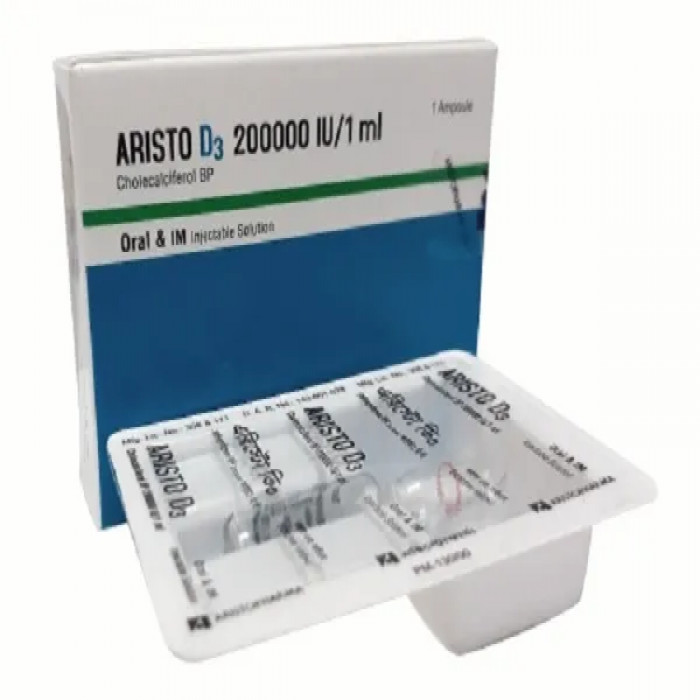
Aristo D3 200000 IU/1ml Injection
Goodbac 3S 4Billion Capsule 1 Strip
Audicare 0.3%+1%+0.025%+2% Ear Drops 10ml
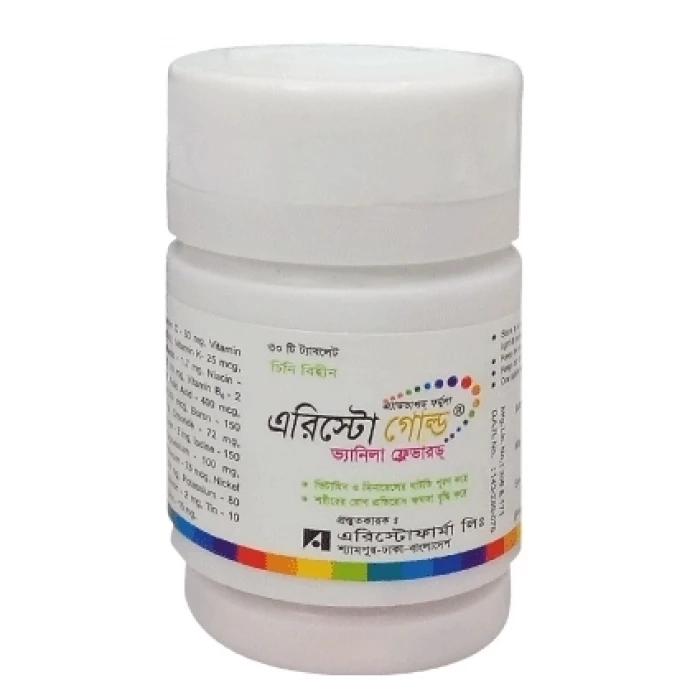
Aristo Gold Tablet (30pcs Pot)
Cutin 5mg Capsule 10pcs
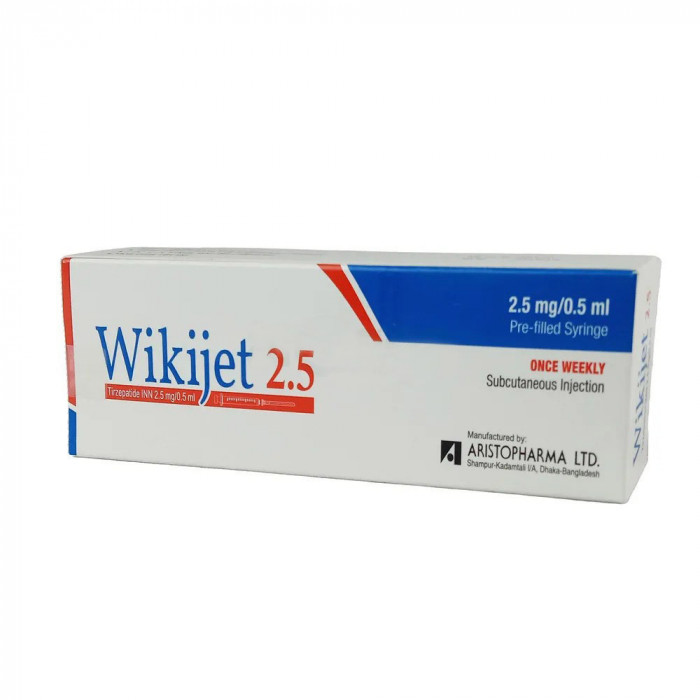
Wikijet 2.5mg/0.5ml Pre-Filled Syringe
কীভাবে অর্ডার করবেন?How to Order?
How to Orderওয়েবসাইট থেকে অর্ডার করার সহজ ভিডিও গাইড।
অ্যাপ থেকে অর্ডারের সহজ ভিডিও গাইড
অ্যাপ ডাউনলোডDownload ePharma App বিস্তারিত গাইড ›Detailed App Ordering Guide✔️ Uses of Ivacard 7.5 mg Tablet
- Chronic heart failure: Helps reduce the workload on the heart and, in eligible patients, may reduce the risk of hospitalization due to worsening heart failure.
- Stable angina: Reduces the heart's oxygen requirement and can help decrease the frequency of heart-related chest pain.
✔️ How Ivacard 7.5 mg Tablet Works
Ivabradine acts specifically on the sinoatrial (SA) node, the heart's natural pacemaker. It selectively inhibits the If (“funny”) current, an electrical current responsible for controlling the spontaneous activity of pacemaker cells.
By slowing the generation of electrical impulses in the sinoatrial node, Ivacard 7.5 reduces the heart rate. This gives the heart more time to fill with blood between beats and reduces its oxygen requirement and workload. Unlike some other medicines that slow the heart, ivabradine does not directly reduce the strength of heart-muscle contraction.
✔️ Words of Advice:
- Limit salt intake to help control fluid retention and reduce the workload on the heart.
- Avoid grapefruit and grapefruit juice.
- Monitor your resting pulse regularly if advised by your doctor.
- Follow your doctor's recommendations regarding daily fluid intake, particularly if you have heart failure.
- Engage in appropriate, gentle physical activity as recommended by your healthcare professional.
- Maintain a heart-healthy diet and follow prescribed treatment consistently.
- Limit alcohol, particularly if it causes or worsens dizziness.
✔️ Drug Interaction
Ivacard 7.5 should not be used in patients with:
- Hypersensitivity to ivabradine or any component of the formulation
- Resting heart rate below 60 bpm before starting treatment
- Severe hypotension
- Cardiogenic shock
- Acute myocardial infarction
- Severe hepatic impairment
- Sick sinus syndrome
- Sinoatrial block
- Unstable angina
- Third-degree AV block
- Pacemaker dependence
- Certain severe or recently worsened heart-failure conditions where ivabradine is contraindicated
- Pregnancy
- Breastfeeding
- Concomitant use of potent CYP3A4 inhibitors
✔️ Precautions & Warnings
- Check the resting heart rate before and during treatment.
- Ivacard 7.5 can cause bradycardia, which may present as dizziness, tiredness, weakness, or fainting.
- Patients with atrial fibrillation or other rhythm disorders that interfere with normal sinus-node function require careful monitoring.
- Use caution in patients with low blood pressure, moderate liver impairment, severe kidney impairment, congenital long-QT syndrome, or those receiving QT-prolonging medicines.
- Temporary changes in vision, such as increased brightness or flashes of light, may occur. Be particularly careful when driving at night or in environments with sudden changes in light.
- Avoid driving or operating machinery if dizziness or visual disturbances impair your ability to do so safely.
- Elderly patients should be monitored carefully because excessive slowing of the heart rate may increase the risk of dizziness and falls.
- Inform your doctor about all medicines you are taking before starting treatment.
✔️ Hepatic Impairment
- Mild hepatic impairment: generally no dose adjustment is required.
- Moderate hepatic impairment: use with caution.
- Severe hepatic impairment: contraindicated.
✔️ Children and Adolescents
The safety and effectiveness of ivabradine in children and adolescents have not been established. It should therefore not be used in this population unless specifically prescribed by an appropriate specialist.
✔️ Renal Impairment
Patients with severe renal impairment require medical supervision. No routine dose adjustment is generally required when creatinine clearance is above 15 mL/min, while limited data are available for patients with creatinine clearance below 15 mL/min.
✔️ Elderly Patients
For patients aged 75 years or older, treatment may be initiated at a lower dose, such as 2.5 mg twice daily, with subsequent adjustment according to response and tolerability.
✔️ Chronic Stable Angina
The usual starting dose is 5 mg twice daily with meals. Depending on the therapeutic response, the dose may be increased to 7.5 mg twice daily after approximately 3–4 weeks.
If the resting heart rate persistently falls below 50 beats/minute, or symptoms of bradycardia such as dizziness, weakness, or fatigue occur, the dose may need to be reduced to 2.5 mg twice daily. Treatment should be discontinued if the heart rate remains below 50 beats/minute or symptoms of bradycardia continue.
✔️ Chronic Heart Failure
The usual starting dose is 5 mg twice daily with meals. The dose is adjusted according to resting heart rate and tolerability.
- Heart rate >60 bpm: the dose may be increased gradually, up to 7.5 mg twice daily.
- Heart rate 50–60 bpm: generally maintain the current dose.
- Heart rate <50 bpm or symptoms of bradycardia: reduce the dose; treatment may need to be discontinued if symptoms persist despite the lowest dose.
✔️ Side Effects:
- Temporary visual brightness or flashes of light (phosphenes)
- Slow heart rate (bradycardia)
- Headache
- Dizziness
- Ventricular extra beats
- Increased blood pressure
- Changes in heart rhythm, including atrial fibrillation
- Blurred vision
- Increased blood creatinine may occur in some patients
✔️ Pregnancy & Breastfeeding
Pregnancy:
Ivacard 7.5 should not be used during pregnancy. Women who are pregnant, planning to become pregnant, or capable of becoming pregnant should consult their doctor regarding appropriate treatment and contraception.
Breastfeeding:
Breastfeeding is not recommended during treatment with ivabradine because the medicine may pass into breast milk. Consult your doctor about suitable alternatives.
✔️ Interaction
Drug Interactions
Strong CYP3A4 inhibitors:
Medicines such as certain azole antifungals, macrolide antibiotics, and HIV protease inhibitors can significantly increase ivabradine concentrations and may cause excessive slowing of the heart rate. These combinations are generally contraindicated.
Heart-rate-lowering medicines:
Combining ivabradine with other medicines that slow the heart rate can increase the risk of bradycardia. Particular caution is required with medicines such as beta-blockers and certain calcium-channel blockers.
Verapamil and diltiazem:
These medicines may increase ivabradine exposure and further reduce the heart rate; concomitant use is generally not recommended.
QT-prolonging medicines:
Medicines that prolong the QT interval may increase the risk of abnormal heart rhythms when combined with ivabradine, particularly because ivabradine lowers the heart rate. Appropriate medical monitoring is required if such combinations cannot be avoided.
CYP3A4 inducers:
Medicines such as rifampicin, phenytoin, barbiturates, and St John's wort may reduce ivabradine concentrations and decrease its effectiveness.
Drug-Food Interaction
Grapefruit and grapefruit juice should be avoided, as they can increase ivabradine exposure and potentially increase the risk of excessive slowing of the heart rate.
✔️ Onset and Duration of Action
Ivabradine begins to exert its heart-rate-lowering effect relatively soon after administration, with effects generally extending over the dosing interval. Individual response varies, so the dose and treatment schedule should be determined by the prescribing physician.
✔️ Storage:
- Store at room temperature, generally between 20°C and 25°C.
- Keep the tablets in their original packaging to protect them from moisture and light.
- Keep out of reach of children.
- Do not use the medicine after its expiry date.
⚠️Disclaimer:
At ePharma, we’re committed to providing accurate and accessible health information. However, all content is intended for informational purposes only and should not replace medical advice from a qualified physician. Please consult your healthcare provider for personalized guidance. We aim to support, not substitute, the doctor-patient relationship.
📦Pricing Information, Availability:
Product Availability & Pricing Notice
Please note that pricing, availability, and service offerings are subject to change due to: Market fluctuations, Manufacturer or supplier adjustments, Product discontinuation or temporary unavailability, Advertising errors. All orders depend on stock availability and staff resources. If services are provided on a time-and-materials basis, any shared estimates are for planning purposes only.


Reliable
All products displayed on ePharma are procured from govt. approved pharmaceuticals and verified licensed pharmacies from 2016.

Secure
ePharma uses Secure Sockets Layer (SSL) 128-bit 🔒 encryption and is Payment Card Industry DataSecurity Standard (PCI DSS) compliant.

Affordable
Find affordable medicine substitutes, save up to 50% on health products, up to 30% off on doctor consultations.

Social
Providing health care services under the health and beauty category with more than 170K Facebook audience and 10M+ reach.







Get more features!
Download the app now
✓ Doctor consultation ✓ 24/7 helpline