


Hepatitis B Symptoms: HBsAg Positive, Tests and Vaccination
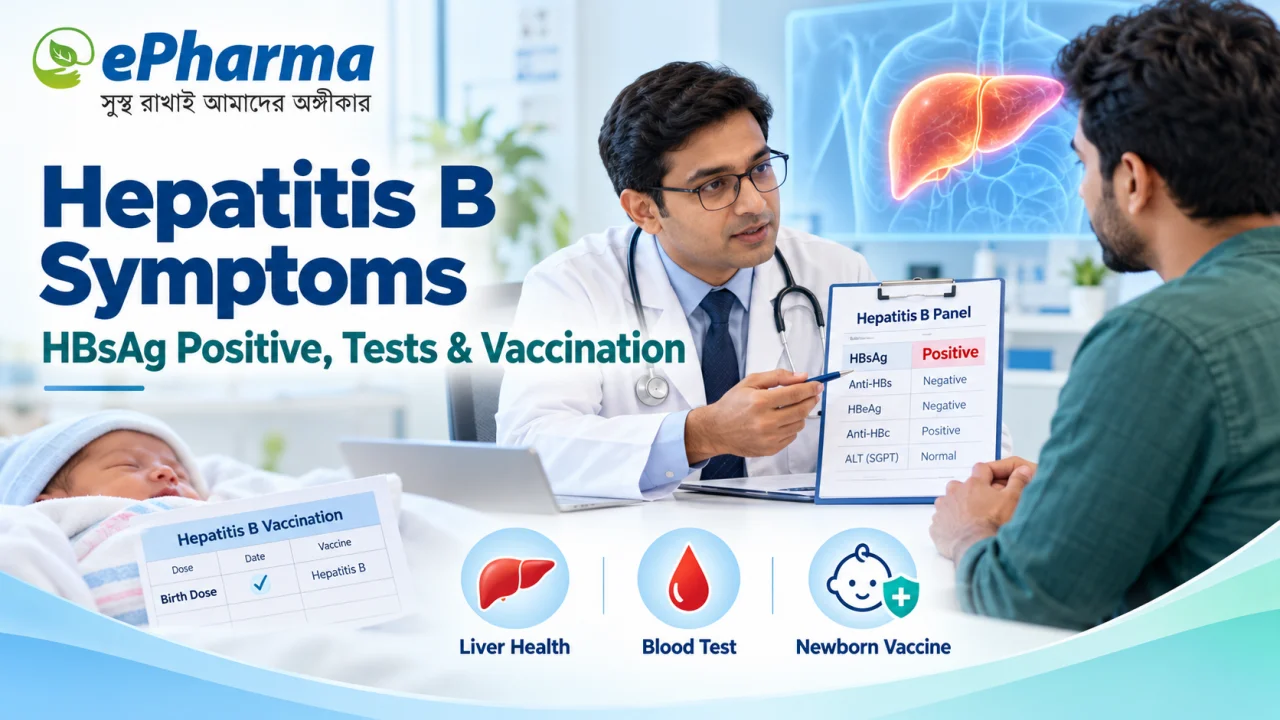
Hepatitis B symptoms, HBsAg positive results, follow-up tests, newborn vaccination and prevention during pregnancy.
A positive HBsAg result is not a verdict
A positive HBsAg result during a work or travel medical check may be worrying, even without symptoms. It usually indicates current HBV infection, not whether it is acute or chronic or how much liver damage exists. A clinician needs other tests and history before advising treatment.
Symptoms of hepatitis B
Acute hepatitis B can cause jaundice, dark urine, nausea, fever, abdominal pain or fatigue, although many people have no symptoms. Chronic infection may remain silent for years while increasing the risk of cirrhosis or liver cancer. Feeling well does not replace follow-up.
What tests follow HBsAg positivity?
CDC recommends an initial triple panel: HBsAg, anti-HBs and total anti-HBc. Depending on circumstances, a physician may order IgM anti-HBc, HBV DNA, ALT/AST, ultrasound and fibrosis tests. Persistent HBsAg for at least six months can indicate chronic infection. Never self-prescribe antiviral medicines.
How hepatitis B spreads—and does not
HBV spreads through infected blood and certain body fluids, including at birth, through unsafe needles or contaminated sharp objects, and during sexual contact. Avoid sharing razors and toothbrushes. It does not spread through hugs, shared meals, handshakes or ordinary social contact.
Why infection during infancy matters
WHO reports that fewer than 5% of infections acquired in adulthood become chronic, compared with roughly 95% of infections acquired in infancy or early childhood. This makes newborn prevention especially important.
What to do after a positive test
Arrange a liver-health assessment. Not everyone needs antiviral treatment, but eligible patients may require long-term therapy. Do not stop treatment on your own. Encourage sexual partners and household contacts to ask about testing and vaccination, avoid alcohol, and check before taking herbal or potentially liver-harming products.
Birth-dose vaccination and Bangladesh's EPI
WHO recommends a hepatitis B birth dose ideally within 24 hours, followed by the remaining scheduled doses. Earlier Bangladesh national strategy documentation describes pentavalent doses at 6, 10 and 14 weeks, but does not verify the birth-dose implementation status in October 2026. Confirm the birth plan and follow-up series with maternity and EPI services.
When a pregnant mother is HBsAg positive
HBsAg screening in pregnancy enables a safe birth plan. The care team may check HBV DNA and liver status; high viral load can require maternal prevention treatment. Discuss rapid newborn vaccination and HBIG when indicated and available. Hepatitis B vaccination is not generally contraindicated during pregnancy; decisions depend on infection and immunity status.
Employment, travel and stigma
Bangladeshi liver specialists have challenged blanket employment discrimination based solely on HBsAg status. However, specific visa, employer and occupational rules differ. Privacy and appropriate medical assessment matter; stigma has no place in care.
Understanding the figures
WHO estimated around 240 million people living with chronic HBV globally in 2024 and about 1.1 million deaths. A 2023 Bangladesh expert discussion cited a 5.1% prevalence estimate alongside other figures likely from different populations or periods. These should not be conflated into a verified 2026 national rate.
When to seek urgent care
Seek urgent care for severe jaundice, abdominal swelling, vomiting blood, black stools, confusion or abnormal drowsiness. Jaundice during pregnancy also needs prompt assessment.
Limits of the related products
Four condom products are shown as barrier options that may reduce sexual HBV transmission risk when used correctly. They do not guarantee full protection or replace vaccination, laboratory testing or treatment. No antivirals or unverified vaccination-booking services are promoted.
Hepatitis A and E · Fatty liver
Frequently asked questions
What does HBsAg positive mean?
Usually current infection; additional tests distinguish acute from chronic HBV.
Can HBV be silent?
Yes. Chronic infection often has no symptoms.
Should household members be vaccinated?
Review vaccination and screening history and seek clinical advice.
Does sharing food spread HBV?
No, not through normal social contact.
When should newborns be vaccinated?
WHO advises birth dose ideally within 24 hours.
What if the mother is positive?
Plan maternal assessment, newborn vaccination and HBIG where indicated.
Does everyone need antivirals?
No, treatment eligibility depends on clinical assessment.
Can HBV tests become negative?
Many acute adult infections clear; chronic cases need long-term follow-up.
Can someone work with HBV?
Often yes, though particular occupational and visa requirements vary.
Sources
Related Products