

Piles vs Anal Fissure: Symptoms, Causes, Treatment and When to See a Doctor
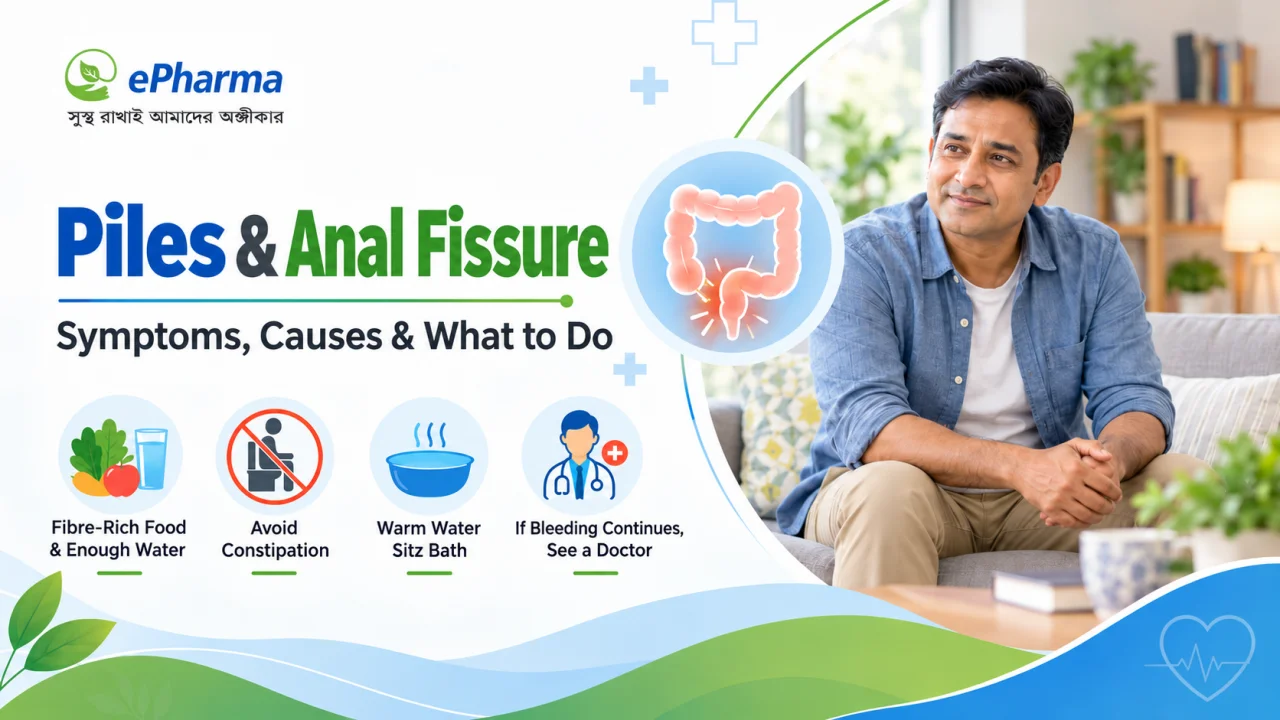
Rectal bleeding, pain or burning? Learn how piles and anal fissures differ, what you can do at home, when surgery may not be needed and when to seek medical care.
You notice bright red blood on the toilet paper. Or every bowel movement causes such sharp pain and burning that you start dreading the bathroom. Many people feel embarrassed talking about anal symptoms—even with a pharmacist or doctor—but piles and fissures are common problems, and delaying care because of shame can allow a simple problem to become more complicated.
The two conditions are often confused because both can cause bleeding. A useful rule of thumb is that piles often cause bleeding or swelling with less pain, while an anal fissure more typically causes sharp pain and burning during a bowel movement. But symptoms alone are not enough for a diagnosis, because rectal bleeding has other possible causes.
What are piles?
Piles, or haemorrhoids, are swollen blood vessels inside or around the anus. Bangladeshi surgeon Dr Reza Ahmed describes them in the same way, and NHS guidance notes that they can range from small swellings to larger lumps and may settle within a few days in some people.
Why do piles happen?
Colorectal surgeon Prof. Dr A.K.M. Fazlul Haque has noted that there is not always one clear cause. Risk increases when the anal area is repeatedly under pressure. Common contributors include:
- straining during bowel movements
- long-term constipation
- sitting on the toilet for a long time
- chronic diarrhoea
- overweight or obesity
- heavy lifting
- pregnancy
- increasing age
What are the symptoms of piles?
- bright red blood on stool or toilet paper
- itching or discomfort around the anus
- swelling or a small lump
- feeling that you still need to pass stool after finishing
- mucus or sticky discharge in some cases
- pain or tenderness, especially with external piles
Internal piles are often painless, so bleeding may be the main symptom.
What is an anal fissure?
An anal fissure is a small tear in the lining of the anus. The most typical symptom is sharp pain or burning during a bowel movement, and the pain may continue for some time afterwards. Bright red blood can also appear on the toilet paper or stool.
The source material is not completely consistent about causes. One Bangladeshi article mentions spicy/oily foods, while NHS guidance focuses on constipation, frequent diarrhoea, pregnancy/childbirth, inflammatory bowel disease and some infections. It is safer not to assume one single cause.
Piles vs fissure: what is the difference?
| Feature | Piles | Anal fissure |
|---|---|---|
| Pain | Often mild or absent with internal piles | Usually sharp pain/burning during bowel movements |
| Bleeding | Can cause bright red blood | Can cause bright red blood |
| Lump/swelling | May be present | Usually not the main feature |
| Pain after stool | Not always | May continue afterwards |
These are patterns, not a diagnosis. An examination may be needed to tell the difference safely.
Does rectal bleeding always mean piles?
No. This is the most important safety point in the article. Bleeding can also occur with fissures, infection, inflammatory bowel disease or colorectal disease. Dr Reza Ahmed's source warns that some pile symptoms can overlap with colorectal-cancer symptoms.
Do not assume “it is only piles” and keep using over-the-counter cream for months. Recurrent bleeding, a change in bowel habit or other warning symptoms deserve proper medical assessment.
What can you do at home?
1. Try a warm sitz bath
A Bangladeshi surgeon source recommends sitting in comfortably warm water for about 10–15 minutes, 2–3 times a day, to reduce pain, itching or discomfort.
2. Clean gently after bowel movements
Use lukewarm water or soft tissue and avoid vigorous rubbing. Keep the area clean and dry.
3. Avoid straining
Do not spend a long time sitting on the toilet or scrolling on your phone. Do not repeatedly ignore the urge to pass stool.
4. Improve fibre and fluid intake
Vegetables, fruit and other fibre-rich foods can help keep stool softer. Drink adequate fluid unless you have been told to restrict fluid because of kidney or heart disease.
Bangladeshi sources also mention psyllium husk in selected situations, but this article does not recommend a product or dose.
5. Keep moving and manage weight
Reduce prolonged sitting, stay physically active and work toward gradual weight control if needed.
Should you use pain medicine or creams on your own?
The source material mentions paracetamol and pharmacist-advised creams or laxatives, but the right option depends on your diagnosis, bleeding history and other medical conditions. Ask a doctor or pharmacist rather than using a cream, suppository or laxative for a long time without review.
This article does not recommend a piles cream, fissure ointment, suppository, laxative or “quick relief” medicine.
Can piles improve without surgery?
Yes, in many cases. Bangladeshi surgeon sources note that not everyone needs an operation, especially in early disease. Lifestyle changes, softer stools and symptom control may be enough for some people.
If symptoms do not settle, hospital-based non-surgical procedures such as banding or injection may be considered. Surgery may be needed for larger or persistent piles. Anal fissures also often improve with conservative care, while persistent cases may need other treatments decided by a specialist.
When should you see a doctor?
The sources differ on exact timing, so the safest practical approach is to seek medical review when you have:
- rectal bleeding
- a change in bowel habit
- recurrent pain or burning
- unusual swelling or a lump
- pus, fever or chills
- symptoms that do not improve with simple home care or keep returning
A colorectal surgeon or surgical specialist can assess anal symptoms. Do not hide symptoms out of embarrassment—history and examination are important for an accurate diagnosis.
When is it urgent?
Go to emergency care if:
- bleeding does not stop
- there is a large amount of blood or large clots
- pain is severe
- you have high fever, chills and feel very unwell
- you develop dizziness, fainting or marked weakness
NHS guidance treats heavy or non-stop bleeding and severe pain as urgent problems.
Common myths
- “Blood means piles.” Not always; other causes need to be considered.
- “Piles always need surgery.” No. Early disease often improves without an operation.
- “Piles and fissures are the same.” No. Fissures typically cause more pain and burning.
- “It is embarrassing, so I should ignore it.” Delay can make a simple problem harder to treat.
- “Once it improves, it will never come back.” Recurrence is possible, so constipation and straining still matter.
Frequently asked questions
What are piles?
Swollen blood vessels inside or around the anus.
What is an anal fissure?
A small tear in the anal lining that often causes sharp pain and burning during bowel movements.
What is the main difference between piles and fissures?
Piles often cause bleeding or swelling with less pain; fissures more typically cause severe pain or burning during stool passage.
Does rectal bleeding always mean piles?
No. Other conditions can cause bleeding, so medical assessment is important.
What can I do at home?
A warm sitz bath, gentle cleaning, adequate fibre and fluid, and avoiding straining may help.
Can piles improve without surgery?
Yes. Many early cases can be managed without surgery, depending on severity and symptoms.
When should I see a specialist?
Seek review for bleeding, bowel-habit change, recurrent symptoms, severe pain, pus or fever.
Which cream or medicine should I use?
Do not use long-term medicines or creams on your own. Ask a doctor or pharmacist.
Sources
- Dr Reza Ahmed — Prothom Alo, 24 September 2025.
- Prof. Dr A.K.M. Fazlul Haque — Daily Star Bangla, 16 June 2025.
- Prof. Dr A.K.M. Fazlul Haque — Jugantor, 7 October 2022.
- Dr Himel Biswas — Prothom Alo, 20 April 2025.
- Ittefaq — Alliance Hospital discussion report, 4 December 2025.
- NHS — Piles (haemorrhoids).
- NHS — Anal fissure.
This article is for general health information and does not replace medical assessment. Do not self-diagnose persistent anal bleeding or pain and manage it indefinitely with medicines or creams. Seek urgent care for heavy/non-stop bleeding or severe pain.