Taking Gastric Medicine Long Term: PPI Risks and When to Stop
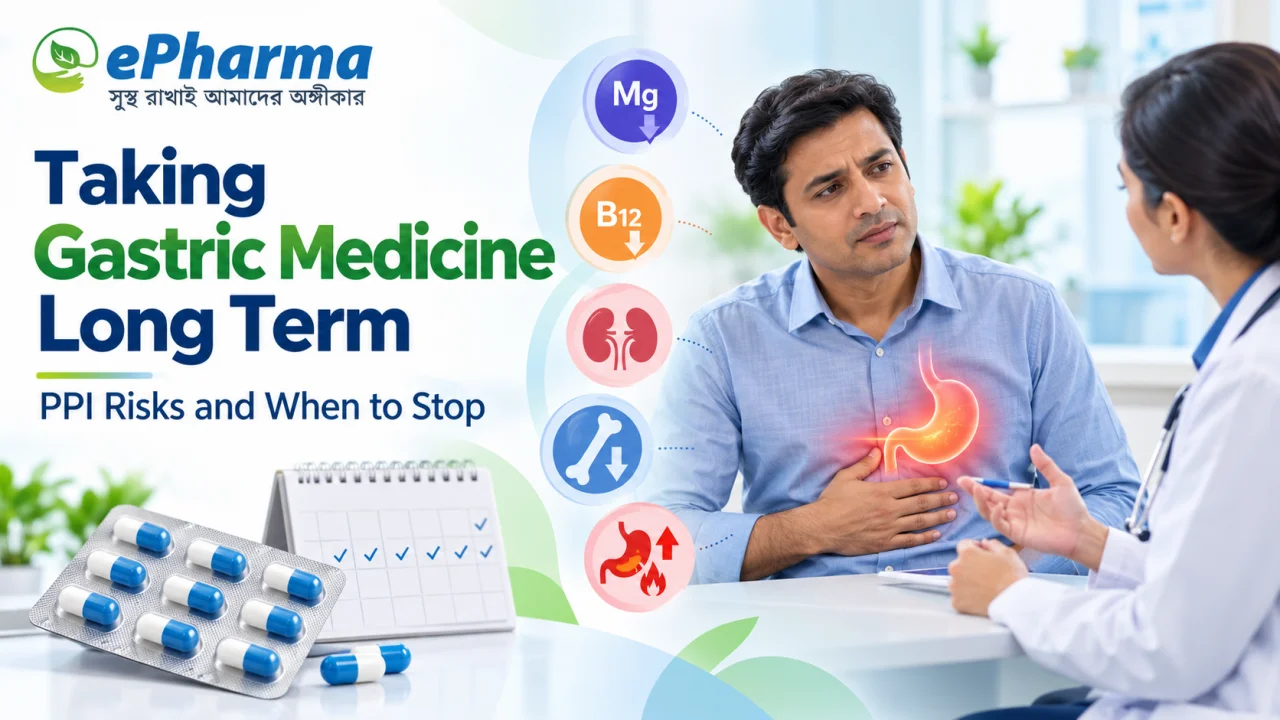
Understand long-term PPI safety, magnesium and B12 concerns, kidney risk evidence, rebound acidity and when to review or stop treatment.
One capsule every morning—do you still need it?
A prescription for heartburn helped years ago. Since then, taking a “gastric medicine” each morning has become routine. But has anyone recently reviewed why it was started?
Proton pump inhibitors (PPIs) are effective, generally safe medicines when they treat a genuine condition. Problems arise when they continue indefinitely without a clear indication. Equally, abruptly stopping a clinically necessary PPI out of fear is not sensible. The goal is review, not alarm.
Not every ‘gastric medicine’ is the same
| Class | What it does | Typical role |
|---|---|---|
| Antacids and alginates | Neutralize acid or help relieve reflux symptoms | Short-term symptom relief |
| H2 blockers, such as famotidine | Reduce acid secretion | Selected reflux symptoms |
| PPIs, such as omeprazole or pantoprazole | Strongly suppress stomach acid production | GERD, ulcers and other defined indications |
Most evidence about long-term side effects concerns PPIs; it should not automatically be applied to every type of acidity medicine.
Long-term PPI risks: what is established and what is uncertain?
An association in an observational study does not prove a drug caused the outcome. People who need long-term PPIs are often older or have other illnesses and medicines.
| Concern | What evidence supports |
|---|---|
| Low magnesium | A rare but recognized effect with prolonged exposure; tell a clinician about cramps, unusual weakness or palpitations |
| C. difficile and some intestinal infections | A safety signal supported by studies and regulatory warnings; persistent serious diarrhea requires care |
| Vitamin B12 deficiency | Long-term acid suppression may contribute to impaired absorption, especially with other risk factors |
| Fractures | Some studies report a modest increase; individual bone-health risk matters |
| Chronic kidney disease, dementia and cancer | Reported associations do not establish a reliable causal link |
A rare kidney inflammation called acute interstitial nephritis is a recognized adverse drug reaction; that is different from claiming that all chronic kidney disease is caused by PPIs. Decisions should consider the reason for treatment and the balance of benefits and risks.
How long can a PPI be taken safely?
There is no single maximum duration for every patient. ACG guidance commonly recommends an initial eight-week trial for uncomplicated classic reflux, followed by an assessment of whether therapy can stop or be used as needed if symptoms resolve.
Longer therapy may be necessary for severe erosive oesophagitis, oesophageal ulcers or strictures, Barrett’s oesophagus, or patients at substantial risk of upper gastrointestinal bleeding. A blanket rule that everyone must stop after two months is therefore misleading.
Why does heartburn return after stopping?
Some people experience temporary worsening of upper gastrointestinal symptoms after stopping prolonged PPI therapy, sometimes described as rebound acid hypersecretion. It does not necessarily mean the original disease has returned, though recurrence is also possible.
AGA’s 2022 best-practice advice allows clinicians to consider either tapering or abrupt discontinuation when deprescribing is appropriate. People with complicated reflux disease or high bleeding risk may not be candidates at all. Do not change a prescribed treatment without an individualized plan.
Five questions for a medication review
- What specific diagnosis justified my PPI?
- Do I have severe oesophagitis, ulcer complications or an important bleeding risk?
- Could the lowest effective dose or a different strategy work?
- Do my symptoms or risk factors justify checking magnesium, B12 or kidney function?
- What should I do if symptoms return, and when should we reassess?
The focus should be on confirming a continued indication, not stopping medication solely because a headline lists potential adverse events.
A note about clopidogrel
Patients taking clopidogrel after a heart event or stroke should tell their clinician which acid-suppressing medicine they use. Omeprazole can interfere with clopidogrel activation, and taking the medicines hours apart does not reliably prevent the interaction. Your prescriber can select an appropriate plan. Never independently discontinue clopidogrel.
Lifestyle steps that can help reflux
Identify your own food triggers rather than eliminating every spicy food automatically. If relevant, aim for healthy weight management, avoid large meals shortly before bed, and consider elevating the head of the bed for nighttime reflux. These changes may help, but they cannot replace necessary treatment for severe disease.
When to seek medical attention
Difficulty swallowing, unexpected weight loss, vomiting blood, black tar-like stool, recurring vomiting or unexplained anaemia warrant medical assessment. Exertional chest pain, shortness of breath or sweating should never be dismissed as acidity—seek emergency care.
Bottom line: PPIs can be extremely useful. If you have taken one for years without a recent review, ask your clinician whether it is still needed.
Frequently asked questions
What happens if you take a PPI for years?
There are recognized risks such as low magnesium and certain infections, plus associations with other conditions that do not all prove causation.
Is taking a gastric medicine daily safe?
It can be appropriate for specific medical conditions under review; indefinite self-medication without an indication is not advisable.
How long should reflux treatment last?
An initial course of about eight weeks is common for uncomplicated reflux, followed by reassessment; some conditions need long-term therapy.
Why does acid rebound after stopping?
Temporary rebound acid symptoms can occur, though the original disease can also recur.
Must PPIs always be tapered?
No. AGA guidance allows either a taper or an abrupt stop when deprescribing is appropriate for that patient.
Do PPIs cause kidney disease?
Rare acute interstitial nephritis is recognized; observational links with chronic kidney disease do not prove causation.
Can PPIs lower vitamin B12?
Long-term acid suppression may reduce absorption in some people, particularly with other risk factors.
Can omeprazole be taken with clopidogrel?
This interaction needs prescriber review; spacing the doses apart does not reliably avoid it.
References
- AGA 2022 PPI deprescribing guidance
- ACG guideline for GERD
- AGA personalized reflux management
- Medical Journal of Australia review
- FDA safety communications overview
- NHS Vitamin B12 deficiency causes
- Prothom Alo clinical discussion
- The Daily Star Bangla discussion
This guide is educational and not a substitute for individualized care. Do not stop or change prescribed medication without medical advice.
Related Products