Winter Dandruff & Hair Fall: Anti-Dandruff Shampoo Guide
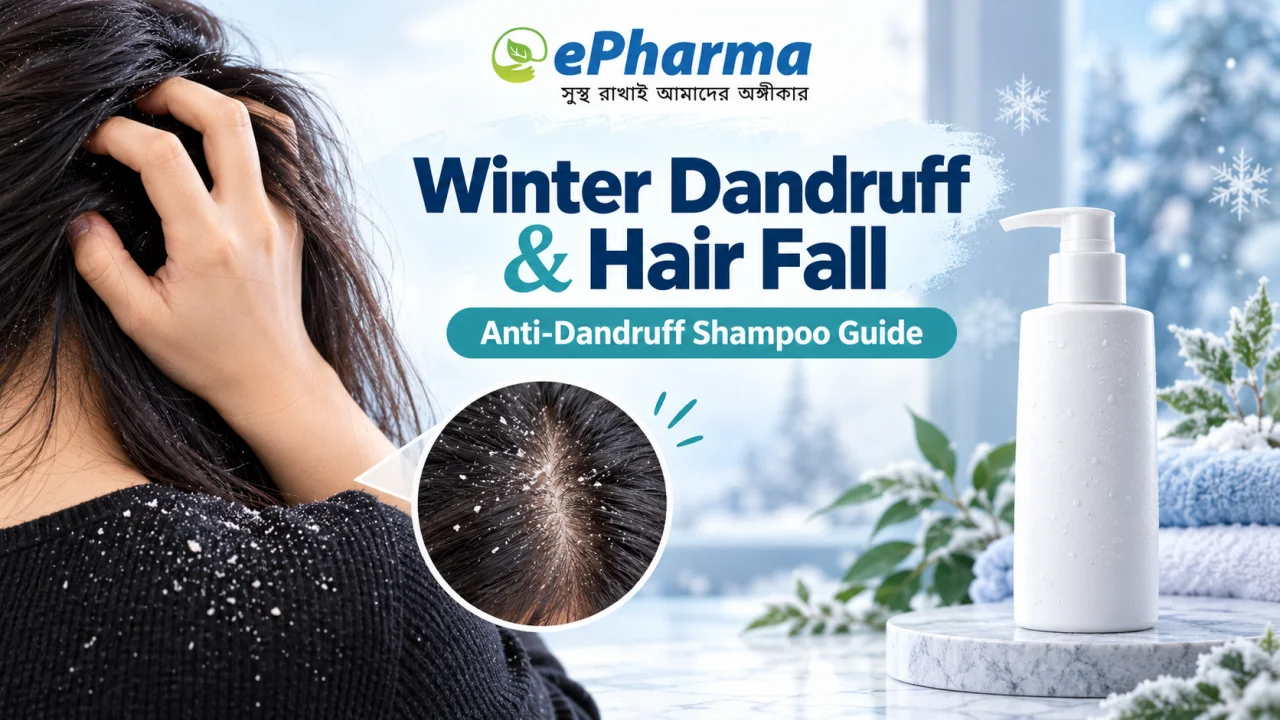
Learn why dandruff often worsens in winter, how anti-dandruff shampoo ingredients differ, how long to leave them on the scalp, and when hair shedding needs medical review.
Winter can make dandruff much more noticeable: flakes show up on dark clothes, the scalp feels itchy, and the amount of hair in the comb may seem alarming. The useful question is not simply which shampoo is best. It is which active ingredient fits your scalp, whether you are using it correctly, and whether the problem is really dandruff.
NHS guidance says dandruff is common, not contagious and not caused by poor hygiene. Cold weather and stress can make it worse.
Dandruff or another scalp condition?
| Condition | Typical clues | What to do |
|---|---|---|
| Dandruff | White/grey flakes with mild itching | Try an anti-dandruff shampoo |
| Seborrhoeic dermatitis | Greasy/yellow scales with redness | See a dermatologist if persistent |
| Psoriasis | Thicker silvery scale and well-defined red patches | Dermatology assessment |
| Ringworm | Round patches with broken hairs or patchy hair loss | Needs medical treatment |
| Contact dermatitis | Irritation after hair dye, spray, gel or another product | Stop the trigger and seek advice if needed |
Anti-dandruff shampoo ingredients
| Active ingredient | What it does | Use note |
|---|---|---|
| Ketoconazole | Antifungal | Use according to the label or clinician advice |
| Selenium sulfide | Helps control yeast and flaking | Rinse thoroughly |
| Zinc pyrithione | Common OTC anti-dandruff active | Often used for mild-to-moderate dandruff |
| Salicylic acid | Helps loosen scale | Conditioner may help if hair feels dry |
| Coal tar | Slows scalp-cell turnover | Follow label cautions |
AAD and NHS both note that if one active ingredient is not helping, another type may work better.
How to use anti-dandruff shampoo properly
- Wet your hair and apply the product mainly to the scalp.
- Massage gently with fingertips rather than scratching with nails.
- Do not rinse immediately. AAD notes that some dandruff shampoos may need to stay on the scalp for up to 5–10 minutes; follow the bottle instructions.
- Rinse thoroughly.
- If the hair feels dry, use conditioner mainly on the hair lengths.
- How often to use a medicated shampoo depends on the active ingredient and label directions.
- NHS advises giving treatment about 4 weeks to work before seeking medical review if symptoms persist.
Should you shampoo every day?
Frequency depends on scalp and hair type. Oily or fine/straight hair may need more frequent washing, while dry, curly or coily hair often needs less. The schedule for a gentle regular shampoo is not the same as for a medicated anti-dandruff shampoo.
What about scalp oiling?
Heavy oiling can make a greasy scalp feel worse for some people. If oil clearly increases itching or flakes, stop it. For dry hair lengths, conditioner after shampooing is a more predictable option.
Can dandruff cause hair fall?
Dandruff itself does not usually cause permanent baldness. Severe itching and repeated scratching can increase temporary shedding. Once scalp inflammation is controlled, that extra shedding may settle.
The American Academy of Dermatology says shedding around 50–100 hairs a day can be normal. A high fever, surgery, major illness or severe stress can trigger telogen effluvium a few months later, and hair fullness often recovers over time.
Winter scalp habits that help
- Use lukewarm rather than very hot water.
- Do not keep wet hair tightly tied or covered for long.
- Keep combs, towels and pillowcases clean.
- Avoid scratching the scalp with nails.
- Stop a new hair product if it clearly triggers irritation.
For OTC hair-care options, browse the ePharma Hair Care category. Choose by active ingredient and label directions rather than brand name alone.
When should you see a dermatologist?
- No improvement after about 4 weeks of anti-dandruff treatment
- A very itchy, red, swollen, painful or oozing scalp
- Flaky rash spreading to the face or other body areas
- Round patches with broken hair or bald spots
- Rapid thinning or hair coming out in clumps
Common myths
| Myth | What is more accurate |
|---|---|
| “Dandruff means poor hygiene.” | NHS says poor hygiene does not cause dandruff. |
| “Dandruff is contagious.” | Dandruff is not contagious; scalp ringworm is a different condition and can spread. |
| “Rinse the shampoo off immediately.” | Many medicated shampoos need contact time on the scalp. |
| “If it does not work in a week, it has failed.” | NHS advises trying treatment for about 4 weeks. |
| “Hair fall with dandruff means permanent baldness.” | Inflammation/scratching-related shedding can be temporary. |
Related ePharma health guides
Frequently asked questions
What is the best way to reduce dandruff?
Use an anti-dandruff shampoo with a suitable active ingredient, apply it to the scalp and follow the label contact time. NHS advises trying treatment for about 4 weeks.
Why does dandruff get worse in winter?
Cold weather and stress can make dandruff worse.
How long should dandruff shampoo stay on the scalp?
Follow the product label. AAD notes that some shampoos may need 5–10 minutes before rinsing.
How much hair shedding is normal?
AAD says about 50–100 hairs per day can be normal.
When should I see a dermatologist?
If dandruff persists after about 4 weeks, the scalp is red or swollen, the rash spreads, or you develop patchy hair loss.
This article is for general health information. Seek professional advice for severe, persistent or uncertain scalp symptoms.
Sources
- NHS — Dandruff.
- American Academy of Dermatology — How to treat dandruff; Hair shedding.
- NHS — How and when to use ketoconazole.
- Prothom Alo — dermatologist guidance on recurrent dandruff.
- bdnews24 — scalp dandruff and temporary hair shedding.
Related Products