

Panic Attack Symptoms: Panic or Heart Attack? When to Seek Help
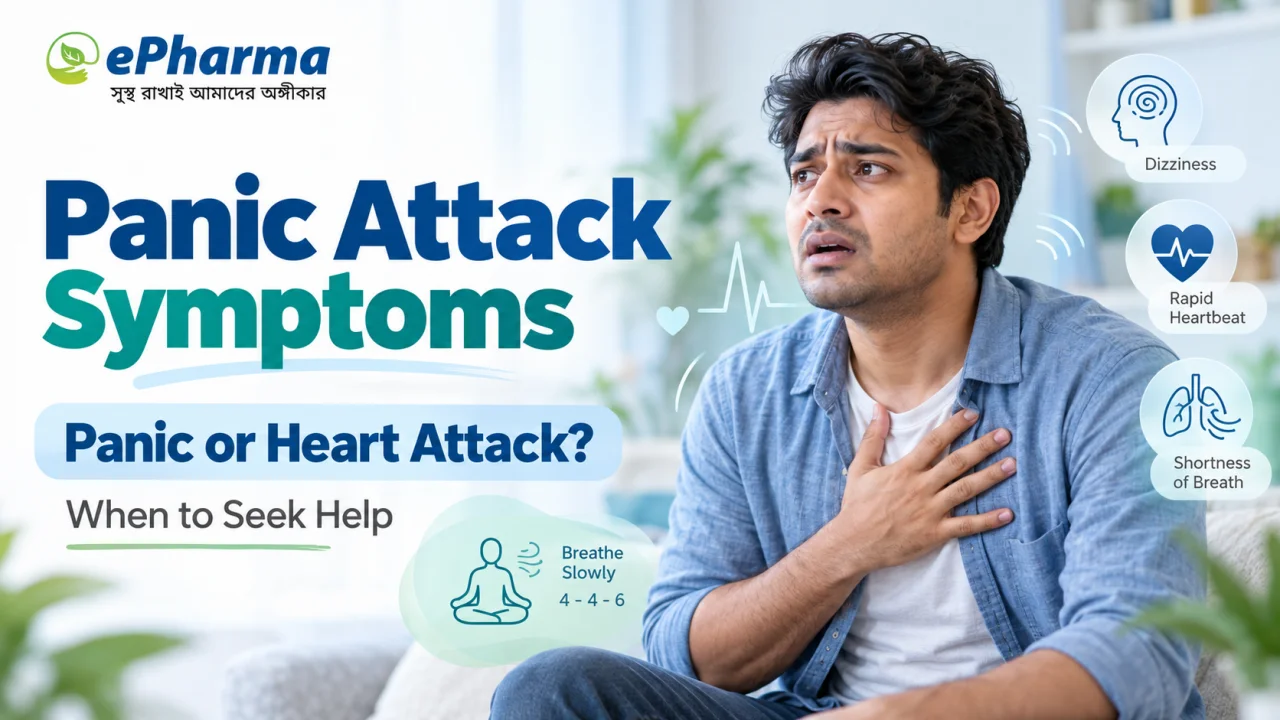
Panic attack symptoms, heart attack warning signs, calming breathing, grounding techniques and evidence-based panic disorder treatment.
When your heart suddenly starts racing
During a meeting, a fictional office worker suddenly develops palpitations, sweating and shortness of breath. It feels like something terrible is happening. Panic attacks can feel this way, but the same symptoms may signal cardiac or other medical conditions. Never assume new or severe chest pain is merely panic.
Panic attack versus panic disorder
A panic attack is a sudden surge of intense fear or discomfort accompanied by physical symptoms. Having one attack does not necessarily mean panic disorder. Clinicians consider panic disorder when recurrent unexpected attacks are followed by persistent worry or significant behaviour changes, commonly over a month.
Common symptoms
Symptoms may include racing heartbeat, shortness of breath, sweating, shaking, dizziness, chest discomfort, tingling, nausea, fear of losing control or fear of dying. Not everyone has every symptom. A first or unusual episode requires appropriate medical assessment.
How long does an attack last?
A Bangladeshi specialist describes many attacks settling over roughly 5–20 minutes, while HSE Ireland says most last 5–30 minutes. Duration varies, and it cannot establish the diagnosis. A heart problem is not ruled out just because discomfort fades.
Can you tell panic from a heart attack at home?
Panic and heart attack can overlap in chest discomfort, breathlessness, sweating and palpitations. Heart attacks may include pressure radiating to the arm, back, neck or jaw, but symptoms vary. Age, pain quality, a past panic diagnosis or one normal ECG cannot safely exclude a heart attack. Clinicians may need ECG, serial troponin and other evaluation.
When urgent help is needed
Get emergency medical help for new or unexplained chest pain or pressure, breathlessness, cold sweat, fainting or discomfort extending to the arm, jaw or back. Heart disease risk factors strengthen concern, but their absence does not guarantee safety. In Bangladesh call 999; do not drive yourself during a suspected cardiac emergency.
If a panic attack has been appropriately assessed
Once an appropriate evaluation indicates panic and there are no emergency warning signs, settle somewhere safe and try slow, gentle breathing. You may breathe in through the nose and out through the mouth while counting steadily to five. Resting a hand on the chest and another on the abdomen can help awareness. Avoid forced or rapid breathing; do not delay emergency assessment to try relaxation if cardiac warning signs are present.
A simple 5-4-3-2-1 grounding exercise
To reconnect with your surroundings, identify five things you can see, four sounds you can hear, three things you can feel, two smells and one taste. Take your time. It may help some people manage distress, but it is not a diagnostic test or emergency treatment.
How a companion can help
Stay calm, reduce crowding and ask what would help. Do not force breathing exercises or give sedatives without medical advice. Arrange urgent evaluation when symptoms could reflect a medical emergency.
Effective long-term treatment
Cognitive behavioural therapy (CBT), often including gradual exposure, is an evidence-based option. Some people benefit from prescribed medication. A qualified clinician should evaluate possible medical causes and agree on a treatment plan; do not start or stop psychiatric medicines independently.
Daily habits that may help
Regular sleep, meals and physical activity may help. Excess caffeine, nicotine and alcohol can worsen symptoms for some people. With appropriate professional guidance, gradual exposure may help reduce avoidance. Lifestyle changes complement rather than replace treatment.
Why related products were not added
No verified set of four or five appropriate over-the-counter products was identified. Blood-pressure monitors and pulse oximeters cannot distinguish panic from a heart attack, so they have not been presented as treatment or diagnostic solutions.
Related reading: Heart attack warning signs · Depression symptoms · Insomnia
Frequently asked questions
What are panic attack symptoms?
Sudden fear, palpitations, breathlessness, sweating, dizziness, tingling or chest discomfort.
How long does a panic attack last?
Often minutes, commonly 5–30, but duration cannot diagnose the cause.
Can I distinguish it from a heart attack?
Not reliably at home; seek urgent care for suspicious chest symptoms.
Does a normal ECG exclude heart attack?
No. Additional tests, sometimes serial troponin, may be needed.
How should I breathe?
Try gentle, slow breathing without forcing or hyperventilating.
What is grounding?
The 5-4-3-2-1 technique focuses on your senses.
When should I call 999?
For suspicious chest pain, severe breathlessness, fainting or cardiac warning signs.
How is panic disorder treated?
CBT and, when appropriate, prescribed medication.
Can coffee worsen panic?
High caffeine intake can aggravate symptoms for some people.