

Can't Sleep at Night? Insomnia Causes and 8 Better Sleep Habits
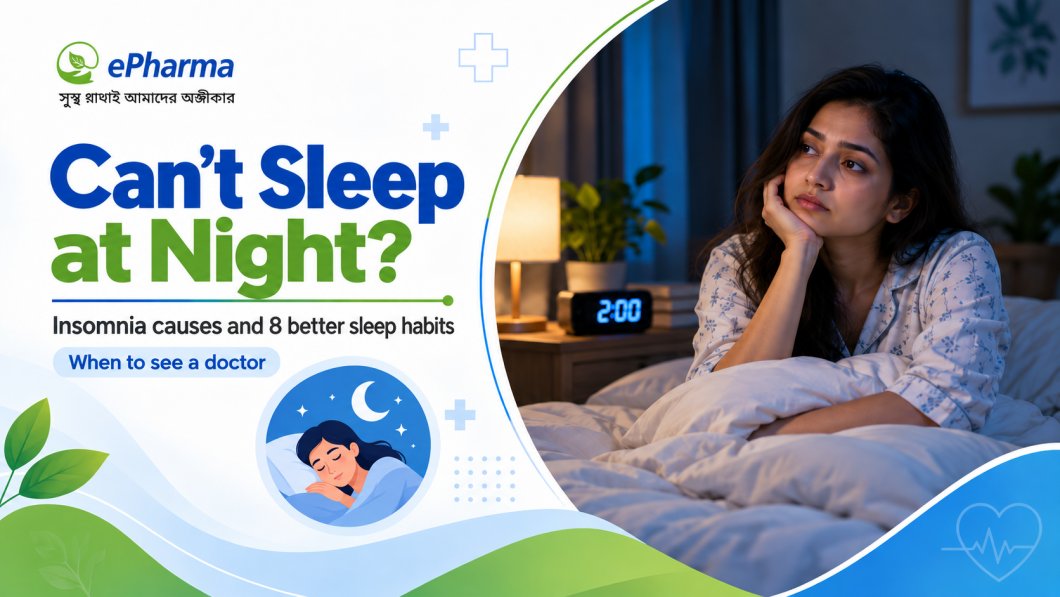
Understand insomnia triggers, eight practical sleep habits, sleeping-pill risks, CBT-I and when to speak with a doctor.
Quick answer
Trouble falling asleep, waking repeatedly, or waking too early can be signs of insomnia—especially when poor sleep affects how you feel or function during the day. Stress, irregular schedules, caffeine, a noisy bedroom, some medicines and medical conditions can all contribute. Start with a consistent wake-up time, a calming pre-bed routine and fewer late-day stimulants. If sleep problems persist, cause significant daytime difficulties or seem connected to breathing problems or low mood, speak with a healthcare professional. Do not start sleeping pills on your own.
It's 2 a.m. and sleep still won't come
You're tired, but your mind is racing. You look at the clock: If I fall asleep now, perhaps I'll get four hours. That calculation makes you more tense.
An occasional restless night happens to almost everyone. Insomnia is more than one difficult night: it involves repeated difficulty initiating or maintaining sleep despite having an opportunity to sleep, often with daytime consequences. In Bangladesh, Dr Mahbuba Shabnam, a physician at Green Life Medical College, has emphasised that persistent insomnia deserves attention rather than dismissal.
The encouraging part: effective help is available. A sleep routine can make a difference, and when insomnia becomes persistent, a structured treatment called cognitive behavioural therapy for insomnia (CBT-I) is usually the first-line approach.
How much sleep do adults need?
Most adults need about 7–9 hours each night, although individual requirements vary. Quality and regularity matter alongside duration. Feeling refreshed is helpful, but by itself does not prove that someone is getting enough sleep—especially if they routinely sleep too little.
Why might you struggle to sleep?
Common contributors include:
- Stress and anxiety: money, family, work or racing thoughts can make it hard to switch off.
- Low mood or depression: sleep can become shorter, broken or sometimes longer.
- Caffeine and nicotine: tea, coffee, energy drinks and tobacco may delay sleep.
- An irregular schedule: late nights, shift work and jet lag disturb the body clock.
- The sleep environment: noise, uncomfortable temperature, light and an unsuitable mattress.
- Physical health: pain, an overactive thyroid, hormonal changes, restless legs or obstructive sleep apnoea.
- Medicines and substances: certain treatments and alcohol can affect sleep.
Not all trouble sleeping is caused by a phone screen. If insomnia is recurring, finding the underlying cause matters.
Eight habits that can help you sleep better
1. Keep a steady wake-up time
Wake up at approximately the same time each day, including weekends. Go to bed when sleepy rather than forcing a rigid bedtime when you are wide awake. Get some daylight during the day to help keep your circadian rhythm regular.
2. If sleep won't come, stop struggling in bed
If you have been awake for roughly 20 minutes or feel increasingly frustrated, get up and do a quiet, low-light activity. Read a gentle book or listen to calm music, and return when sleepy. You do not need to watch the clock to count the minutes.
3. Put screens away before bedtime
Reduce bright screens and stimulating content during the last hour before bed, when practical. The problem is not only blue light: stressful messages, exciting videos and late-night scrolling can keep your mind alert.
4. Move caffeine earlier
Caffeine affects people differently and can last for hours. Try avoiding tea, coffee, energy drinks and other caffeine sources for at least six hours before your intended bedtime; if you are sensitive, allow longer. Avoid relying on alcohol to fall asleep—it often worsens sleep quality.
5. Exercise regularly, but choose your timing
Physical activity supports general health and can improve sleep. If vigorous exercise close to bedtime leaves you wired, move it earlier. Gentle stretching or relaxation may be suitable in the evening.
6. Make the bedroom comfortable
Keep it as dark, quiet and comfortable as you can. An eye mask or earplugs may help, provided they are safe and suitable for you. Use the bed mainly for sleep rather than hours of work or scrolling.
7. Watch daytime naps
Long or late naps can reduce your sleepiness at night. If you need a nap, keep it brief and earlier in the day. Naps are not a substitute for regularly adequate night-time sleep.
8. Give worries a place outside the bedroom
Before bed, write tomorrow's to-do list or a brief “worry list,” then set it aside. Try calming activities, gentle breathing exercises or reading. If distress feels unmanageable, professional support can help.
Try keeping a sleep diary for one or two weeks: when you went to bed, when you woke, caffeine use, naps and how you felt during the day. This can help a clinician understand patterns without making you obsess over every minute.
Should you take a sleeping pill?
Not without professional advice. Prescription hypnotics and over-the-counter sedating products can cause next-day drowsiness, falls, interactions and sometimes dependence. They do not necessarily resolve the cause of insomnia. Never mix sedatives with alcohol, and do not drive when drowsy.
If you already use a sleeping medicine regularly, speak with your prescriber before stopping or changing the dose; some medicines require a supervised taper. Avoid using antihistamines, melatonin, magnesium or herbal products as an assumed “natural cure” without checking suitability and interactions.
How is persistent insomnia treated?
A clinician may ask about your daily routine, stress, mood, snoring, medicines and medical history. They may investigate sleep apnoea, thyroid problems, chronic pain, depression or other conditions.
For chronic insomnia, CBT-I is a structured, evidence-based treatment that changes habits and thought patterns that perpetuate wakefulness. It is more than generic sleep hygiene and may include stimulus control, carefully guided sleep scheduling and cognitive strategies. It can be delivered in person or through suitable digital programmes with professional oversight. Sleeping medicines, when appropriate, are generally used selectively and for limited periods.
When should you see a doctor?
Book an assessment if:
- sleeplessness continues for weeks or months, despite sensible changes;
- it is affecting your work, mood, memory or relationships;
- you snore loudly, wake gasping or someone notices breathing pauses;
- you experience significant anxiety, depression or persistent pain;
- you are so sleepy that you might fall asleep while driving.
You do not need to wait three months to ask for help. Chronic insomnia is often defined by difficulty sleeping at least three nights a week for three months or longer, with daytime impairment, but earlier problems deserve attention too.
If you have thoughts of harming yourself or feel unable to stay safe, seek urgent in-person help at an emergency department or through local emergency services, and tell someone you trust.
Useful non-medicine items at home
An eye mask, earplugs and a simple alarm clock may help some people reduce light, noise and nighttime screen use. These are optional comfort aids—not insomnia treatments. ePharma does not recommend self-prescribing sleeping pills or supplements.
More from ePharma Health Blog
Frequently asked questions
What is insomnia?
Repeated difficulty falling or staying asleep, or waking too early, that affects daytime wellbeing despite an adequate opportunity to sleep.
How many hours should adults sleep?
Most adults need around 7–9 hours nightly, though personal needs vary.
What should I do if I cannot fall asleep?
If you feel frustrated and wide awake, leave the bed briefly for a quiet, low-light activity and return when sleepy.
Can I take sleeping pills without a prescription?
No. Sedating drugs can cause adverse effects, interactions and dependence. Seek professional advice.
When should I stop drinking coffee?
Avoid caffeine for at least six hours before bed, and earlier if you are especially sensitive.
Can phones keep me awake?
Bright light and stimulating content can both delay sleep; reducing screen time before bed may help.
Are daytime naps bad?
Not always, but long or late naps can make it harder to sleep at night.
Should I sleep late on weekends?
Keeping a reasonably steady wake-up time helps regulate the sleep–wake rhythm.
When should insomnia be evaluated?
Seek advice when it persists, affects daily life or accompanies mood or breathing symptoms—don't wait for a fixed three-month deadline.
What is the most effective treatment for chronic insomnia?
CBT-I is generally recommended as first-line treatment, with assessment and management of any underlying cause.
Sources
- NHS: Insomnia
- NHS Every Mind Matters: How to fall asleep faster and sleep better
- American College of Physicians: CBT-I for chronic insomnia
- Prothom Alo, Dr Mahbuba Shabnam, “যাঁদের ঘুমের সমস্যা আছে” (January 2022).
Updated: October 2026.