

Depression Symptoms: Sadness or Depression? When to Seek Help
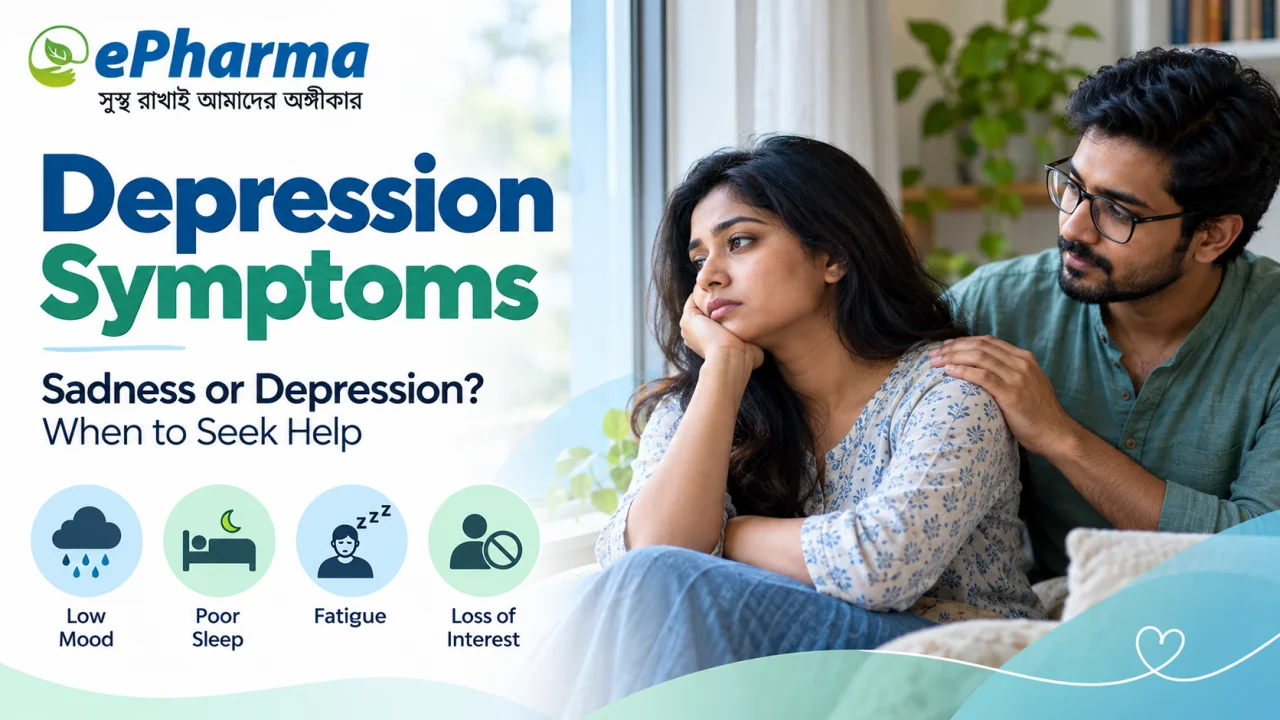
Recognize depression symptoms, the two-week warning, effective treatment, support for loved ones and mental-health helplines in Bangladesh.
When sadness becomes depression
Sadness is part of being human. Depression is different: persistent low mood or loss of interest can affect daily life, study, work and relationships. The WHO describes depressive episodes lasting most of the day, nearly every day, for at least two weeks. You do not need to wait two weeks to seek help when symptoms are severe or safety is at risk.
A quiet change people may miss
Consider a fictional university student who stops replying to friends, loses concentration and struggles to sleep. Relatives might mistake the changes for laziness. Such experiences illustrate why checking in gently matters more than assigning blame. A simple question—‘How can I support you?’—can help someone talk about what is happening.
Symptoms to recognise
Depression may involve ongoing sadness or emptiness, loss of pleasure, hopelessness, excessive guilt or low self-worth, difficulty concentrating and sometimes thoughts of death or suicide. Sleep and appetite may change, energy can fall, unexplained aches can occur, and someone may withdraw from others. Symptoms alone do not replace professional assessment.
Sadness versus a depressive episode
Everyday sadness often follows an event and may ease over time. Depression can persist, remove pleasure from usual activities and disrupt functioning. There is no single outward appearance or experience that fits everyone. Severity and impact matter alongside duration.
Why depression develops
Depression does not have one cause. Genetics, difficult life experiences, chronic stress, isolation, physical conditions and substance use can contribute. Sometimes there is no obvious trigger. It is not a failure of willpower, and supernatural explanations do not replace evidence-based care.
How common is depression?
The WHO's September 2026 fact sheet estimates depression in about 5.2% of adults worldwide, including 6.2% of women and 4.1% of men. These are global estimates, not a verified current Bangladesh prevalence figure.
When to seek professional help
Seek help if low mood or loss of interest lasts around two weeks, or sooner when daily functioning is significantly affected. A psychiatrist, clinical psychologist or other qualified provider can assess symptoms and consider physical illnesses or medicine effects that may resemble depression. Mention any periods of unusually high energy, reduced need for sleep or impulsive behaviour, because bipolar disorder requires different assessment and treatment.
Treatments that can help
Effective options include psychological therapies such as CBT, behavioural activation and interpersonal psychotherapy. Some people with moderate or severe depression benefit from medication as well as therapy; medication is not necessary for everyone. Antidepressants can take several weeks to help and may have adverse effects. Decisions about starting, changing or stopping them belong with a qualified prescriber.
Small steps that support recovery
Try manageable routines: talk to someone you trust, eat and sleep regularly when possible, take a short walk, reconnect with a small part of an activity you once enjoyed and avoid alcohol or illicit drugs. Self-care supports treatment; it does not replace care for significant depression. Recovery can take time.
How to support someone
Listen without judging or minimizing what the person says. Offer practical help with appointments and everyday tasks. If they mention suicide or self-harm, take it seriously, ask calmly about immediate safety and connect them with urgent professional help. Do not dismiss a warning as attention-seeking.
If there is an immediate safety concern
If someone might harm themselves soon, stay with them or arrange trusted support while seeking urgent help. In Bangladesh, call 999 or go to a nearby emergency department. For emotional support, Kaan Pete Roi can be reached at +880 9612-119911; its service is not 24/7, so use emergency care if it is unavailable.
Why there are no related products
Depression care should not be presented as a shopping list. No suitable selection of non-prescription retail products was verified for this article, so unrelated supplements, sleeping aids and prescription antidepressants have been deliberately excluded. Professional mental-health care matters more than product promotion.
Related reading: Sleep and insomnia · Mental wellbeing
Frequently asked questions
What are common depression symptoms?
Persistent low mood, loss of interest, sleep or appetite changes, fatigue, low self-worth and difficulty concentrating.
When should I seek help?
After roughly two weeks of persistent symptoms, or sooner if severe.
Are sadness and depression the same?
No. Depression can be persistent and substantially impair daily life.
Does depression treatment work?
Yes. Psychological therapies and sometimes medicines are effective.
Does everyone need antidepressants?
No. Treatment depends on severity and personal circumstances.
Can antidepressants be stopped suddenly?
Do not stop without discussing a plan with the prescriber.
Which professional can help?
A psychiatrist, clinical psychologist or qualified mental-health provider.
What if someone talks about suicide?
Take it seriously and seek emergency help if safety is at risk.
What is the Kaan Pete Roi number?
+880 9612-119911; service is not available around the clock.