

Winter Asthma and Allergies: Symptoms, Triggers and Prevention
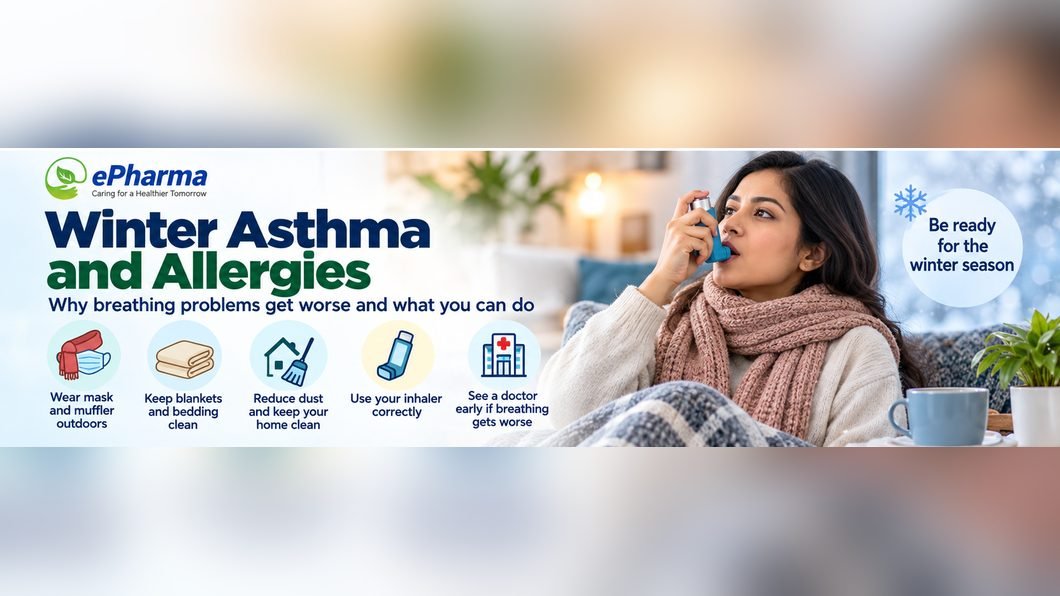
A practical winter guide to asthma and allergy triggers, inhaler technique, home preparation and emergency warning signs.
Quick answer
Cold, dry air, dust, indoor allergens, air pollution and respiratory viruses can make asthma and allergic rhinitis harder to manage during winter. Check that your prescribed inhalers are available and in date, review your written asthma action plan, clean stored bedding, avoid smoke and dusty air, and protect your nose and mouth on cold days. If breathing becomes severe, you struggle to speak, symptoms worsen rapidly, or prescribed reliever treatment is not helping, seek emergency medical care. Do not delay while checking a pulse oximeter.
Why winter can make breathing difficult
On a chilly morning, a lingering night-time cough, tight chest or wheeze can feel familiar to someone with asthma. Others notice repeated sneezing, a runny nose or itchy eyes when blankets come out of storage. Those symptoms have overlapping triggers, but they are not the same condition.
Cold, dry air
Breathing cold air can irritate sensitive airways and trigger coughing, chest tightness and wheezing. The NHS identifies cold air as a common asthma trigger. Covering the nose and mouth with a scarf when outside may help warm inhaled air.
Dust, smoke and pollution
In Bangladesh, winter can bring dusty roads and polluted air, especially around traffic and construction. Bangladeshi chest physician Prof. Dr. Mohammad Azizur Rahman has highlighted worsening air pollution as a seasonal problem for people with asthma. WHO also identifies smoke, air pollution and dust among asthma triggers.
Colds and flu
Respiratory viral infections can worsen existing asthma, even if the initial illness appears to be an ordinary cold. Ask your clinician which vaccinations are appropriate for you.
Dust mites and stored bedding
Dust mites thrive in bedding and fabrics. Dr. Saif Hossain Khan, writing about winter allergies in Bangladesh, draws attention to mattresses, pillows, blankets, carpets and curtains. Take stored blankets out early, clean them according to their care labels, and dry them completely before use.
Is it asthma, allergy or an infection?
| Symptom | Allergic rhinitis | Asthma |
|---|---|---|
| Sneezing, itchy nose, watery discharge | Common | May coexist |
| Itchy or watery eyes | Common | Less characteristic |
| Wheezing and chest tightness | Not typical on their own | Common |
| Shortness of breath | Not typical on its own | Important warning sign |
| Cough at night or early morning | Sometimes | Common |
| Fever or body aches | Usually absent | Usually suggest an infection rather than asthma or allergy alone |
These conditions can occur together. A fever does not rule out asthma; an infection may trigger an asthma flare. New wheezing, breathlessness or persistent symptoms deserve clinical assessment.
Five practical steps before winter begins
- Check prescribed medicines and devices. Confirm inhalers are in date and have enough doses. Never stop a preventer simply because you feel well.
- Review your asthma action plan. Ask your doctor or asthma nurse what to do if symptoms increase or the reliever is needed more often.
- Discuss vaccination. Ask about influenza and other vaccines recommended for your age and risk factors.
- Prepare bedding. Wash pillowcases, sheets and suitable blankets according to their labels; dry them thoroughly. Dust-mite-proof covers may help those with confirmed dust-mite allergy.
- Reduce indoor irritants. Wipe surfaces with a damp cloth, improve ventilation where outdoor air quality allows, and avoid smoking, incense or other indoor smoke.
Everyday winter habits that help
- Cover your mouth and nose with a scarf or suitable mask in cold or dusty weather.
- If early mornings trigger symptoms, choose a warmer time for walking or exercise, following your clinician's exercise advice.
- Keep bedding clean and address mould or dampness at home.
- Avoid cigarette smoke, burning rubbish and smoky cooking areas.
- Wash hands regularly and take precautions around people with respiratory infections.
- Keep your reliever accessible and follow your personalised action plan.
A mask can reduce some particulate exposure, but cannot replace prescribed asthma treatment.
Inhaler myths worth clearing up
An inhaler is not addictive. Asthma symptoms may return when effective treatment is stopped; that is not addiction. Inhaled corticosteroids can reduce airway inflammation and lower flare-up risk when prescribed appropriately, although they can have side effects. Discuss concerns with your clinician instead of stopping treatment.
A reliever inhaler and a preventer/controller serve different purposes. Some patients also have combination or anti-inflammatory reliever regimens. Your exact treatment depends on your prescription and written action plan.
How to use a pressurised metered-dose inhaler (pMDI)
This overview is for a standard pressurised metered-dose inhaler used without a spacer. Dry-powder and breath-actuated devices work differently. Follow your own device's instructions and ask a pharmacist to check your technique.
- Remove the cap and check that the mouthpiece is clean. Shake if your particular inhaler requires it.
- Breathe out gently, away from the mouthpiece.
- Seal your lips around the mouthpiece.
- Start a slow, steady breath in and press the canister once as you inhale.
- Continue breathing in slowly and deeply.
- Hold your breath for up to about 10 seconds if comfortable, then breathe out gently.
- Follow the prescribed instructions for any additional dose. If the inhaler contains a corticosteroid, rinse your mouth and spit out the water afterwards.
A compatible spacer often makes a pMDI easier to use and can improve drug delivery. Technique varies with the spacer and age of the user; ask a healthcare professional for a demonstration. Do not use these steps for a dry-powder inhaler.
When an asthma flare needs emergency help
An asthma attack may involve worsening wheeze, cough, tight chest, difficulty breathing or a rapidly rising need for reliever medication. Sit upright and follow your written asthma action plan. Get emergency medical help immediately if you cannot speak in full sentences, breathing is very difficult, you are becoming drowsy or confused, lips look blue or grey, symptoms are rapidly worsening, or reliever treatment does not help.
Do not wait for a pulse oximeter reading before seeking help. Pulse oximeters can be inaccurate and a reassuring number does not rule out serious illness.
Travelling during winter
Before travelling to Sylhet, Srimangal, Cox's Bazar or a cold hill area, check your symptoms and treatment plan with your clinician. Keep inhalers in hand luggage, carry sufficient supplies, dress appropriately and identify nearby healthcare facilities. Pay attention to cold air, smoke, strenuous activity and any altitude-related symptoms.
Children: asthma, cold or pneumonia?
A child's cough in winter is not always asthma. Fast breathing, the chest pulling inward, difficulty feeding or unusual drowsiness are warning signs needing prompt medical assessment. Read our guide to childhood pneumonia and winter cough.
Useful home-care items
A comfortable mask, scarf, approved spacer compatible with the prescribed inhaler, thermometer and—if clinically advised—a pulse oximeter may be useful. A nebuliser is not automatically better than an inhaler; a clinician should decide whether one is needed and which medicine or dose to use. Avoid starting prescription medicines on your own.
Related ePharma Health Blog guides
- How to Use a Pulse Oximeter
- Childhood Pneumonia: Warning Signs
- How to Measure Blood Pressure at Home
Frequently asked questions
Why does asthma often get worse in winter?
Cold air, polluted air, indoor dust allergens and respiratory viruses can trigger sensitive airways.
How should I prepare for winter if I have asthma?
Check inhalers, review your personal asthma action plan, discuss vaccines and reduce indoor triggers.
Can I walk outside on cold mornings?
Often yes if asthma is well controlled, but cover your nose and mouth and adjust timing or activity if cold air triggers symptoms.
Is sneezing and a blocked nose an allergy or a cold?
Allergy often causes itching and sneezing without fever; infection may include fever or body aches. They can overlap.
Are asthma inhalers addictive?
No. Recurring symptoms after stopping treatment do not indicate addiction.
Is every inhaler used the same way?
No. pMDIs, dry-powder and breath-actuated inhalers require different techniques; ask a pharmacist to demonstrate yours.
Would a spacer help?
A compatible spacer often helps with a pMDI, especially for children or people who struggle to coordinate pressing and breathing in.
When should I go to hospital?
Seek emergency care for severe or worsening breathlessness, inability to speak comfortably, confusion, bluish or greyish lips, or failure to improve with prescribed reliever treatment.
Can blankets trigger allergy?
Dust mites and accumulated dust in bedding can trigger symptoms; clean and dry stored bedding before use.
Can people with asthma travel to cold places?
Many can with well-controlled asthma and an appropriate plan. Discuss risks and preparation with your clinician if symptoms are frequent or severe.
Sources
- WHO: Asthma
- NHS: Asthma
- Asthma + Lung UK: Asthma attacks
- MedlinePlus: How to use an inhaler without a spacer
- Prothom Alo: articles by Prof. Dr. Mohammad Azizur Rahman (2022), Dr. Saif Hossain Khan (2026), Dr. Mohammad Azharul Islam (2023) and Dr. Aflatun Akter Jahan (2024).
Updated: October 2026.