Dengue vs Chikungunya: Key Differences, Joint Pain Duration and Tests
Fever gone but severe joint pain remains? Compare dengue and chikungunya symptoms, how long joint pain can last, which tests are used and when to seek urgent care.
The fever is gone, but your wrists, fingers, knees and ankles still hurt so much that walking feels difficult. That is when many people ask the same question: is this dengue or chikungunya?
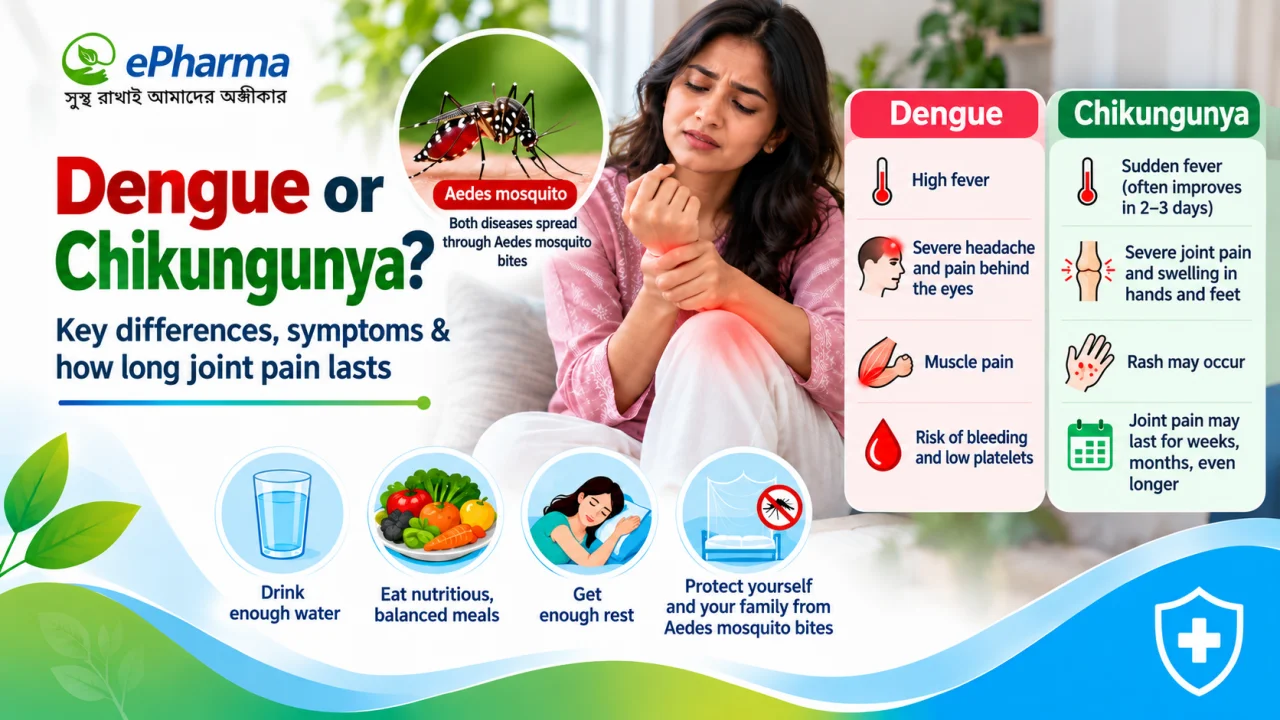
Both infections are spread by Aedes mosquitoes, and both can begin with sudden fever, body pain and rash. The overlap can be confusing. One practical clue is that chikungunya is more strongly associated with severe, sometimes swollen joint pain, while dengue requires close attention to warning signs—especially severe abdominal pain, persistent vomiting or bleeding after the fever starts to settle. Symptoms can suggest a pattern, but testing and clinical assessment are needed for a reliable diagnosis.
How does chikungunya usually begin?
Chikungunya is a mosquito-borne viral illness. WHO says symptoms usually begin 4–8 days after the bite of an infected Aedes mosquito, with a possible range of 2–12 days. The onset is often abrupt, with fever and severe joint pain. Joint swelling, muscle pain, headache, nausea, fatigue and rash can also occur.
Bangladeshi medicine specialist Emeritus Prof. Dr A B M Abdullah has described how the fever may settle within a few days while severe pain in multiple joints continues. The degree of joint pain is one reason chikungunya can be so disabling even after the fever improves.
Dengue vs chikungunya: key differences
| Feature | Dengue | Chikungunya |
|---|---|---|
| Mosquito | Aedes mosquitoes | Aedes mosquitoes |
| Typical symptom onset | About 4–10 days after infection | Usually 4–8 days, range 2–12 days |
| Fever | Often high; symptoms commonly last 2–7 days | Often sudden; fever may improve within a few days |
| Most prominent pain | Headache, pain behind the eyes, muscle and joint pain | Severe joint pain and stiffness are often prominent |
| Joint swelling | Can occur | More characteristic |
| Rash | Can occur | Can occur |
| Severe complications | Severe dengue can develop, often after fever improves | Severe disease is comparatively uncommon |
| After recovery | Fatigue may last for weeks | Joint pain may persist for weeks, months or longer |
The first few days can still look very similar. WHO notes that chikungunya can be mistaken for dengue or Zika because the symptoms overlap.
Which symptoms point more toward chikungunya?
Three simple questions can help you understand the pattern:
- Is joint pain the main problem? Severe pain in the wrists, fingers, ankles or knees can point more toward chikungunya.
- Are the joints swollen or particularly stiff in the morning? That is a familiar chikungunya pattern.
- Is there bleeding, severe abdominal pain or persistent vomiting? These are important dengue warning signs and need urgent assessment.
Dr Mushtaq Hossain has advised seeking medical care when fever does not improve within about three days. People who already have arthritis or chronic joint pain may also notice that old pain becomes much worse during chikungunya.
How long can chikungunya joint pain last?
WHO says joint pain is often short-lived, but in some people it can continue for weeks, months or even years. Most patients recover fully, but recovery is not identical for everyone.
Prof. Abdullah has said that many patients improve considerably within one to two weeks after the fever settles, while a smaller group has more prolonged pain. Persistent pain that interferes with walking, hand use or normal daily activities deserves medical review.
How can you manage joint pain at home?
1. Rest during the acute illness
Give your body time to recover while fever and pain are intense. Avoid heavy exercise and aggressive manipulation during the active phase.
2. Stay well hydrated
Water, oral rehydration solution and soups can help prevent dehydration. People with heart or kidney disease who have fluid restrictions should follow their clinician’s advice.
3. Warm or cold compress?
Bangladeshi specialist sources indicate that either may help depending on the degree of inflammation and personal comfort. Use gentle warmth or a cold compress rather than extreme temperatures.
4. Restart movement gradually
Once the fever has settled, gentle range-of-motion movement may help reduce stiffness. Stop if pain clearly worsens. Persistent limitation may benefit from a clinician or physiotherapist-guided plan.
What should you eat with chikungunya?
There is no specific food proven to cure chikungunya. Focus on hydration and simple, balanced meals:
- water, soup and oral rehydration fluids
- eggs, fish, lentils and other protein sources
- fruit and vegetables
- foods that are easy for you to tolerate
A restrictive “detox” diet is unnecessary.
Which tests are used, and when?
| Timing | Dengue | Chikungunya |
|---|---|---|
| First week of illness | NS1 antigen or other virus-detection testing; CBC when clinically indicated | RT-PCR can detect the virus |
| After the first week | Antibody testing may be used depending on clinical context | Antibody/IgM testing becomes useful |
WHO states that chikungunya virus can be detected with RT-PCR during the first week, while antibody tests are used later. It is important not to assume chikungunya and ignore dengue, because the pain-medicine safety advice changes if dengue is still possible.
For dengue platelet questions, see Dengue Platelet Count: What to Do When It Drops.
The most important pain-medicine safety rule
Do not self-medicate aggressively while dengue has not been ruled out. WHO recommends paracetamol/acetaminophen for fever and pain and advises avoiding aspirin, ibuprofen and other NSAIDs until dengue is excluded, because they can increase bleeding risk in dengue.
Prof. Abdullah has similarly advised against taking other pain medicines without medical guidance. This article does not provide dosing instructions or recommend prescription painkillers, steroids, muscle relaxants or antibiotics.
When should you see a doctor?
Arrange medical review if:
- fever is not improving after about three days
- joint pain is severe or stops normal daily activity
- joint pain or stiffness continues for several weeks
- the patient is older, pregnant, or has heart, kidney or other serious chronic disease
- symptoms are clearly worsening
When should you go to hospital urgently?
WHO lists the following severe dengue warning signs, often appearing after the fever has gone down:
- severe abdominal pain
- persistent vomiting
- rapid breathing
- bleeding from the nose or gums
- blood in vomit or stool
- restlessness or marked weakness
- excessive thirst
- pale or cold skin
Severe chikungunya is uncommon, but eye, heart and neurological complications can occur. Seek urgent care for vision problems, chest pain or palpitations, confusion or seizures.
The same mosquito means the same prevention priorities
- empty standing water at least once a week
- use mosquito protection during the day as well as at night
- wear long sleeves and use window/door screens where practical
- follow label directions when using mosquito repellent
- during the first week of illness, avoid mosquito bites so mosquitoes do not pick up the virus and spread it to others
Common myths
- “The fever is gone, so the danger is over.” Dengue warning signs may appear after the fever settles.
- “Joint pain automatically means chikungunya.” Dengue can also cause joint pain; testing and assessment matter.
- “Severe pain means I should take a strong painkiller.” NSAIDs may increase bleeding risk if dengue has not been excluded.
- “Chikungunya joint pain always lasts forever.” Most people recover, although some have prolonged pain.
- “Once I have had dengue, I cannot get it again.” Dengue reinfection can occur, and repeat infection may carry greater risk of severe disease.
Frequently asked questions
What is the main difference between dengue and chikungunya?
Severe joint pain and swelling are more characteristic of chikungunya, while dengue requires close attention to warning signs such as abdominal pain, persistent vomiting and bleeding after fever improves.
How long does chikungunya joint pain last?
It may settle within days, but WHO says some people have pain for weeks, months or even longer.
Is chikungunya as dangerous as dengue?
Severe chikungunya is less common, but newborns, older adults and people with underlying conditions are more vulnerable. Severe dengue has a greater risk of bleeding and shock.
Which test confirms chikungunya?
RT-PCR is useful during the first week; antibody testing is used later. Dengue testing may also be needed because the symptoms overlap.
Which painkiller is safest?
Until dengue is ruled out, WHO recommends paracetamol/acetaminophen and advises avoiding NSAIDs such as ibuprofen or aspirin. Follow clinician or label guidance for dosing.
Can dengue and chikungunya occur at the same time?
The same Aedes mosquito species can transmit both viruses. Because symptoms overlap, dengue warning signs should never be ignored.
Warm or cold compress?
Either may help depending on inflammation and comfort. Use gentle temperatures and stop if symptoms worsen.
What should I eat?
Stay hydrated and choose simple balanced foods with protein, fruit and vegetables. No specific food has been proven to cure chikungunya.
Can chikungunya happen twice?
WHO says available evidence suggests reinfection is unlikely after recovery, although research continues.
When should I go to hospital?
Seek urgent care for severe abdominal pain, persistent vomiting, bleeding, rapid breathing, marked weakness or pale/cold skin.
Related reading
- Dengue Platelet Count: When Is It Dangerous?
- Weakness After Dengue: Recovery Time and Warning Signs
- Joint Pain in Winter: Why It Feels Worse and What Can Help
Sources
- Emeritus Prof. Dr A B M Abdullah and Dr Mushtaq Hossain — Ittefaq, 24 August 2025.
- Dr Mohammad Ali — Prothom Alo, 11 September 2025.
- WHO — Chikungunya fact sheet, 14 April 2025.
- WHO — Dengue fact sheet, 21 August 2025.
This article is for general health information and does not replace diagnosis or personal medical care. Seek medical advice if dengue or chikungunya is suspected. Go to hospital urgently for severe abdominal pain, persistent vomiting, bleeding, breathing difficulty or marked weakness.
Related Products