

How to Use a Pulse Oximeter: SpO₂ Readings and Warning Signs
A clear home guide to using a pulse oximeter, reducing false readings, understanding oxygen saturation and recognizing urgent warning signs.
How to Use a Pulse Oximeter: Correct SpO₂ Readings and When to Seek Help
Quick answer
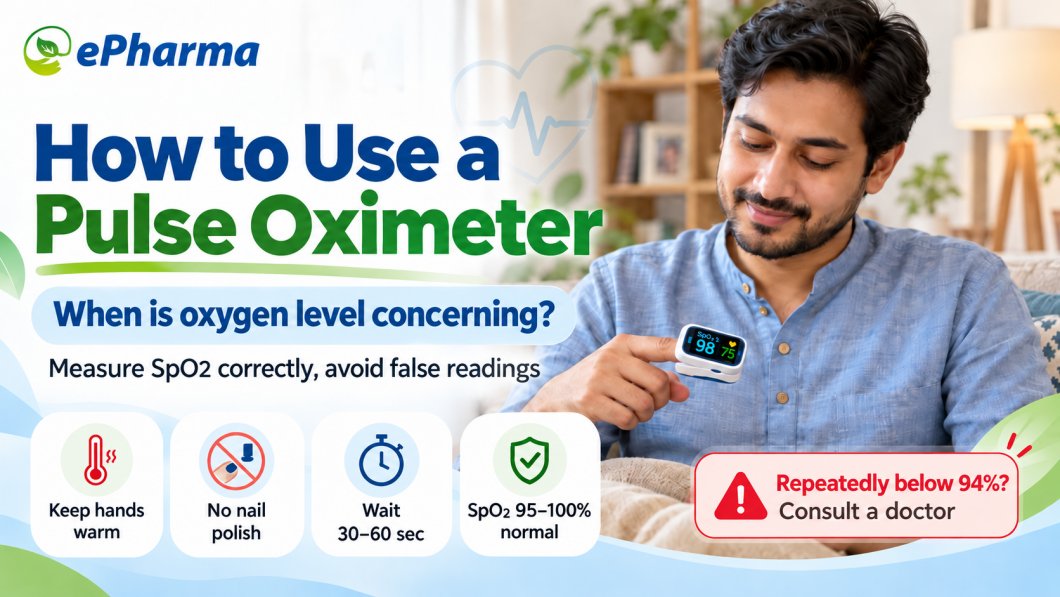
A pulse oximeter is a small fingertip device that estimates oxygen saturation (SpO₂) and pulse rate. For a more reliable reading, sit and rest for a few minutes, keep your hand warm and relaxed, remove nail polish, fit the device on a suitable finger, stay still, and wait until the reading stabilizes. Record the number alongside the time and how you feel. For most healthy people, SpO₂ is typically 95–100%. A reading is only one piece of information: seek urgent help for severe breathlessness, blue or grey lips, chest pain, fainting or new confusion even if the device appears normal.
What does a pulse oximeter measure?
The screen usually shows SpO₂ (%), an estimate of how much oxygen your blood is carrying, and PR or bpm, your pulse rate per minute. It is not a test for COVID-19, pneumonia, asthma or any other particular disease, and it cannot replace a medical examination or, when needed, a blood test.
A device can be useful for someone with a respiratory condition or during recovery from illness when their healthcare professional has recommended home monitoring. Healthy people do not generally need to check repeatedly without a reason or a clinician's plan.
Seven steps for a more reliable reading
- Sit and rest. If you have just walked, climbed stairs or exercised, allow yourself a few minutes of comfortable rest unless you were specifically instructed to check after activity.
- Warm your hand. Cold fingers and poor circulation can produce weak or unstable signals.
- Remove nail polish or artificial nails from the finger being measured. If removal is not possible, try a suitable unpainted finger and follow the device instructions.
- Fit the sensor correctly. Insert a suitably sized finger, often the index or middle finger, fully into the clip. Follow the manufacturer’s instructions.
- Keep your hand relaxed and still. Support it comfortably, generally below heart level, away from strong direct light.
- Allow the display to stabilize. This can take several seconds, sometimes around 30–60 seconds. Do not act on a number that is jumping around.
- Write down the reading. Note SpO₂, pulse, time, symptoms and whether you are using prescribed supplemental oxygen.
If a number unexpectedly looks low, check the fit, temperature and movement, then repeat while resting. Do not delay urgent care to keep rechecking if you have worrying symptoms.
Why can a reading be inaccurate?
Common causes include cold hands, reduced blood flow, movement, incorrect fit, nail polish or artificial nails, strong ambient light and some device limitations. Current tobacco use and differences in skin pigmentation can also affect performance. The U.S. FDA warns that readings may be less reliable in people with darker skin, including a risk of an apparently reassuring reading when oxygen is actually low.
Readings are estimates, not perfectly precise laboratory measurements. One number should never override how someone looks, feels or breathes.
What SpO₂ level is normal—and when should you worry?
For most otherwise healthy adults at sea level, a usual resting reading is 95–100%. Levels can differ with altitude and some long-term heart or lung conditions. If you have COPD or another condition requiring an individualized oxygen target, follow your clinician’s instructions rather than a generic chart.
| Reading or situation | Sensible next step | | --- | --- | | 95–100% and feeling well | Usually within the typical range for most healthy people. Do not ignore concerning symptoms. | | 93–94%, repeatedly while resting, without a lower prescribed baseline | Contact a healthcare professional promptly for advice and assessment. | | 92% or below, confirmed on a correctly fitted device without a known lower prescribed target | Seek urgent medical assessment; do not wait at home for the number to improve. | | Any reading with severe breathlessness, chest pain, blue/grey lips, collapse or confusion | Seek emergency care immediately, regardless of the displayed number. |
These are general safety prompts, not a way to diagnose a disease or prescribe oxygen. A threshold used in one clinical pathway (for example, home COVID monitoring) should not be treated as a universal rule for every adult, child, pregnant patient or person with chronic lung disease. If a clinician has given you a personal action plan, follow it.
Symptoms matter more than a reassuring number
Do not rely only on the pulse oximeter. Seek urgent help if breathing becomes difficult, lips or face turn blue/grey, chest pain develops, you become unusually sleepy or confused, or you collapse. Some people with low oxygen may not feel marked breathlessness, while others feel very unwell despite a normal-looking reading.
In Bangladesh, emergency assistance may be requested via 999 when necessary. Tell the medical team the SpO₂ number, when it was taken, your symptoms and whether you use prescribed oxygen.
Do not start oxygen therapy on your own
A low reading should trigger appropriate clinical evaluation, not unsupervised adjustment of an oxygen cylinder or concentrator. Oxygen is a medical treatment with a prescribed flow and target; incorrect use may be harmful, particularly in some chronic respiratory illnesses. If you have an existing oxygen prescription, use the specific clinician-provided plan and seek help when the plan’s warning criteria are met.
Children need special care
An adult fingertip clip may not fit a small child correctly. Pediatric readings, normal ranges and escalation plans depend on age, device suitability and the clinical situation. Do not interpret an infant’s measurement using a generic adult chart. Fast or difficult breathing, chest indrawing, difficulty feeding, marked drowsiness or blue lips require prompt assessment even without a reliable SpO₂ reading.
See our child pneumonia warning-signs guide for more details.
What to look for when choosing an oximeter
Choose a device with a clear display distinguishing SpO₂ from pulse, appropriate finger fit, readable instructions, a return/warranty policy and a trustworthy seller. Check that its intended use suits your needs; not all consumer wellness devices are approved for clinical decision-making. Keep batteries available and clean the sensor according to its manufacturer's instructions.
For related home-monitoring guidance, read how to use a digital thermometer, how to measure blood pressure at home and how to use a glucometer.
Frequently asked questions
What is a normal oxygen level on a pulse oximeter?
For most healthy adults at sea level, a typical SpO₂ is 95–100%, but some people have a different baseline. Follow your personal medical plan if you have one.
What if my SpO₂ is 93% or 94%?
Rest and check the measurement technique. If it remains 93–94% and you do not have a clinician-agreed lower baseline, seek prompt clinical advice. Do not wait if you feel very unwell.
Is 92% an emergency?
A confirmed reading of 92% or lower, without a prescribed lower target, needs urgent medical assessment. Severe symptoms require emergency help at any number.
Which finger should I use?
A properly fitting index or middle finger is common, but follow the instructions for your particular model.
Can nail polish affect the result?
Yes. Nail polish and artificial nails can interfere with the light signal. Use a clean, suitable finger.
Why do readings change each time?
Finger temperature, movement, poor fit, circulation, lighting and limitations of the device can all affect readings.
What do the two numbers mean?
SpO₂ is estimated blood oxygen saturation expressed as a percentage; PR/bpm is pulse rate per minute.
Can a reading appear normal while oxygen is actually low?
Yes. Pulse oximeters can be inaccurate, including overestimating oxygen in some circumstances, and readings must be considered alongside symptoms.
Can I use an adult oximeter on a baby?
Do not rely on an adult clip that does not fit. Follow pediatric clinician guidance and seek help for breathing or feeding warning signs.
Should I turn on home oxygen when the number is low?
Do not start or alter oxygen treatment without a clinician’s plan. Seek appropriate medical assessment.
Sources
- U.S. FDA — Pulse Oximeter Basics
- U.S. FDA — Pulse Oximeters
- MedlinePlus — Pulse Oximetry
- NHS England — COVID Oximetry @home guidance
Reviewed for ePharma, October 2026.