


✔ 100% Authentic Product
👁️ Viewed 1742 times
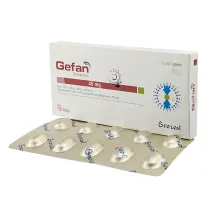
Gefan 45 Tablet
Gefapixant is a selective P2X3 receptor antagonist.
P2X3 receptors are ATP-gated ion channels located on sensory vagal C-fibers within the respiratory tract. During airway inflammation or exposure to irritants, respiratory mucosal cells release adenosine triphosphate (ATP). Extracellular ATP activates P2X3 receptors, which transmit signals to the brain that trigger the cough reflex.
By selectively blocking P2X3 receptors, Gefapixant reduces ATP-mediated sensory nerve activation and suppresses the abnormal cough reflex associated with chronic cough.
Discount Price: ৳ 768
MRP:
৳
800
4%
off

100% Genuine Products, Guaranteed

Safe & Secure Payments, Always

Fast, Secure & Efficient Delivery

Proper Packaging
 Cash on Delivery - All over Bangladesh
 Regular Delivery: 24-48 Hours, Dhaka City* Charge Tk.39-59
- Regular Delivery: 48-96 Hours, Other Cities* Charge Tk.99-125
 ফ্রি ডেলিভারিঃ - ১৪৯৯ টাকা+ অর্ডারে, ঢাকা
শহরে
ফ্রি ডেলিভারিঃ - ১৪৯৯ টাকা+ অর্ডারে, ঢাকা
শহরে- ফ্রি ডেলিভারিঃ - ৪৯৯৯ টাকা+ অর্ডারে, ঢাকার
বাহিরে
📲 মোবাইল অ্যাপ অর্ডারে সাশ্রয় বেশী
-
Google Play Store থেকে ডাউনলোড
-
Apple Store থেকে ডাউনলোড
100% Genuine Products, Guaranteed
Safe & Secure Payments, Always
Fast, Secure & Efficient Delivery
Proper Packaging
- Cash on Delivery - All over Bangladesh
- Regular Delivery: 24-48 Hours, Dhaka City* Charge Tk.39-59
- Regular Delivery: 48-96 Hours, Other Cities* Charge Tk.99-125
- ফ্রি ডেলিভারিঃ - ১৪৯৯ টাকা+ অর্ডারে, ঢাকা
শহরে
- ফ্রি ডেলিভারিঃ - ৪৯৯৯ টাকা+ অর্ডারে, ঢাকার
বাহিরে
- Google Play Store থেকে ডাউনলোড
- Apple Store থেকে ডাউনলোড
📲 মোবাইল অ্যাপ অর্ডারে সাশ্রয় বেশী
✅ Description:
Gefan (Gefapixant) is indicated for the treatment of:
- Refractory Chronic Cough (RCC) — chronic cough that persists despite appropriate treatment of underlying causes.
- Unexplained Chronic Cough (UCC) — chronic cough for which no identifiable cause can be found despite thorough evaluation.
It is approved for use in adult patients with chronic cough disorders.
Use this medicine only as prescribed by a registered physician.

Relevant Products
Same generic alternatives, ranked by customer interest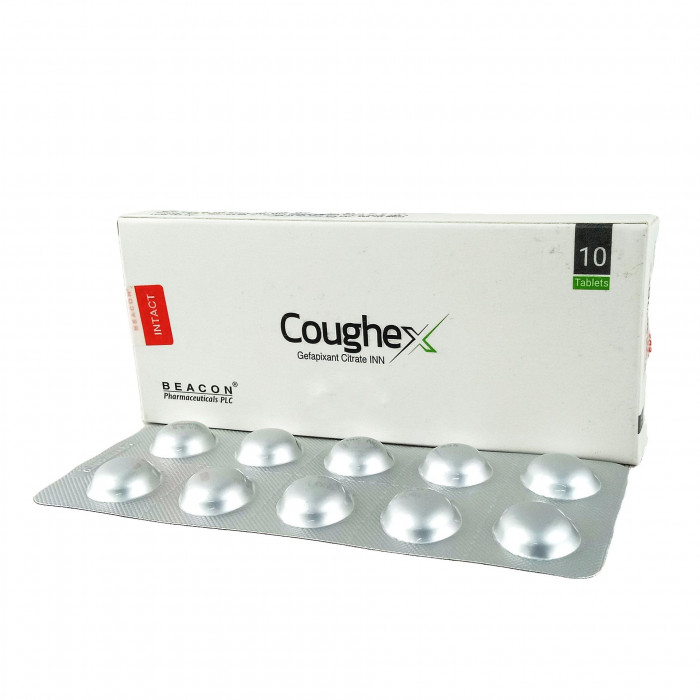
Coughex 45mg Tablet 1 Strip
Related Posts

✔️ Dosage and Administration of Gefapixant
Treatment should be initiated and supervised by physicians experienced in managing chronic cough disorders.
Adults
- 45 mg orally twice daily
- May be taken with or without food
Missed Dose
If a dose is missed:
- Skip the missed dose.
- Take the next scheduled dose at the usual time.
- Do not take a double dose to compensate for a missed dose.
Elderly Patients
- No routine dose adjustment is required based solely on age.
- Since renal function may decline with age, elderly patients should be monitored carefully during treatment.
Pediatric Patients
- Safety and efficacy have not been established in individuals younger than 18 years.
- Use is not recommended in pediatric patients.
Patients with Renal Impairment
| Renal Function | Recommended Dose |
|---|---|
| Mild to Moderate Impairment (eGFR >30 mL/min/1.73 m²) | No dose adjustment required |
| Severe Impairment (eGFR <30 mL/min/1.73 m², not on dialysis) | 45 mg once daily |
Patients with Hepatic Impairment
- Gefapixant has not been adequately studied in patients with liver disease.
- Use with caution until further data become available.
Obstructive Sleep Apnea
Gefapixant should not be used in patients with refractory or unexplained chronic cough who also have obstructive sleep apnea.
✔️ Side Effects
Very Common
- Dysgeusia (altered taste sensation)
- Ageusia (loss of taste)
- Hypogeusia (reduced taste sensation)
Common
- Upper respiratory tract infection
- Decreased appetite
- Taste disturbances
- Dizziness
- Nausea
- Diarrhea
- Dry mouth
- Excessive salivation
- Epigastric pain
- Dyspepsia
- Oral hypoesthesia (reduced oral sensation)
- Oral paresthesia (tingling or abnormal oral sensations)
Uncommon
- Urinary stones
- Bladder stones
- Nephrolithiasis (kidney stones)
Most adverse effects are mild to moderate in severity, although taste-related side effects are among the most frequently reported reasons for treatment discontinuation.
✔️ Pregnancy & Lactation & Fertility
Pregnancy
There are no adequate human studies evaluating the safety of Gefapixant during pregnancy.
As a precaution:
- Use during pregnancy is not recommended unless clearly necessary.
- Women of childbearing potential should use effective contraception during treatment.
Breastfeeding
It is unknown whether Gefapixant is excreted into human breast milk.
Animal studies have demonstrated transfer into milk. Therefore:
- Caution is advised during breastfeeding.
- The potential benefits of treatment should be weighed against possible risks to the infant.
Fertility
- Human fertility data are unavailable.
- Animal studies have not demonstrated adverse effects on fertility.
✔️ Gefan should be used cautiously in:
- Patients with known hypersensitivity to sulphonamides
- Elderly individuals with impaired renal function
- Patients experiencing significant taste disturbances that may affect nutrition or quality of life
✔️ Gefan is contraindicated in patients with:
- Known severe hypersensitivity to Gefapixant
- Hypersensitivity to any component of the formulation
✔️ Interaction
Proton Pump Inhibitors (PPIs)
- Concomitant administration with omeprazole has not demonstrated clinically significant effects on Gefapixant pharmacokinetics.
Effect of Gefan on Other Medicines
- In vitro studies suggest a low potential for inhibition or induction of cytochrome P450 (CYP) enzymes.
- No clinically significant drug interactions have been identified.
Effect of Other Medicines on Gefan
- No clinically meaningful interactions have been observed with concomitant medications.
✔️ Storage:
- Store below 30°C.
- Keep in a cool and dry place.
- Protect from light and moisture.
- Keep out of the reach of children.
⚠️Disclaimer:
At ePharma, we’re committed to providing accurate and accessible health information. However, all content is intended for informational purposes only and should not replace medical advice from a qualified physician. Please consult your healthcare provider for personalized guidance. We aim to support, not substitute, the doctor-patient relationship.
📦Pricing Information, Availability:
Product Availability & Pricing Notice
Please note that pricing, availability, and service offerings are subject to change due to: Market fluctuations, Manufacturer or supplier adjustments, Product discontinuation or temporary unavailability, Advertising errors. All orders depend on stock availability and staff resources. If services are provided on a time-and-materials basis, any shared estimates are for planning purposes only.


Reliable
All products displayed on ePharma are procured from govt. approved pharmaceuticals and verified licensed pharmacies from 2016.

Secure
ePharma uses Secure Sockets Layer (SSL) 128-bit 🔒 encryption and is Payment Card Industry DataSecurity Standard (PCI DSS) compliant.

Affordable
Find affordable medicine substitutes, save up to 50% on health products, up to 30% off on doctor consultations.

Social
Providing health care services under the health and beauty category with more than 170K Facebook audience and 10M+ reach.







Get more features!
Download the app now
✓ Doctor consultation ✓ 24/7 helpline