Influenza (Flu): Symptoms, Cold Differences, Home Care and When to See a Doctor
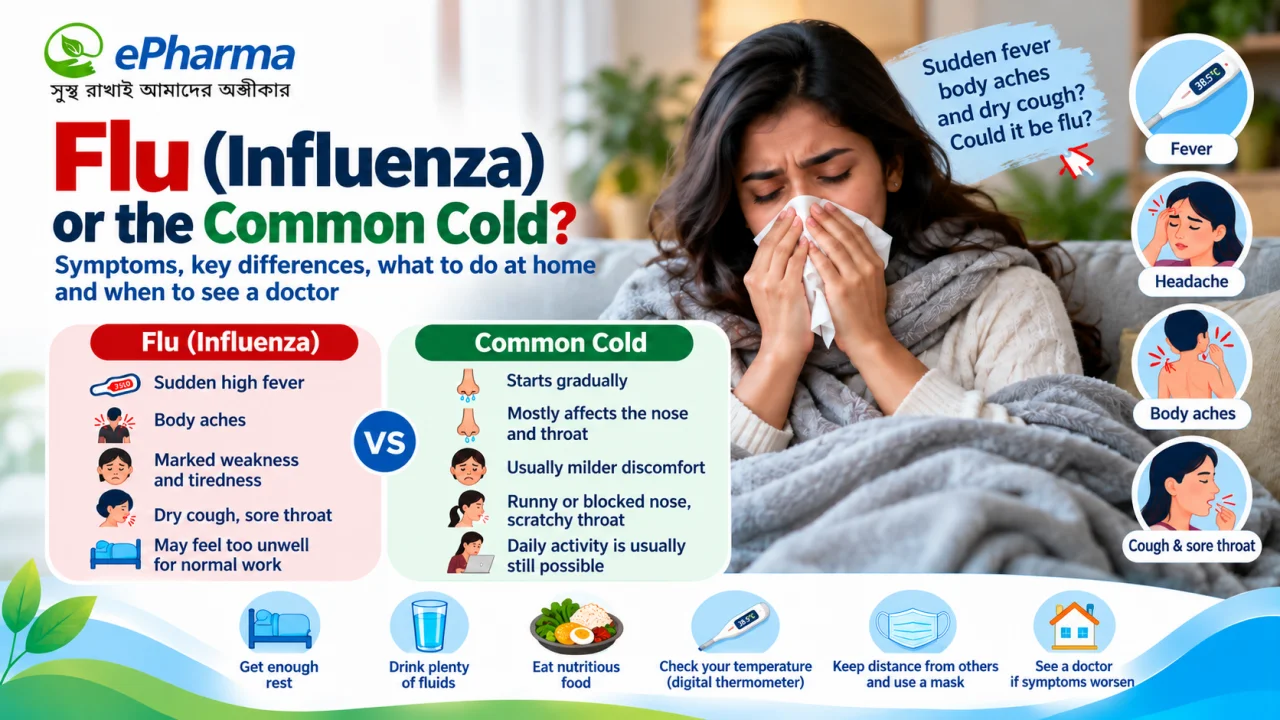
Sudden fever, body aches and cough? Learn how flu differs from a cold, what to do at home, why antibiotics usually do not help and when to seek medical care.
You felt fine yesterday. This morning you wake up with a pounding head, aching arms and legs, sore throat, cough and fever. The question is immediate: is this just a cold, or is it flu? Should you go to work, stay home, or start an antibiotic?
Influenza is a viral respiratory illness. Compared with a common cold, it often starts more suddenly and can make your whole body feel unwell. Most people recover with rest, fluids and symptom care, but older adults, pregnant people and those with chronic disease can be at higher risk of complications.
Does flu only happen in winter?
No. Bangladesh has also seen influenza activity rise during monsoon months. A 2025 Daily Star Bangla report discussed increased influenza detection during the rainy season based on IEDCR and icddr,b data. Winter respiratory illness remains important, but “flu means winter only” is too simple.
Flu vs common cold: what is the difference?
| Feature | Flu | Common cold |
|---|---|---|
| Onset | Can begin suddenly within hours | Usually develops gradually |
| Overall effect | Whole-body weakness and aches are common | Mainly nose and throat symptoms |
| Fever | Common and can be more noticeable | Often mild or absent |
| Body aches | Common and sometimes marked | Usually mild |
| Cough | Dry cough is common | May occur |
| Fatigue | Often significant | Usually milder |
NHS guidance emphasises that flu tends to arrive quickly and can leave you too unwell for normal activity, while a cold is more often centred on the nose and throat.
What are the main symptoms of flu?
Common symptoms across the Bangladeshi physician sources and NHS guidance include:
- sudden fever
- body aches
- headache
- sore throat
- dry cough
- blocked or runny nose
- marked tiredness
- reduced appetite
Some people continue to cough after other symptoms have improved.
Is every fever flu?
No. Dengue, typhoid and other viral infections are also common causes of fever in Bangladesh. A very high fever, unusual symptoms or a fever that is not improving should be medically assessed rather than assumed to be flu.
What should you do at home?
1. Rest and sleep
Give your body time to recover. If you have fever or feel significantly unwell, staying home also reduces the chance of spreading infection.
2. Drink adequate fluids
Water, soup and oral rehydration fluids can help prevent dehydration. If you have heart or kidney disease with fluid restriction, follow your clinician’s advice.
3. Measure your temperature
A digital thermometer is more useful than guessing whether you “feel hot.” Tracking the temperature and how long it lasts can help you explain the illness clearly if you need medical care.
4. Avoid accidental double-dosing
NHS guidance mentions paracetamol for fever and aches, but many combination cold-and-flu products also contain paracetamol. Taking more than one product with the same ingredient can lead to accidental overdose. Ask a pharmacist or doctor if you are unsure, especially if you have liver/kidney disease, are pregnant or take several medicines.
5. Use simple throat care
A Bangladeshi ENT specialist source supports warm salt-water gargling for throat discomfort.
Do you need antibiotics for flu?
Usually not. Flu is caused by a virus. NHS guidance is clear that antibiotics do not treat influenza and do not make viral symptoms settle faster.
Secondary bacterial infection can occur after flu, including pneumonia. In that situation a clinician may prescribe an antibiotic after assessment. Do not start one on your own.
What about antiviral medicine?
The uploaded source material notes that doctors may consider antiviral treatment in selected situations. This article does not name or dose antivirals and does not recommend self-starting them.
How long does flu usually last?
Many uncomplicated cases improve within several days. NHS guidance suggests that most people begin to recover within about a week, although cough and tiredness may last longer.
Seek medical review if symptoms are not improving after around 7 days or continue beyond 7–10 days, especially if they are worsening.
How long is flu contagious?
The sources differ slightly:
- NHS: the first 5 days are the most contagious
- one Bangladeshi specialist source: spread tends to decrease after about 5 days
- another Bangladeshi source: transmission can continue for 5–7 days after symptoms begin
A practical approach is to be especially careful for the first 5 days: stay home while febrile or clearly unwell, use a mask, and avoid close contact with elderly, pregnant or medically vulnerable people.
Who is at higher risk from flu?
- adults aged 65 or older
- pregnant people
- people with chronic heart, lung, kidney or metabolic disease
- people with uncontrolled diabetes
- people with weakened immunity
- women who have recently given birth
If you are in a higher-risk group, contact a clinician earlier rather than waiting several days for severe symptoms to appear.
What if you have asthma or chronic lung disease?
Respiratory infections can worsen breathing symptoms. If you have asthma or another chronic lung condition and notice worsening wheeze, breathlessness or loss of usual control, seek medical advice early.
How can you reduce flu spread?
- cover coughs and sneezes
- wash hands regularly
- wear a mask when symptomatic
- avoid touching eyes, nose and mouth unnecessarily
- stay home when feverish or significantly unwell
- clean frequently touched surfaces
Should you get a flu vaccine?
The source material supports annual influenza vaccination for higher-risk groups because circulating strains change over time. The uploaded material does not verify current Bangladesh availability, price or one universal timing schedule.
Ask your clinician whether vaccination is appropriate for you and when it should be given.
When should you see a doctor?
Arrange medical review if:
- symptoms are not improving after 7 days
- fever keeps returning
- cough becomes prolonged
- you are 65+, pregnant or in another high-risk group
- you show signs of dehydration
- the illness is clearly worsening
When is it an emergency?
Seek urgent care for:
- severe breathing difficulty
- chest pain
- coughing up blood
- marked dizziness, confusion or extreme drowsiness
- severe dehydration
Common myths
- “Flu always needs antibiotics.” No. Antibiotics do not treat viral influenza.
- “Flu and a cold are the same.” No. Flu tends to be more sudden and systemic.
- “Flu only happens in winter.” Bangladesh has also documented monsoon influenza activity.
- “I can keep going to work with fever.” Rest and infection-control measures matter during the contagious phase.
- “Combination flu medicines are always harmless.” Duplicate ingredients can increase overdose risk.
Frequently asked questions
What is influenza?
Influenza is a viral respiratory illness that can cause sudden fever, body aches, cough and marked tiredness.
What is the main difference between flu and a cold?
Flu usually starts more suddenly and affects the whole body, while a cold is more often limited to nose and throat symptoms.
How long does flu last?
Many uncomplicated cases improve within about a week, although cough or tiredness can persist longer.
Do antibiotics help flu?
Usually not. Antibiotics are only useful if a bacterial infection is diagnosed.
How should I track fever?
Use a digital thermometer and note the temperature trend and how long the fever lasts.
How long is flu contagious?
The first 5 days are considered the most contagious, though some sources describe transmission for up to 5–7 days after symptoms start.
Who is at higher risk?
Older adults, pregnant people, those with chronic disease and people with weakened immunity are at higher risk of complications.
When should I go to hospital?
Seek urgent care for severe breathing difficulty, chest pain, coughing blood, confusion/extreme drowsiness or severe dehydration.
Sources
- Assoc. Prof. Dr Fazle Rabbi Chowdhury — Daily Star Bangla, 20 August 2025.
- Prof. Dr Sohel Mahmud Arafat — Daily Star Bangla, 21 March 2024.
- Dr Rozana Rouf — Prothom Alo, 4 October 2024.
- Dr M. Alamgir Chowdhury — Prothom Alo, 24 February 2025.
- NHS — Flu.
This article is for general adult health information and does not replace personal medical advice. Do not start antibiotics or other medicines on your own. Seek urgent care for severe breathing difficulty, chest pain, coughing blood or confusion.
Related Products