

Cervical Cancer Symptoms: VIA Screening and HPV Vaccination
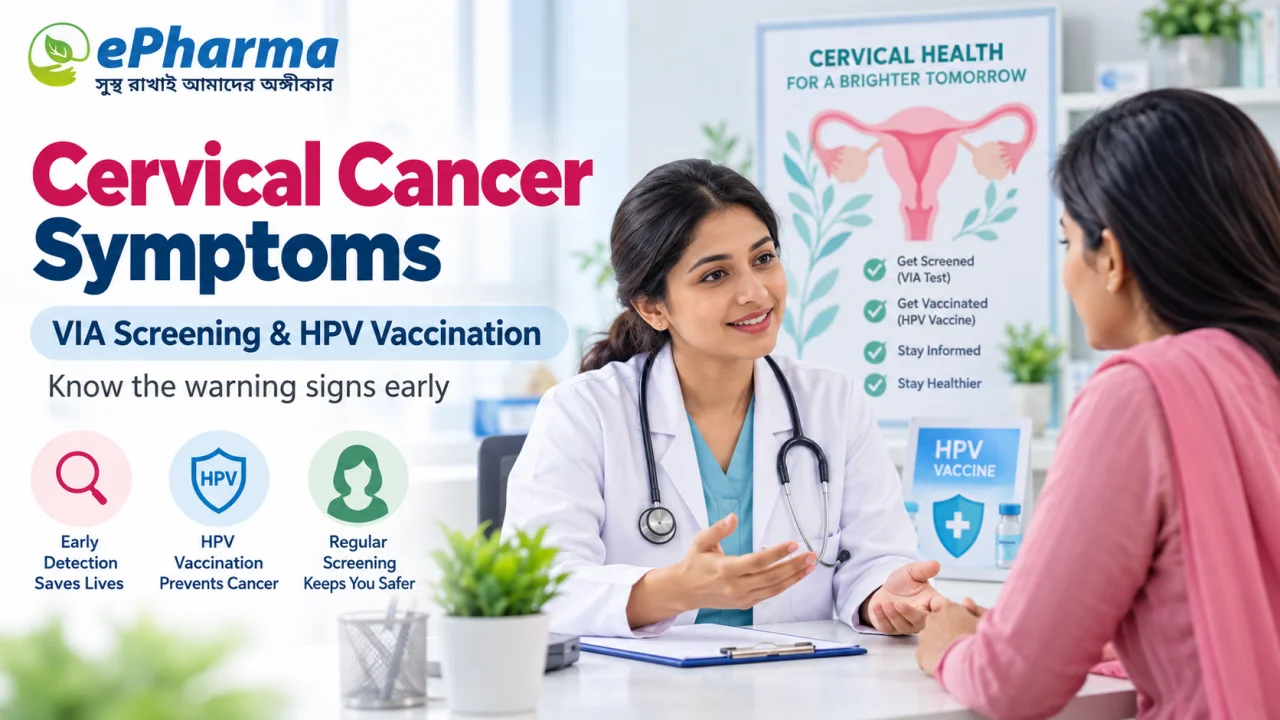
Cervical cancer warning signs, VIA screening in Bangladesh, HPV vaccine recommendations and when abnormal bleeding needs a doctor.
The most important fact
Early cervical precancer usually has no noticeable symptoms. This is why screening is intended for people who feel healthy, not only those with abnormal bleeding. HPV vaccination, appropriate cervical screening and prompt treatment of precancerous changes are the foundations of prevention.
What causes cervical cancer?
Almost all cervical cancers are linked to persistent infection with high-risk human papillomavirus (HPV). HPV is common and transmitted through sexual contact; most infections resolve on their own. A persistent infection can cause cell changes over years. HPV infection is not a judgment of a person's character or cleanliness.
Warning signs that need examination
Bleeding after sex, bleeding between periods, any bleeding after menopause, unusual vaginal discharge, persistent pelvic pain or unexplained weight loss deserve assessment. These can have causes other than cancer, but should not be dismissed. Postmenopausal bleeding especially warrants evaluation.
Understanding VIA screening
VIA means visual inspection with acetic acid. A trained worker applies dilute acetic acid to the cervix and examines visible changes. Some people feel discomfort; it is not guaranteed painless. A positive screening result does not diagnose cancer; follow-up may include HPV testing, Pap smear, colposcopy or biopsy.
Screening in Bangladesh
Bangladeshi experts described a public VIA screening programme commonly targeting married women aged 30–60 every five years. Free VIA services have been reported in government facilities; check local availability. Medical risk cannot be decided by marital status alone; seek individualized care if relevant.
Why WHO recommendations differ
WHO 2026 recommends high-performance cervical screening every 5–10 years from age 30 for women at average risk. Women living with HIV should begin at 25 and follow a 3–5-year interval. Bangladesh's VIA programme and WHO's HPV-based testing intervals refer to different testing approaches; follow your clinician's advice.
HPV vaccination
WHO prioritizes vaccination for girls aged 9–14 before sexual exposure. National schedules may use one or two doses; some immunocompromised people need a different schedule. Bangladesh launched an adolescent single-dose campaign in 2023. Confirm current 2026 eligibility and services at an EPI centre rather than assuming past campaign arrangements still apply.
Vaccination does not replace screening
HPV vaccines protect against major cancer-causing types but not all types, and cannot treat an existing infection. Continue screening as recommended. Condoms may reduce HPV transmission risk but do not fully prevent it because HPV can spread through uncovered skin contact.
Screening versus diagnosis
Routine screening finds precancer in people without symptoms. Bleeding after sex, postmenopausal bleeding and persistent abnormal discharge instead require a diagnostic gynecology appointment; do not wait for a future screening invitation. Appropriate treatment of precancer can prevent progression.
Understanding Bangladesh estimates
Previously reported Bangladesh cervical cancer figures vary because hospital counts and population-level estimates measure different things. Do not interpret these as a single confirmed 2026 national registry count. Improving access to timely screening and treatment is what matters.
Related products and limits
The four selected condoms are barrier sexual-health products. Consistent, correct use can lower some HPV exposure risk, but condoms are not a substitute for HPV vaccination, cervical screening or cancer treatment. Intimate washes and sanitary pads are not being promoted as cancer prevention.
Frequently asked questions
Does cervical cancer cause early symptoms?
Often no. Routine screening can find precancer.
Does bleeding after sex mean cancer?
Not always, but it requires medical assessment.
What is a VIA test?
A visual test using dilute acetic acid on the cervix.
Does a positive VIA prove cancer?
No. Further examination may be needed.
When should screening start?
Often from age 30; WHO advises earlier screening for women with HIV.
Who should get HPV vaccine?
WHO prioritizes girls aged 9–14; check national eligibility.
Do vaccinated women need screening?
Yes. Vaccines do not cover every cancer-causing type.
Are VIA tests free in Bangladesh?
Government programme services have been reported as free; verify locally.
Does bleeding after menopause need assessment?
Yes, consult a qualified gynecologist.
References
Related Products