

How to Use a Digital Thermometer Correctly: Fever Measurement Guide
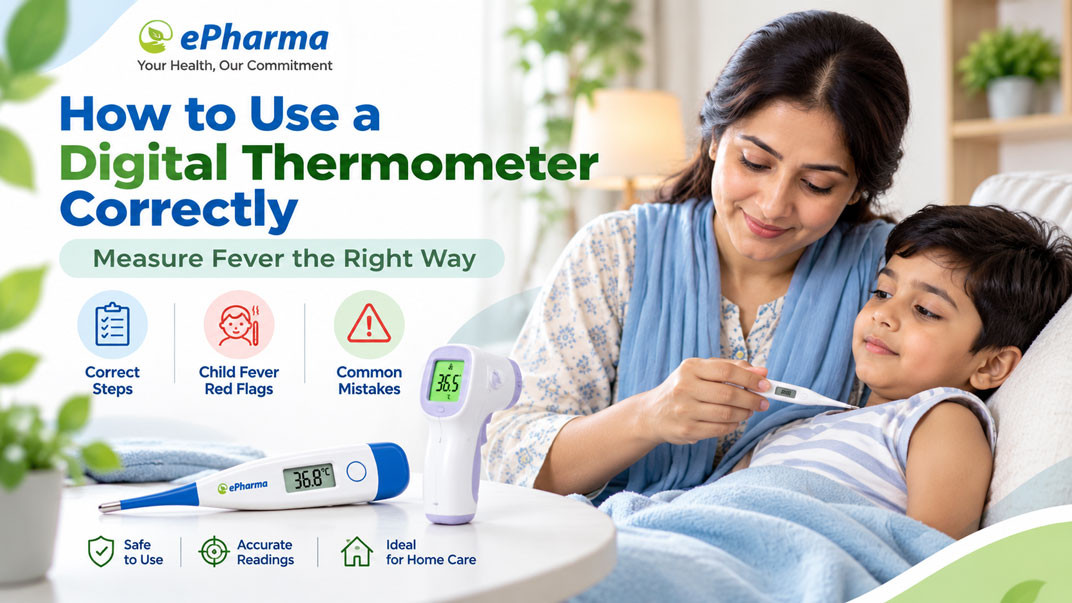
A practical guide to digital thermometer use, correct fever measurement, child fever red flags, infrared thermometer tips, and mercury safety.
Quick answer: To measure temperature correctly with a digital thermometer, wash your hands, clean and dry the sensor, dry the armpit, place the sensor directly against bare skin, and keep the arm pressed gently against the body until the device signals that the reading is complete. Do not measure immediately after a bath, heavy wrapping, intense activity, or being in a very warm room—allow a few minutes to settle first. For young children, an armpit digital thermometer is a practical home method. A baby under 3 months with a temperature of 38°C (100.4°F) or higher needs prompt medical assessment.
Feeling hot is not the same as having a measured fever. Body temperature varies with age, time of day, activity, and the measurement site. During an illness, using the same thermometer, the same site, and the same technique makes trends easier to interpret.
Why keep a digital thermometer at home?
Fever is a sign, not a diagnosis. During dengue, typhoid, respiratory infections, or childhood illness, clinicians often need to know how high the temperature was, when it started, and how it changed. Digital thermometers are quick, easy to read, and avoid the mercury exposure risk of old glass mercury thermometers.
Main types of thermometer
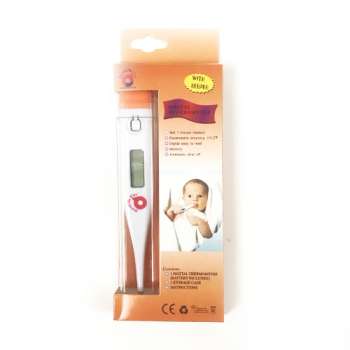
- Digital contact thermometer: used at the armpit or oral site according to the manufacturer’s instructions; one of the most practical home options.
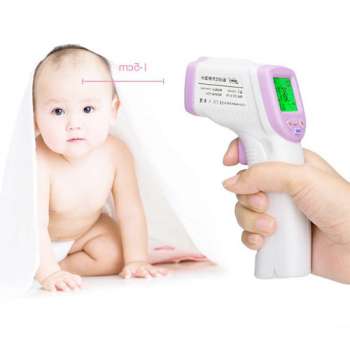
- Infrared forehead or ear thermometer: quick and convenient, but placement, distance, sweat, ear positioning, and environmental conditions can affect the result.
- Glass mercury thermometer: not preferred for modern home use because breakage can expose people to mercury; mercury-free alternatives are safer.
How to measure temperature in the armpit with a digital thermometer
- Wash your hands.
- Clean the sensor: follow the manufacturer’s instructions; rubbing alcohol/alcohol swab or soap and lukewarm water may be appropriate for many contact thermometers.
- Turn the thermometer on: make sure the display and battery indicator look normal.
- Dry the armpit: sweat or moisture can interfere with consistent contact.
- Place the sensor on bare skin: not over clothing.
- Hold the arm against the body: keep the thermometer firmly in place without moving it.
- Wait until the reading is complete: many devices beep, but follow the exact timing in the product manual.
- Record the result: note the temperature, time, measurement site, and any fever medicine already given.
- Clean and store the thermometer.
When should you wait before taking a temperature?
A reading can be temporarily affected if a child has been wrapped in a heavy blanket, is in a very warm room, has been very active, has been holding a hot-water bottle, or has just had a bath. Let them return to a comfortable normal state for a few minutes, then measure again. Heavy exercise or a hot bath may require a longer waiting period.
How to take an oral temperature
For a cooperative older child or adult, place an oral thermometer under the tongue and keep the mouth closed. Hot or cold food and drinks can affect the result, so wait about 30 minutes after eating or drinking before an oral measurement. Do not use the same thermometer for both oral and rectal measurements.
What temperature counts as a fever?
Body temperature varies between people and measurement sites. In children, the NHS defines a high temperature as 38°C or above. Because armpit, oral, ear, forehead, and rectal readings can differ, tell your healthcare professional which site you used.
The number is not the whole story. A person can be seriously unwell even without a very high temperature. Seek care for breathing difficulty, confusion, dehydration, seizures, or other danger signs regardless of the thermometer reading.
Fever red flags by age in children
- Under 3 months: 38°C or higher—or suspected high temperature—needs prompt medical assessment.
- 3 to 6 months: 39°C or higher needs urgent medical advice.
- Any age: seek urgent care if the child is difficult to wake, has breathing difficulty, a seizure, stiff neck, a non-blanching rash, poor feeding/dehydration, or unusual behavior.
Bangladesh pediatric guidance commonly recommends medical review when fever lasts more than 3 days or is becoming more severe. Do not wait 3 days if any danger sign appears earlier.
Common mistakes that can cause a misleading temperature reading
- measuring in a sweaty/wet armpit
- placing the sensor over clothing
- removing the thermometer before the reading is complete
- checking immediately after a bath, heavy wrapping, or intense activity
- taking an oral temperature immediately after hot/cold food or drink
- not cleaning the thermometer
- using the same thermometer for oral and rectal sites
- ignoring a weak battery or damaged sensor
- holding an infrared thermometer at the wrong distance or angle
- comparing different measurement sites as if they should give identical numbers
Are infrared thermometers reliable?
A good infrared thermometer can be useful when it is used exactly as instructed, especially for quick screening. But forehead and ear readings can be sensitive to positioning and the environment, and ear thermometers can be harder to position correctly in babies because the ear canal is small. If a result does not fit how the person looks or feels, check the device instructions and repeat with a contact digital thermometer when appropriate.
Should you undress or sponge a child to bring the fever down?
The NHS does not recommend undressing a child or sponging them just to reduce the temperature number. Keep the child comfortable, avoid excessive clothing or bedding, encourage fluids, and monitor symptoms. If fever medicine is needed, the dose depends on factors such as age/weight and medical history—do not guess the dose.
An important dengue reminder
In dengue, the critical phase can begin as the fever comes down and warning signs may appear during the next 24–48 hours. Seek hospital care for severe abdominal pain, repeated vomiting, bleeding, marked drowsiness or weakness, or reduced urine output. A normal thermometer reading does not prove that dengue has resolved.
When should you seek urgent medical care?
For children or adults, seek prompt assessment for:
- breathing difficulty, rapid breathing, or chest retractions
- seizure, fainting, severe confusion, or difficulty waking
- stiff neck, severe headache, or strong light sensitivity
- a rash that does not fade with pressure
- signs of dehydration, very little urine, or poor drinking/feeding
- abnormal skin/lip colour or unusually cold extremities
- persistent or worsening fever, including fever lasting more than 3 days
- fever during pregnancy, significant chronic illness, older age, or immune problems
- dengue warning signs such as abdominal pain, repeated vomiting, bleeding, or reduced urine output
What to do if a mercury thermometer breaks
If an old glass thermometer contains a silver liquid and is not clearly marked “mercury free,” treat it as mercury.
- move children, pets, and other people away from the area;
- open windows to the outside and close doors to other rooms;
- do not use a vacuum cleaner or broom because this can spread mercury into smaller droplets and increase exposure;
- do not pour mercury down a drain;
- carefully collect glass and mercury using methods such as stiff card/cardboard, an eyedropper, or sticky tape as described by EPA guidance;
- seal cleanup materials in a suitable bag/container and contact local health or waste authorities for disposal advice.
How to choose a digital thermometer
- clear, easy-to-read display
- audible beep or reading-complete indicator
- flexible/child-friendly tip if useful
- water resistance for easier cleaning
- memory function to track fever trends
- easily available battery type
- clear manufacturer instructions
- for infrared models, clear distance/placement guidance
- purchase from a reliable, licensed seller
How to keep a useful temperature log
Record the date, time, temperature, measurement site (armpit/oral/forehead), timing of fever medicine, and significant symptoms. A series of readings taken with the same method is more useful to clinicians than isolated numbers taken at different sites.
Related reading
- How to Measure Blood Pressure at Home
- How to Use a Glucometer Correctly
- Dengue Platelet Count: When Is It Dangerous?
Frequently asked questions
How do I measure temperature in the armpit correctly?
Dry the armpit, place the sensor directly on bare skin, hold the arm against the body, and wait until the device signals that the reading is complete.
When does a baby's fever need urgent medical care?
A baby under 3 months with a temperature of 38°C or higher needs prompt medical assessment. At 3–6 months, 39°C or higher needs urgent advice. At any age, severe symptoms matter more than the number alone.
Is an armpit temperature the same as an oral temperature?
No. Different sites can produce different readings. For trends, use the same thermometer and site consistently and tell the clinician how the temperature was measured.
How long after eating should I wait before taking an oral temperature?
Hot or cold food and drinks can affect oral readings. Waiting about 30 minutes is a practical recommendation.
What if an infrared thermometer seems wrong?
Check placement, distance, sweat/obstruction, and the device manual. If the result still seems inconsistent, repeat with a contact digital thermometer when appropriate.
Does a normal temperature mean dengue is over?
No. Dengue can enter its critical phase as fever resolves, and warning signs can appear over the next 24–48 hours.
Can I vacuum mercury from a broken thermometer?
No. Vacuuming or sweeping can spread mercury and increase exposure. Ventilate the area and follow safe mercury cleanup guidance.
Should I worry if the thermometer is normal but the person looks very ill?
Yes. Breathing difficulty, seizures, confusion, dehydration, a non-blanching rash, or other danger signs need medical attention regardless of the temperature reading.
Sources
- NHS — High temperature (fever) in children
- NHS — How to take your baby's temperature
- U.S. EPA — What to Do if a Mercury Thermometer Breaks
- U.S. CDC — Clinical Features/Management of Dengue
- Mayo Clinic — How to take your temperature
- Bangladesh pediatric expert guidance reported by Prothom Alo
Updated: October 2026
Related Products