

How to Measure Blood Pressure at Home: BP Monitor Guide
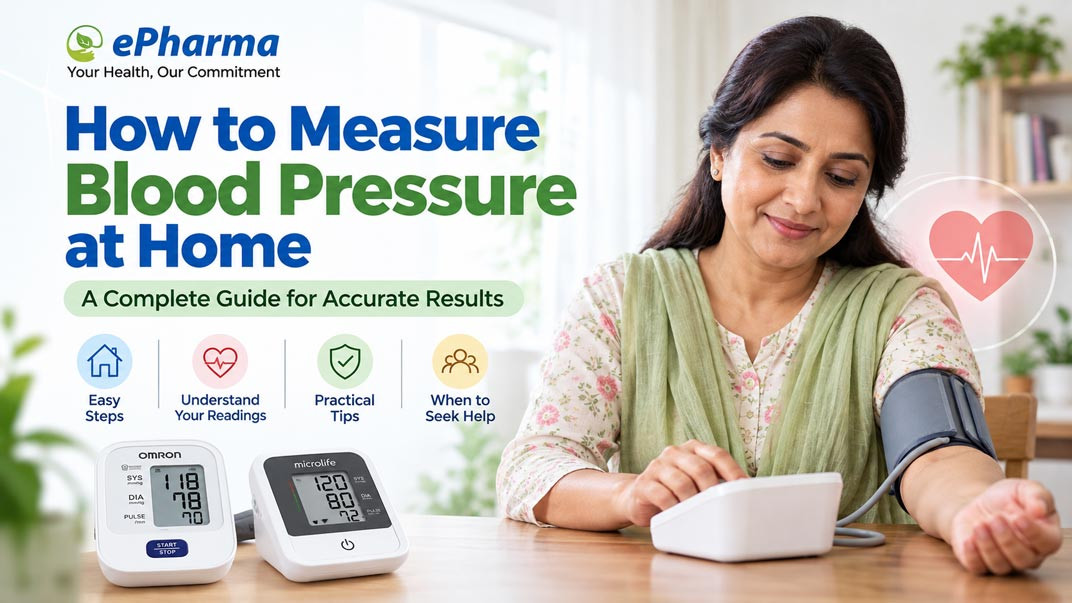
A practical guide to measuring blood pressure correctly at home, choosing the right cuff and monitor, avoiding common mistakes, and handling very high readings.
Quick answer: Before checking your blood pressure at home, sit quietly for at least 5 minutes. Avoid smoking, caffeine, and exercise for 30 minutes beforehand, empty your bladder, sit with your back supported and both feet flat on the floor, and do not cross your legs. Place the cuff on your bare upper arm, support the arm at heart level, stay silent during the reading, and take 2 readings about 1 minute apart.
Blood pressure is not a fixed number. Stress, sleep, movement, caffeine, smoking, exercise, a full bladder, body position, and the wrong cuff size can all affect the result. So it is not safe to make decisions based on a single high reading—or to stop medication just because one reading looks normal. A home BP log can give your healthcare professional useful information about your usual blood pressure, but a home monitor alone does not diagnose hypertension.
What do the two blood pressure numbers mean?
Blood pressure is written as systolic/diastolic, for example 120/80 mm Hg. The first or upper number is the systolic pressure—the pressure in your arteries when the heart contracts and pumps blood. The second or lower number is the diastolic pressure—the pressure while the heart relaxes between beats.
How to measure blood pressure correctly at home
- Prepare for 30 minutes beforehand: Avoid smoking, tea, coffee, other caffeinated drinks, and exercise. If possible, do not measure immediately after a heavy meal.
- Empty your bladder: A full bladder can affect the reading.
- Rest quietly for 5 minutes: Do not measure immediately after rushing, climbing stairs, or an argument or stressful event.
- Sit correctly: Keep your back supported, both feet flat on the floor, and your legs uncrossed.
- Place the cuff on a bare upper arm: Do not place the cuff over clothing. Avoid rolling a tight sleeve high enough to squeeze the arm.
- Support your arm at heart level: Rest it on a table or cushion. Letting the arm hang down or holding it too high can change the reading.
- Stay quiet and still: Do not talk, use your phone, or move during the measurement.
- Take two readings: In general, take 2 readings about 1 minute apart and record both. Follow your clinician’s instructions if they have given you a different monitoring plan.
Where should the cuff go?
For a digital upper-arm BP monitor, the cuff is usually placed on the bare upper arm just above the elbow crease. The middle of the cuff should be around heart level. If your model has an artery mark or positioning guide, follow the manufacturer’s instructions.
Cuff size matters. A cuff that is too small can make a reading look falsely high, while an oversized cuff can make it look lower. Do not assume that a “standard” cuff fits everyone. Measure your arm circumference and check it against the cuff range specified for the monitor.
Which type of BP monitor is best for home use?
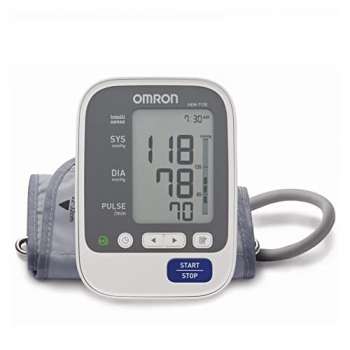
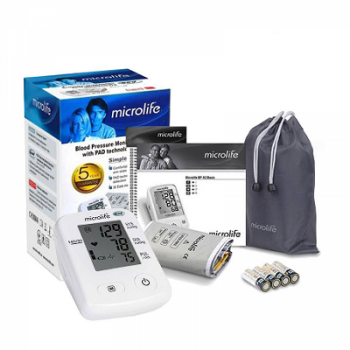
For most people, an automatic upper-arm cuff monitor is the most practical option for home use. When choosing a model, look beyond the brand and extra features. Consider independent clinical validation, the correct cuff size, a readable display, memory functions, and after-sales support.
A wrist monitor may be used in some situations, such as when a suitable upper-arm cuff does not fit, but the device should be validated and the wrist must be held at heart level. Finger monitors are generally not a preferred choice for routine home blood pressure monitoring.
Important: Do not assume that a specific ePharma product is clinically validated just because of its brand. If validation matters for your choice, check the exact model against an independent list such as ValidateBP or STRIDE BP.
What is the best time to check blood pressure?
There is no single best time for everyone. Follow your healthcare professional’s plan first. Measuring at consistent times, in the same position, and usually on the same arm makes readings easier to compare. When home monitoring is first started, a clinician may ask for morning and evening readings over several days.
Do not check blood pressure only when you have a headache, dizziness, or feel unwell. High blood pressure often causes no symptoms. If you have hypertension or have been advised to monitor at home, keeping a regular record is more useful.
What blood pressure is normal, and when is it high?
The American Heart Association’s adult categories provide a useful reference framework:
| Category | Systolic | Diastolic |
|---|---|---|
| Normal | Less than 120 | and less than 80 |
| Elevated | 120–129 | and less than 80 |
| Stage 1 hypertension | 130–139 | or 80–89 |
| Stage 2 hypertension | 140 or higher | or 90 or higher |
| Severe hypertension | Higher than 180 | and/or higher than 120 |
Do not diagnose yourself from this table alone. Repeated readings, age, pregnancy, diabetes, kidney or heart disease, current medicines, and a clinician’s assessment all matter. Targets and diagnostic thresholds may differ depending on the guideline and your clinical situation.
What should you do if blood pressure is above 180/120?
If your reading is above 180/120 mm Hg, wait at least 1 minute and measure again. If the second reading is still this high, contact a healthcare professional promptly.
If you also have chest pain, shortness of breath, severe back pain, numbness or weakness, changes in vision, or difficulty speaking, this may be a hypertensive emergency. Seek emergency help immediately. In Bangladesh, the national emergency service number is 999.
Common mistakes when measuring blood pressure
- Putting the cuff over clothing
- Drinking tea or coffee, smoking, or exercising just before the measurement
- Not resting for 5 minutes first
- Crossing the legs or letting the feet dangle
- Not supporting the back or arm
- Keeping the arm below or well above heart level
- Talking or using a phone during the reading
- Using the wrong cuff size
- Making a decision from one reading only
- Stopping blood pressure medicine because a home reading looks normal
What is white coat hypertension?
Some people have higher blood pressure in a clinic because they feel anxious there, while their readings are lower at home. This is often called white coat hypertension. The opposite pattern can also occur, where clinic readings look normal but home readings are higher. A properly kept home BP log helps your healthcare professional see the pattern more clearly.
Older adults, diabetes, or dizziness when standing
If you are older, have diabetes, or feel dizzy or weak when standing up, a clinician may sometimes want to compare seated and standing blood pressure. This can help evaluate orthostatic hypotension. If there is a risk of falling, do not repeatedly perform standing measurements on your own without guidance.
How to keep a useful BP log
Record the date, time, both readings, pulse if your monitor displays it, the timing of your medicines, and any unusual circumstances such as poor sleep, pain, or significant stress. A trend over several days is usually more useful than a single number. If your monitor stores readings, take the device or saved results to your appointment.
Checklist before buying a home BP monitor
- Prefer an automatic upper-arm model for routine home use
- Check whether the exact model is independently validated
- Make sure the cuff range fits your arm circumference
- Choose a display that is easy to read
- Consider whether you need memory or average functions
- Check battery/adapter options and after-sales support
- After buying, consider comparing your monitor with a clinic device during an appointment
Frequently asked questions
How long should I sit before measuring blood pressure at home?
Rest quietly for at least 5 minutes. Stay silent during the measurement and support your arm at heart level.
Is one blood pressure reading enough?
In general, take 2 readings about 1 minute apart. A trend over time is more useful than a single reading.
Which arm should I use?
There can be a small difference between the arms. A clinician may compare both arms initially; for ongoing home monitoring, using the same recommended arm makes trends easier to compare.
Can I use a wrist blood pressure monitor?
An upper-arm monitor is generally preferred. A validated wrist monitor may be an option in special situations when a suitable upper-arm cuff cannot be used, but the wrist must be held at heart level.
What should I do if my BP is above 180/120?
Wait at least 1 minute and measure again. If it remains very high, contact a healthcare professional promptly. If you also have chest pain, shortness of breath, numbness or weakness, vision changes, or difficulty speaking, seek emergency help.
Does high blood pressure always cause headache or dizziness?
No. High blood pressure often causes no symptoms, so monitoring should not depend only on how you feel.
Can I stop my medicine if my BP is normal today?
No. Do not stop or change blood pressure medicine without medical advice, even when home readings are normal.
Can the wrong cuff size change the result?
Yes. A cuff that is too small may produce a falsely high reading, while one that is too large may read lower. Use a cuff range that fits your arm.
Sources and verification
- American Heart Association — Home Blood Pressure Monitoring
- American Heart Association — Understanding Blood Pressure Readings / When to Call 911
- CDC — Measuring Your Blood Pressure
- ValidateBP and STRIDE BP — validated device lists
- Bangladesh Police — National Emergency Service 999
Updated: October 2026
Related Products