


✔ 100% Authentic Product
👁️ Viewed 1663 times
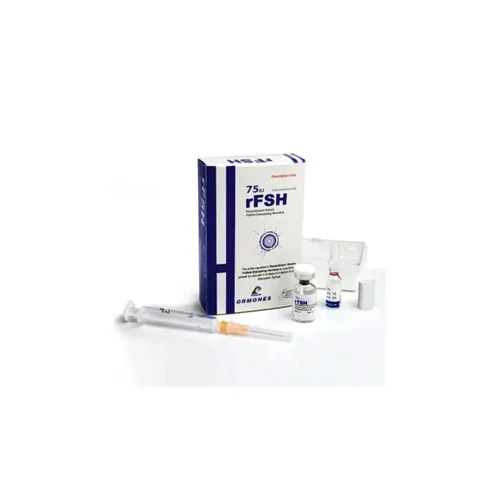
R fsh 75 IU Injection
Materna R Fsh 75IU Injection is used in the treatment of infertility in women. It is also helpful in the treatment of male hypogonadism. Human data on acute rFSH toxicity are limited. Excessive doses may overstimulate the ovaries and increase the risk of OHSS in women. If an overdose is suspected, seek immediate medical advice. Treatment is generally supportive and depends on the patient's symptoms and clinical condition.
rFSH is a prescription fertility medicine. It must be used only under the supervision of a registered physician or fertility specialist.
Discount Price: ৳ 1,881
MRP:
৳
1900
1%
off

100% Genuine Products, Guaranteed

Safe & Secure Payments, Always

Fast, Secure & Efficient Delivery

Proper Packaging
 Cash on Delivery - All over Bangladesh
 Regular Delivery: 24-48 Hours, Dhaka City* Charge Tk.39-59
- Regular Delivery: 48-96 Hours, Other Cities* Charge Tk.99-125
 ফ্রি ডেলিভারিঃ - ১৪৯৯ টাকা+ অর্ডারে, ঢাকা
শহরে
ফ্রি ডেলিভারিঃ - ১৪৯৯ টাকা+ অর্ডারে, ঢাকা
শহরে- ফ্রি ডেলিভারিঃ - ৪৯৯৯ টাকা+ অর্ডারে, ঢাকার
বাহিরে
📲 মোবাইল অ্যাপ অর্ডারে সাশ্রয় বেশী
-
Google Play Store থেকে ডাউনলোড
-
Apple Store থেকে ডাউনলোড
100% Genuine Products, Guaranteed
Safe & Secure Payments, Always
Fast, Secure & Efficient Delivery
Proper Packaging
- Cash on Delivery - All over Bangladesh
- Regular Delivery: 24-48 Hours, Dhaka City* Charge Tk.39-59
- Regular Delivery: 48-96 Hours, Other Cities* Charge Tk.99-125
- ফ্রি ডেলিভারিঃ - ১৪৯৯ টাকা+ অর্ডারে, ঢাকা
শহরে
- ফ্রি ডেলিভারিঃ - ৪৯৯৯ টাকা+ অর্ডারে, ঢাকার
বাহিরে
- Google Play Store থেকে ডাউনলোড
- Apple Store থেকে ডাউনলোড
📲 মোবাইল অ্যাপ অর্ডারে সাশ্রয় বেশী
✅ Description:
Recombinant Follicle-Stimulating Hormone (rFSH) 75 IU is an injectable fertility medicine used to support the development of ovarian follicles in women and stimulate sperm production in certain men with hormonal infertility. It is administered by subcutaneous injection and should be used under the supervision of a qualified fertility specialist.
rFSH is a recombinant form of human follicle-stimulating hormone produced using genetic engineering technology. It consists of two non-identical glycoprotein subunits, known as the alpha and beta chains, which closely resemble those of naturally occurring human FSH.
The hormone is manufactured in genetically modified Chinese hamster ovary (CHO) cells and undergoes purification to produce a highly consistent preparation. Its biological activity is standardized against the World Health Organization's international reference standard for recombinant human FSH.
rFSH acts on FSH receptors in the ovaries and testes. In women, it promotes the growth and maturation of ovarian follicles. In men, when combined with hCG, it supports the development of sperm-producing cells. Recombinant FSH has no significant luteinizing hormone (LH) activity.

Relevant Products
Same generic alternatives, ranked by customer interest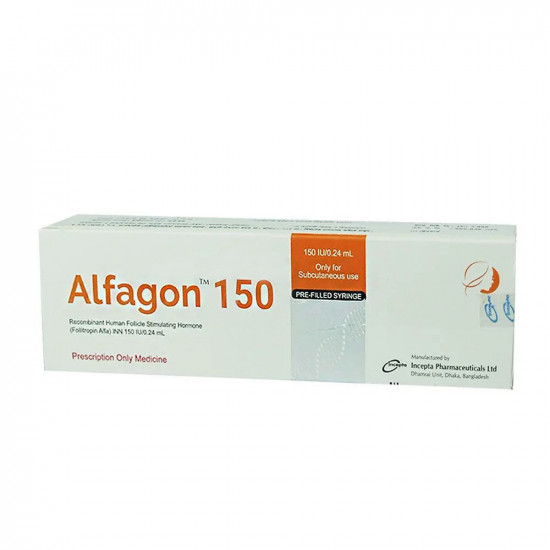
Alfagon 150IU Pre-Filled Syringe
More From Popular Pharmaceuticals Ltd.
Popular products from this manufacturer/brand
Qfol Capsule | 400mcg
HPC Injection 250mg/ml (Box)
M-Lucas 10mg Tablet 1 Strip
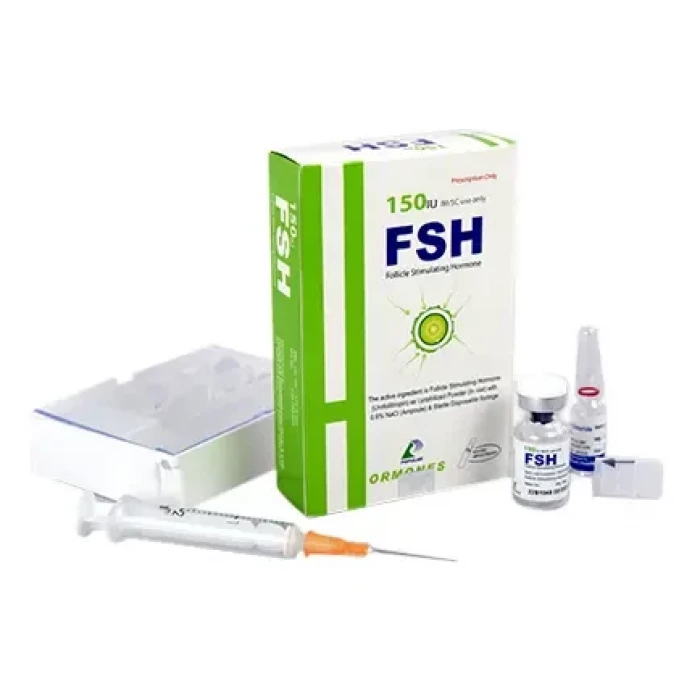
FSH 150IU IM/SC Injection
Feviz Plus Capsule 1 Strip
Zepatid 2.5 Prefilled Syringe For Subcutaneous Use
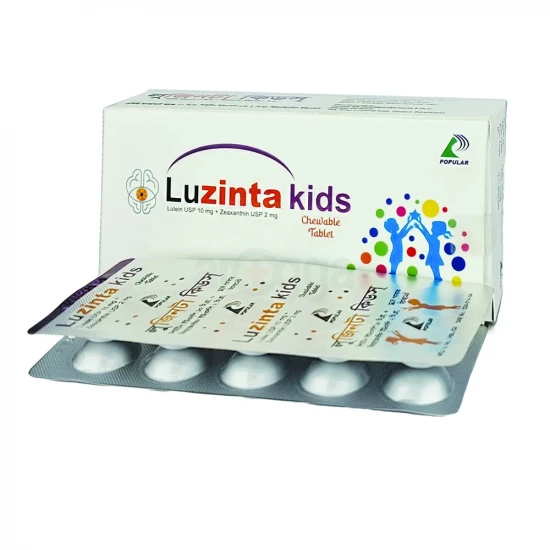
Luzinta Kids Chewable Tablet | 10mg+2mg
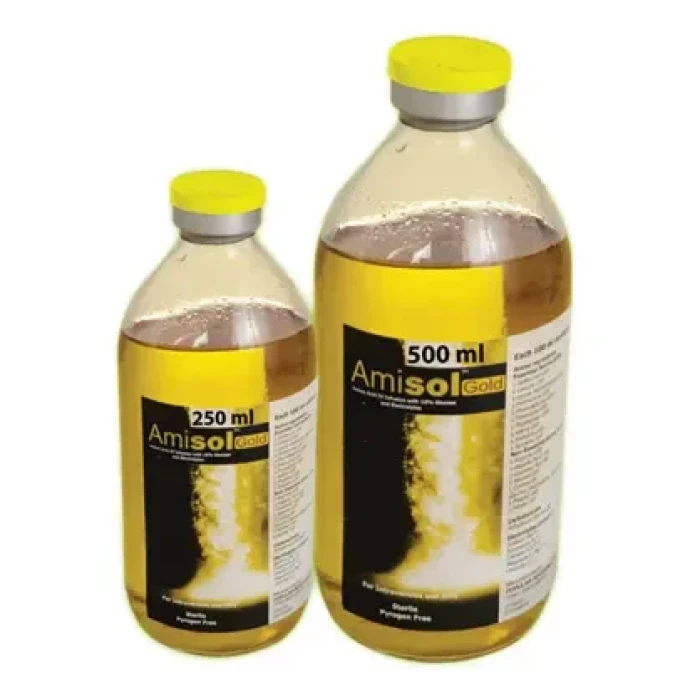
Amisol Gold 500ml
✔️ Uses of rFSH Injection
In Women
- Ovulation induction: Helps stimulate the growth and development of ovarian follicles in women who have difficulty ovulating, including those who have undergone pituitary suppression. Human chorionic gonadotropin (hCG) may be administered afterward to trigger ovulation.
- Assisted reproductive technology (ART): Used during fertility treatments such as IVF to stimulate the development of multiple ovarian follicles and support the production of several mature eggs.
- PCOS-related infertility: May be prescribed to induce ovulation in women with polycystic ovary syndrome (PCOS) who experience infertility due to ovulatory problems.
In Men
- Induction of spermatogenesis: Used in combination with hCG to stimulate sperm production in men with hypogonadotropic hypogonadism, a condition involving inadequate stimulation of the testes by reproductive hormones.
✔️ Dosage & Administration
The dose of rFSH varies considerably between patients. Treatment must be individualized according to the patient's age, medical condition, ovarian or testicular response, and fertility treatment plan.
- rFSH is administered by subcutaneous injection.
- The injection should be given slowly to reduce discomfort and leakage.
- Injection sites should be rotated to help prevent tissue changes, including lipoatrophy.
- Any unused reconstituted solution should be discarded according to the product instructions.
- Self-administration may be possible after proper training and only when approved by the treating physician.
- The first injection should generally be administered under medical supervision.
✔️ Side Effects
rFSH may cause side effects, particularly because it stimulates the reproductive organs. Possible adverse effects include:
- Pelvic or abdominal pain.
- Bloating.
- Nausea or vomiting.
- Breast tenderness.
- Headache.
- Injection-site pain or irritation.
- Ovarian enlargement.
- Multiple pregnancy, including twins or higher-order pregnancies.
✔️ Dosage in Women
Ovulation Induction
A commonly used starting dose is 75 IU daily, administered subcutaneously for at least the first seven days. The dose may be adjusted in increments of 25 or 75 IU at weekly intervals, depending on follicular growth and serum estradiol levels.
Once adequate follicular development has been achieved, hCG may be administered to induce final egg maturation and ovulation. The usual hCG dose may range from 5,000 to 10,000 IU, depending on the treatment plan.
Sexual intercourse may be advised around the expected time of ovulation. The exact timing should be determined by the fertility specialist.
Assisted Reproductive Technology (ART)
For controlled ovarian stimulation during IVF or other ART procedures, treatment may begin with approximately 150–300 IU daily for at least the first four days. Subsequent doses are adjusted according to ovarian response, ultrasound findings, and estradiol levels.
Once the follicles have reached the appropriate stage of development, hCG or another suitable medication may be used to trigger final oocyte maturation. Egg retrieval is generally performed approximately 34–36 hours after the trigger injection.
PCOS-Related Infertility
Women with PCOS may be started on a low dose, commonly around 75 IU daily, to encourage gradual follicular development. Treatment may continue for several days before the response is assessed through ultrasound and hormone testing.
If the ovaries do not respond adequately, the dose may be increased cautiously under specialist supervision. Dosage adjustments must be made carefully to reduce the risk of excessive ovarian stimulation and multiple pregnancy.
✔️ Contraindications
rFSH should not be used in patients with certain conditions, including:
- Tumors of the ovaries, breasts, uterus, pituitary gland, or hypothalamus when contraindicated by the treating specialist.
- Pregnancy.
- Breastfeeding, unless specifically assessed and advised by a specialist.
- Unexplained vaginal bleeding.
- Known hypersensitivity to FSH or any component of the formulation.
- Primary ovarian failure.
- Uterine fibroids that are incompatible with pregnancy.
- Primary testicular failure in men.
Underlying endocrine disorders, such as uncontrolled thyroid, adrenal, or pituitary conditions, should be evaluated before treatment begins.
✔️ For a 75 IU vial of lyophilized rFSH:
- Use the prescribed sterile water for injection according to the product instructions.
- Add the required volume of diluent to the vial using an aseptic technique.
- Gently swirl the vial until the powder has completely dissolved. Do not shake vigorously.
- Inspect the solution before use. It should be clear and free from visible particles or unusual discoloration.
- Do not use the solution if it appears cloudy, discolored, or contains particles.
- Prepare and administer the injection only as instructed by a qualified healthcare professional.
- Any unused solution should be discarded according to the product's instructions.
Combining contents from multiple vials should only be performed when specifically prescribed and instructed by a healthcare professional. The manufacturer's approved reconstitution procedure must be followed.
✔️ Pregnancy and Lactation
Pregnancy: Recombinant FSH must not be used during pregnancy. It is intended to support conception and has no therapeutic role after pregnancy has been established.
Breastfeeding: The safety of rFSH during lactation has not been established. Consult a healthcare professional before using this medicine while breastfeeding.
✔️ Ovarian Hyperstimulation Syndrome (OHSS)
In some women, the ovaries may respond excessively to rFSH. This can lead to ovarian hyperstimulation syndrome, which may cause:
- Severe pelvic or abdominal pain.
- Significant bloating.
- Rapid weight gain.
- Reduced urine output.
- Nausea or vomiting.
- Difficulty breathing.
- Fluid accumulation in the abdomen or lungs.
- Increased risk of blood clots.
✔️ Administration Instructions
In women who do not have primary ovarian failure, rFSH treatment commonly stimulates ovarian follicular growth over approximately 7–12 days, although the duration varies between patients.
The medicine generally promotes follicular development and maturation. Once sufficient follicular growth has been achieved, hCG or another appropriate trigger medication may be administered to induce final egg maturation and ovulation.
Regular ultrasound examinations and hormone testing are essential during treatment to monitor the response and reduce the risk of ovarian hyperstimulation.
✔️ Dosage in Men
For men with hypogonadotropic hypogonadism, hCG treatment is generally given first to stimulate testosterone production and normalize testosterone levels.
Once an adequate testosterone response has been achieved, rFSH may be added to stimulate sperm production. A specialist may prescribe approximately 150–300 IU per week, divided into multiple subcutaneous injections, alongside the appropriate hCG regimen.
Treatment may require several months, and semen analysis is commonly performed approximately four to six months after treatment begins to assess the response.
Dosages must be determined and adjusted by a qualified fertility specialist.
✔️ Precautions and Warnings
- Treatment should be initiated and monitored by a fertility specialist.
- The first injection should preferably be administered under direct medical supervision.
- Ovarian response must be monitored through ultrasound and, when appropriate, serum estradiol testing.
- Excessive ovarian stimulation may result in OHSS, which can cause serious complications.
- hCG should be withheld if unwanted ovarian hyperstimulation develops, as it may worsen OHSS.
- Gonadotropin treatment increases the risk of multiple pregnancy.
- Women undergoing ART may have a higher risk of ectopic pregnancy, particularly when tubal abnormalities are present. Early ultrasound assessment is important to confirm the location of pregnancy.
- Pregnancy loss may occur more frequently in women undergoing assisted reproductive procedures than in the general population.
- Although allergic reactions are uncommon, severe hypersensitivity, including anaphylaxis, is possible.
- Underlying thyroid, adrenal, and pituitary disorders should be assessed and appropriately controlled before treatment.
- Men receiving rFSH should undergo periodic semen analysis to evaluate sperm production.
- Patients should report severe abdominal pain, breathing difficulties, sudden weight gain, or reduced urine output immediately.
✔️ Storage:
- Store in a refrigerator at 2°C–8°C, according to the product label.
- Do not freeze.
- Keep away from direct light.
- Keep out of the reach and sight of children.
- Follow the manufacturer's instructions regarding storage after reconstitution.
- Do not use the medicine after its expiry date or if the solution is damaged or unsuitable for injection.
⚠️Disclaimer:
At ePharma, we’re committed to providing accurate and accessible health information. However, all content is intended for informational purposes only and should not replace medical advice from a qualified physician. Please consult your healthcare provider for personalized guidance. We aim to support, not substitute, the doctor-patient relationship.
📦Pricing Information, Availability:
Product Availability & Pricing Notice
Please note that pricing, availability, and service offerings are subject to change due to: Market fluctuations, Manufacturer or supplier adjustments, Product discontinuation or temporary unavailability, Advertising errors. All orders depend on stock availability and staff resources. If services are provided on a time-and-materials basis, any shared estimates are for planning purposes only.

Reliable
All products displayed on ePharma are procured from govt. approved pharmaceuticals and verified licensed pharmacies from 2016.

Secure
ePharma uses Secure Sockets Layer (SSL) 128-bit 🔒 encryption and is Payment Card Industry DataSecurity Standard (PCI DSS) compliant.

Affordable
Find affordable medicine substitutes, save up to 50% on health products, up to 30% off on doctor consultations.

Social
Providing health care services under the health and beauty category with more than 170K Facebook audience and 10M+ reach.







Get more features!
Download the app now
✓ Doctor consultation ✓ 24/7 helpline