Birth Control Pill: What to Do If You Miss One or More Pills
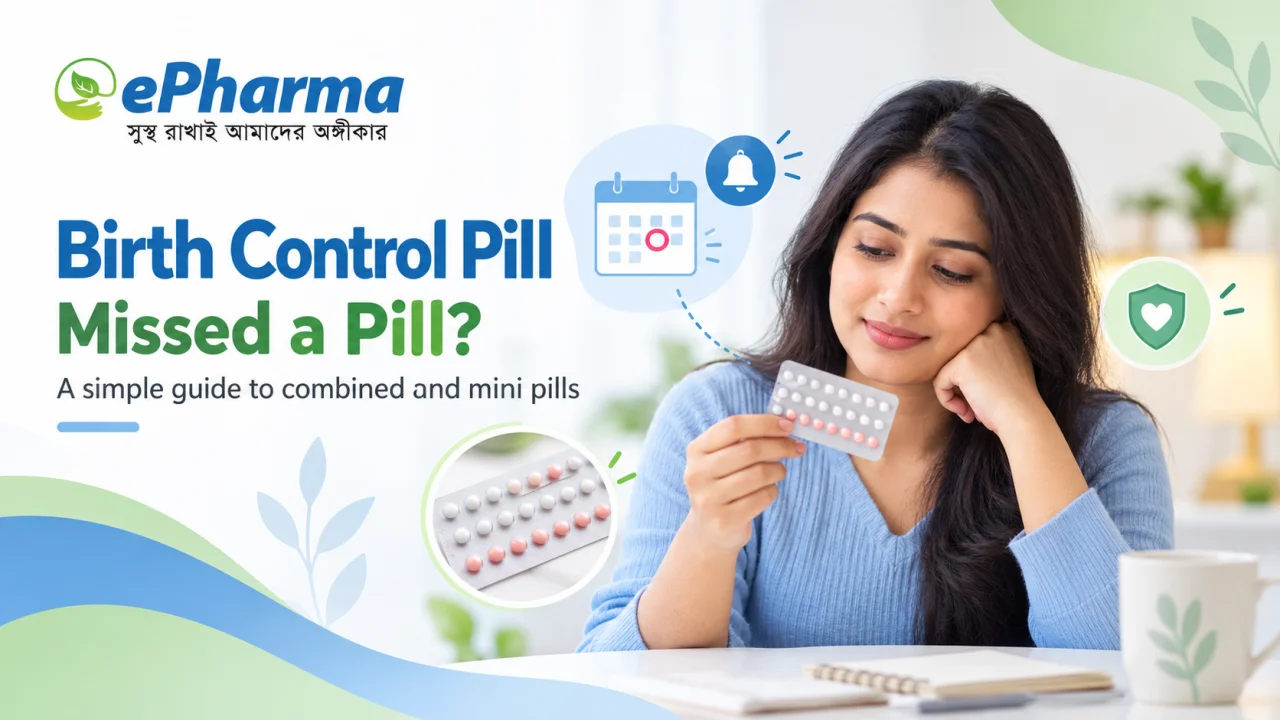
Missed your birth-control pill? Learn what to do after 1 or 2+ missed combined pills, how mini-pill timing differs, and when condoms or emergency contraception may be needed.
“I forgot last night's pill—what do I do now?” Seeing yesterday's tablet still in the pack can trigger instant panic. But being late, missing one active combined pill, and missing two or more pills are not the same situation. And the rules for the combined pill and the progestogen-only pill are different.
The most important rule: your exact pill leaflet takes priority because advice can vary by pill type and pack design. The guidance below is a practical framework for standard combined pills and common progestogen-only pills.
Missed combined pill: quick practical table
| Situation | What to do | Backup? |
|---|---|---|
| Less than 24 hours late | Take it as soon as you remember, then take the next pill at the usual time | Usually no extra contraception |
| 1 active pill missed | Take the most recent missed pill now—even if this means 2 pills in one day—then continue normally | Usually none for standard monophasic pills |
| 2+ active pills missed | Take only the most recent missed pill, leave earlier missed pills, continue the pack | Use condoms for 7 days |
| Week 1 + 2+ missed + recent unprotected sex | Follow the above rule and urgently discuss emergency contraception with a pharmacist/clinician | 7 days condoms |
| Week 3 + 2+ missed | Finish active pills and start the next pack without a pill-free break/dummy pills | 7 days condoms |
Important: Zoely, Qlaira, phasic pills and tailored regimens can have different instructions. Current NHS guidance says what to do depends on the pill type, number missed and where you are in the pack.
What type of pill do you take?
| Type | What it contains | Why it matters |
|---|---|---|
| Combined pill | Oestrogen + progestogen | Missed-pill action can depend on week and pack position |
| Progestogen-only pill / mini pill | Progestogen only | Timing window is tighter and type-specific |
| Emergency contraception | One-off options | Not a routine daily pill; may be needed after certain missed-pill situations |
When can you start the combined pill?
Current NHS guidance says:
- Start on days 1–5 of the menstrual cycle and you are usually protected straight away.
- Start after day 5 and use backup contraception for 7 days.
- Some brands, including Zoely and Qlaira, have different rules.
Taking the pill at roughly the same time each day helps build a reliable routine.
What are the inactive pills in an everyday pack?
Everyday combined-pill packs may contain differently coloured dummy pills. NHS notes that some packs have 7 dummy pills, while others have 2 or 4.
UNFPA explains that placebo tablets help users maintain the habit of taking a pill every day. Some placebo tablets contain iron, but the amount is not enough to treat iron deficiency or anaemia.
What if you miss a mini pill?
The rule depends on the type. In the supplied 2026 NHS Wales guidance, the traditional progestogen-only pill has a 3-hour window and the desogestrel pill has a 12-hour window.
If you are outside that window:
- take one pill now
- do not take multiple missed pills at once
- continue the pack at the usual time
- commonly use condoms for the next 48 hours, although some leaflets advise longer
- if you had recent unprotected sex, ask about emergency contraception
Current NHS guidance also emphasises checking the exact leaflet or asking a pharmacist because action depends on pill type and time elapsed.
What if you vomit or have severe diarrhoea?
NHS Wales guidance says that if you vomit within 2 hours of taking a mini pill, another pill may be needed. Severe diarrhoea can also reduce absorption.
Combined pills can also be affected by vomiting or diarrhoea. Follow the leaflet and get advice if illness continues.
How effective is the combined pill?
NHS says the combined pill is over 99% effective with correct use. Effectiveness falls with incorrect use such as missed pills. Healthdirect reports 99.7% with perfect use and about 93% with typical use.
Who should get medical advice before using the combined pill?
NHS says the combined pill may not be suitable if you:
- are 35 or older and smoke
- have a personal or strong family history of blood clots
- have high blood pressure or cardiovascular disease
- have migraine with aura
- have a history of breast cancer
- have significant liver disease or diabetes complications
What about breastfeeding?
Current NHS postpartum guidance says people who are breastfeeding are usually advised to wait until at least 6 weeks after birth before starting the combined pill. A progestogen-only method may be an option earlier, depending on individual risk.
Can other medicines affect the pill?
Current NHS guidance specifically flags some medicines used for TB, epilepsy and HIV, as well as griseofulvin, lamotrigine and St John's wort. It is not accurate to say that all antibiotics reduce contraceptive-pill effectiveness.
Always tell a pharmacist or clinician that you use hormonal contraception when starting another medicine.
What side effects can happen?
NHS says breakthrough bleeding or period changes are common in the first few months. Some people report headaches, mood changes, nausea, dizziness or sore breasts. A small number develop higher blood pressure.
Healthdirect also lists brown facial patches or melasma as a possible effect.
When should emergency contraception be discussed?
If you miss 2 or more active combined pills in the first week and have had recent unprotected sex, emergency contraception may be needed. The same applies when a mini pill is outside its allowed window and unprotected sex has occurred.
This article does not give specific emergency-pill names, doses or time windows because your regular pill can affect which emergency option is appropriate. Ask a pharmacist or clinician promptly.
When should you consider a pregnancy test?
If pills were missed, a new pack was started late, or you had unprotected sex and then do not get the expected bleed, a pregnancy test may be appropriate. Timing depends on the date of unprotected sex.
Common mistakes
- using combined-pill rules for the mini pill
- taking all missed pills at once after missing 2 or more
- ignoring emergency-contraception advice after week-1 missed pills
- taking a pill-free break after significant week-3 missed pills
- following a generic internet rule instead of the pack leaflet
- not mentioning hormonal contraception when starting interacting medicines
Common myths
- “Missing one pill means pregnancy is likely.” Not necessarily; action depends on pill type, number missed and pack position.
- “Every pill has the same 24-hour rule.” No. Mini-pill windows are tighter.
- “Dummy pills provide hormonal contraception.” No. They contain no contraceptive hormones.
- “All antibiotics stop the pill working.” No. Specific interacting medicines matter.
- “The pill protects against STIs.” No. Condoms help protect against STIs.
Frequently asked questions
What should you do after missing one combined pill?
Take the most recent missed active pill as soon as you remember, even if this means taking 2 pills in one day, then continue normally. With a standard monophasic pill, extra contraception is usually not needed for one missed pill.
What if you miss 2 or more combined pills?
Take the most recent missed pill, leave earlier missed pills, continue the pack and use condoms for 7 days.
What if pills were missed in week 1?
If 2 or more pills were missed and there was recent unprotected sex, urgently discuss emergency contraception.
How late can a mini pill be?
Traditional POPs commonly have a 3-hour window and desogestrel POPs a 12-hour window. Check your exact leaflet.
Can you use the combined pill while breastfeeding?
NHS usually advises waiting at least 6 weeks after birth if breastfeeding.
Does the pill protect against STIs?
No. Condoms are needed for STI protection.
Related reading
Sources
- NHS — What to do if you miss a combined pill or take an extra one.
- NHS — How to take the combined pill.
- NHS — What to do if you miss a progestogen-only pill.
- NHS — Sex and contraception after birth.
- NHS 111 Wales — Progestogen-only contraceptive pill, updated 8 April 2026.
- MHRA — Combined oral contraceptives: missed-pill advice, 2011.
- Healthdirect Australia — Combined oral contraceptive pill, reviewed August 2026.
- UNFPA — Combined oral contraceptives: placebo tablets.
This article is for general information. Exact missed-pill instructions can vary by brand, hormone type and pack design. Follow your pack leaflet and promptly ask a pharmacist or clinician if you are unsure, had recent unprotected sex or may need emergency contraception.
Related Products