

Premature Ejaculation: Causes, Treatment and Practical Help
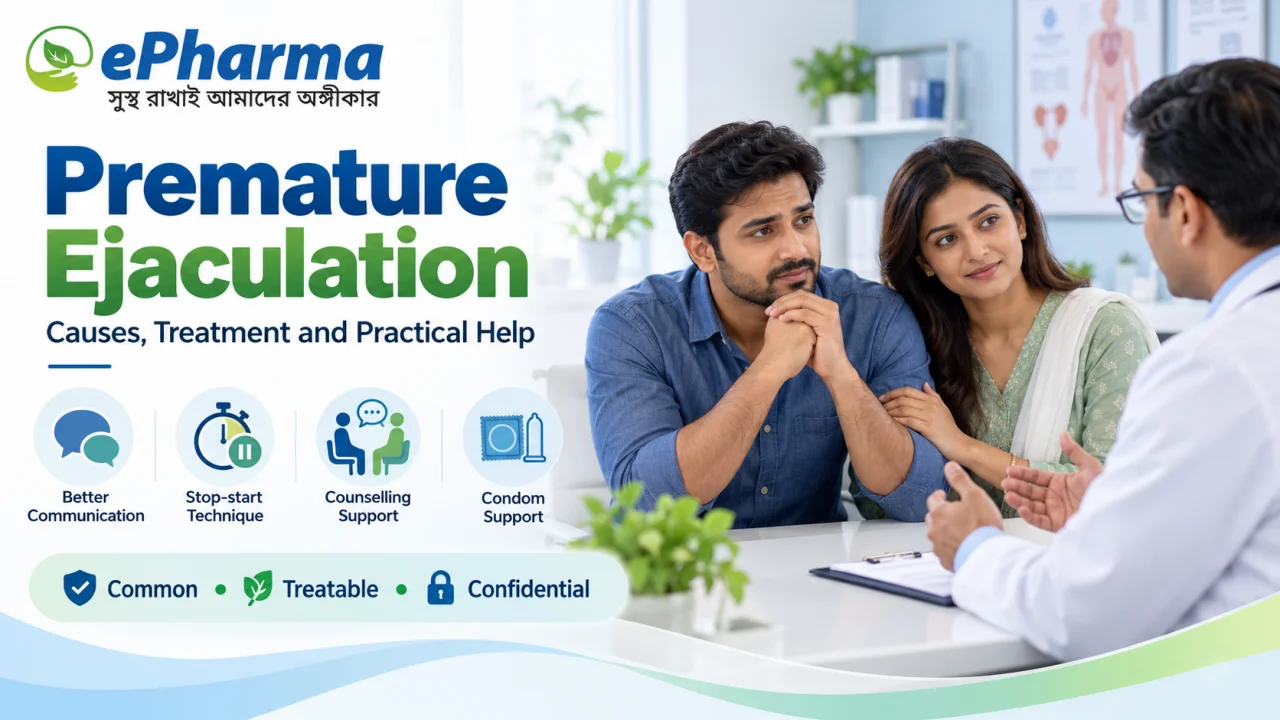
Learn what premature ejaculation means, common causes, stop-start and squeeze methods, condoms, counselling and when to consult a doctor.
It is okay to talk about it
Ejaculating earlier than you or your partner would like can be frustrating, especially in a new relationship. Occasional episodes are common, and persistent difficulties can be assessed and treated. A fictional example is a newly married man who initially avoids discussing the issue; a confidential consultation helps him understand that it is not a measure of masculinity.
What is premature ejaculation?
Premature ejaculation usually involves consistently ejaculating sooner than desired, limited control and personal or relationship distress. In lifelong PE, clinical definitions commonly refer to ejaculation within about one minute of penetration. Acquired PE may involve a marked bothersome reduction from a previous pattern. Time alone cannot establish a diagnosis; control, frequency and distress matter.
Does one episode mean a disorder?
No. Occasional early ejaculation can occur with excitement, stress or a new relationship. Seek assessment when it happens persistently, causes distress or begins suddenly after a period of previously satisfactory control.
Emotional and physical contributors
Performance anxiety, ongoing stress, low mood and relationship tension can contribute. In some cases, erectile difficulties, prostate-related conditions or thyroid problems may need assessment. There is not one universal cause, and self-diagnosis can miss treatable conditions.
PE is not the same as erectile dysfunction
PE concerns ejaculatory timing and control. Erectile dysfunction concerns achieving or maintaining an erection. They can coexist, and the best approach depends on assessing both rather than treating them as interchangeable.
The stop-start technique
With the stop-start method, pause stimulation when ejaculation feels imminent, allow arousal to settle, then resume. It takes practice and works best with communication and consent. Stop if there is pain or discomfort and seek professional advice when needed.
The squeeze method and alternatives
A clinician may teach the squeeze technique, which briefly applies pressure near the head of the penis before ejaculation. NHS describes 10–20 seconds, but the method is not comfortable for everyone. Never force it if painful; stop-start techniques or counselling may be preferable.
Can condoms help delay ejaculation?
A thicker condom or a product marketed for delaying sensation may help some people, but results vary and condoms are not a guaranteed treatment. Follow the product instructions and check for latex or ingredient sensitivity. Stop use if irritation occurs. Condoms also help lower STI and unintended-pregnancy risks but do not provide complete protection.
Counselling and medical treatment
Psychosexual counselling and behavioural techniques can help address anxiety and improve control. A urologist or andrologist may consider other evidence-based treatment when appropriate. Medicines can cause adverse effects and interactions, so do not self-prescribe.
Beware of unverified enhancement products
Avoid unverified herbal pills, oils and products promising guaranteed results. Some erectile-dysfunction medicines can dangerously lower blood pressure when combined with nitrate medicines used for heart disease. Always disclose your other conditions and medications to your clinician.
When to book a consultation
Consult a urologist or andrologist for persistent distressing symptoms, sudden onset, coexisting erection difficulties, urinary symptoms, painful ejaculation or major relationship strain. A psychosexual therapist or mental-health professional can also be helpful.
Choosing relevant related products
The selected related items are condoms sold in the extra-time or delay category. They may reduce sensation for some users, but do not diagnose PE or guarantee lasting improvement. Read the instructions and ingredients carefully. No prescription sexual-health drugs are featured.
Related reading: Depression symptoms · Sexual-health medicine safety
Frequently asked questions
When is early ejaculation a problem?
When limited control happens persistently and causes distress.
Is one minute the only cutoff?
No. It is one element in lifelong PE definitions; acquired changes and distress also matter.
Is an occasional episode a disorder?
No. Occasional episodes are common.
What can contribute to PE?
Anxiety, relationship stress and some physical conditions.
What is stop-start?
Pause stimulation near ejaculation, then resume when arousal subsides.
Can condoms help?
A thicker or delay condom may help some people, but is not guaranteed.
Which doctor should I see?
A urologist or andrologist; sometimes a psychosexual therapist.
Are herbal enhancement pills safe?
Ingredients and effects may be uncertain; avoid unverified products.
Are PE and erectile dysfunction the same?
No, although they can occur together.
Sources
Related Products