


✔ 100% Authentic Product
👁️ Viewed 1803 times
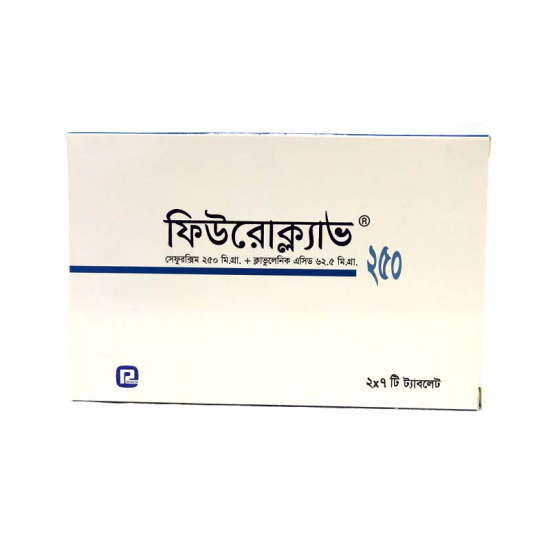
Furoclav 250 Tablet 1 Strip
Discount Price: ৳ 235
MRP:
৳
245
4%
off

100% Genuine Products, Guaranteed

Safe & Secure Payments, Always

Fast, Secure & Efficient Delivery

Proper Packaging
 Cash on Delivery - All over Bangladesh
 Regular Delivery: 24-48 Hours, Dhaka City* Charge Tk.39-59
- Regular Delivery: 48-96 Hours, Other Cities* Charge Tk.99-125
 ফ্রি ডেলিভারিঃ - ১৪৯৯ টাকা+ অর্ডারে, ঢাকা
শহরে
ফ্রি ডেলিভারিঃ - ১৪৯৯ টাকা+ অর্ডারে, ঢাকা
শহরে- ফ্রি ডেলিভারিঃ - ৪৯৯৯ টাকা+ অর্ডারে, ঢাকার
বাহিরে
📲 মোবাইল অ্যাপ অর্ডারে সাশ্রয় বেশী
-
Google Play Store থেকে ডাউনলোড
-
Apple Store থেকে ডাউনলোড
100% Genuine Products, Guaranteed
Safe & Secure Payments, Always
Fast, Secure & Efficient Delivery
Proper Packaging
- Cash on Delivery - All over Bangladesh
- Regular Delivery: 24-48 Hours, Dhaka City* Charge Tk.39-59
- Regular Delivery: 48-96 Hours, Other Cities* Charge Tk.99-125
- ফ্রি ডেলিভারিঃ - ১৪৯৯ টাকা+ অর্ডারে, ঢাকা
শহরে
- ফ্রি ডেলিভারিঃ - ৪৯৯৯ টাকা+ অর্ডারে, ঢাকার
বাহিরে
- Google Play Store থেকে ডাউনলোড
- Apple Store থেকে ডাউনলোড
📲 মোবাইল অ্যাপ অর্ডারে সাশ্রয় বেশী
✅ Description:
Cefuroxime is a bactericidal second-generation cephalosporin antibiotic that kills a wide spectrum of Gram-positive & negative bacteria, including many beta-lactamase-producing strains. Cefuroxime works by interfering with the transpeptidation process, which stops bacteria from making cell walls. Streptomyces clavuligerus produces clavulanic acid, a naturally derived beta-lactamase inhibitor. It has a structure comparable to beta-lactam antibiotics, and it binds to beta-lactamase enzymes and inactivates them irreversibly. Clavulanic acid protects Cefuroxime against breakdown by beta-lactamase enzymes, making it a viable therapy option for bacterial infections.
Generics: Cefuroxime Axetil + Clavulanic Acid Dosage Form: Tablet.Indications: It is indicated for the treatment of infections caused by sensitive bacteria.
- Pharyngitis/Tonsillitis caused by Streptococcus pyogenes.
- Acute Bacterial Otitis Media caused by Streptococcus pneumoniae, Haemophilus influenzae, Moraxella catarrhalis (beta-lactamase producing strains) or Streptococcus pyogenes.
- Acute bacterial maxillary sinusitis caused by Streptococcus pneumoniae or Haemophilus influenzae (non beta-lactamase producing strains)
- Lower respiratory tract infections including pneumoniae, caused by Streptococcus pneumoniae, Haemophilus influenzae (including beta lactamase-producing strains), Klebsiella spp., Staphylococcus aureus (penicillinase- and non-penicillinase-producing strains), Streptococcus pyogenes, E. coli.
- Acute bacterial exacerbation of chronic bronchitis and secondary bacterial infections of Acute bronchitis caused by Streptococcus pneumoniae, Haemophilus influenzae (beta-lactamase negative strains) or Haemophilus parainfluenzae (beta-lactamase negative strains).
- Uncomplicated skin and skin-structure infections caused by Staphylococcus aureus (including beta-lactamase producing strains) or Streptococcus pyogenes.
- Uncomplicated urinary tract infections caused by E.coli or Klebsiella pneumoniae.
- Bone and Joint Infections caused by Staphylococcus aureus (penicillinase- and non-penicillinase-producing strains).
- Uncomplicated Gonorrhoea caused by penicillinase-producing and non-penicillinase producing strains of Neisseria gonorrhoeae.
- Early Lyme Disease (erythema migrans) caused by Borrelia burgdorferi.
- Septicemia caused by Staphylococcus aureus, Streptococcus pneumoniae, E.coli, Haemophilus influenzae (including ampicillin-resistant strains) & Klebsiella spp.
- Meningitis caused by Streptococcus pneumoniae, Haemophilus influenzae (including ampicillin-resistant strains), Neisseria meningitidis & Staphylococcus aureus (penicillinase and non-penicillinase producing strains)
- Switch therapy (Injectable to oral)
Pharmacology:
Cefuroxime is a bactericidal second generation cephalosporin antibiotic which is active against a wide range of Gram-positive and Gram-negative susceptible organisms including many beta-lactamase producing strains. Cefuroxime inhibits bacterial cell wall synthesis by interfering with the transpeptidation process. Clavulanic acid is a naturally derived beta lactamase inhibitor produced by Streptomyces clavuligerus. It has similar structure to beta lactam antibiotics which binds irreversibly to beta-lactamase enzymes and inactivates them. Clavulanic acid gives protection of Cefuroxime from degradation by beta lactamase enzymes and provides a solution for the treatment of bacterial infections caused by beta lactam resistant bacteria.
Dosage guideline: Adolescents and adults (13 years and older)-
- Pharyngitis/tonsillitis: 250 mg b.i.d. for 5-10 days
- Acute bacterial maxillary sinusitis: 250 mg b.i.d. for 10 days
- Acute bacterial exacerbation of chronic bronchitis: 250-500 mg b.i.d. for 10 days
- Secondary bacterial infections of acute bronchitis: 250-500 mg b.i.d. for 5-10 days
- Uncomplicated skin and skin structure infections: 250-500 mg b.i.d. for 10 days
- Uncomplicated urinary tract infections: 250 mg b.i.d. for 7-10 days
- Uncomplicated Gonorrhoea: 1000 mg b.i.d. Single dose
- Community acquired pneumonia: 250-500 mg b.i.d. for 5-10 days
- MDR Typhoid Fever: 500 mg b.i.d. for 10-14 days
- Early Lyme disease: 500 mg b.i.d. for 20 days
Paediatric Patients (3 months to 12 years)-
- Pharyngitis/Tonsillitis: 20 mg/kg/day b.i.d for 5-10 days
- Acute otitis media: 30 mg/kg/day b.i.d for 10 days
- Acute bacterial maxillary sinusitis: 30 mg/kg/day b.i.d for 10 days
- Impetigo: 30 mg/kg/day b.i.d for 10 days
Route of administration: Orally.Interaction: Concomitant administration of probenecid with Cefuroxime-Clavulanic Acid increases the area under the serum concentration versus time curve by 50%. Drug that reduces gastric acidity may result in a lower bioavailability of Cefuroxime and tend to cancel the effect of postprandial absorption. Contraindications:Cefuroxime-Clavulanic Acid is contraindicated in patients with known allergy to cephalosporin & in patients with Pseudomembranous Colitis. Side Effects: Generally Cefuroxime-Clavulanic Acid is well tolerated. However, a few side effects like nausea, vomiting, diarrhea, abdominal discomfort or pain may occur. As with other broad-spectrum antibiotics, prolonged administration of Cefuroxime and Clavulanic acid combination may result in overgrowth of nonsusceptible microorganisms. Rarely (<0.2%) renal dysfunction, anaphylaxis, angioedema, pruritis, rash and serum sickness like urticaria may appear.  Pregnancy & Lactation: While all antibiotics should be avoided in the first trimester if possible. However, Cefuroxime-Clavulanic Acid can be safely used in later pregnancy to treat urinary and other infections. Cefuroxime-Clavulanic Acid is excreted into the breast milk in small quantities. However, the possibility of sensitizing the infant should be kept in mind.  Precautions & Warnings: Cefuroxime should be given with care to patients receiving concurrent treatment with potent diuretics & who has history of colitis.  Therapeutic Class:Second generation Cephalosporins Storage Conditions: Store in a cool, dry place (below 30o C), away from light and moisture. Keep out of the reach of children.

Relevant Products
Same generic alternatives, ranked by customer interest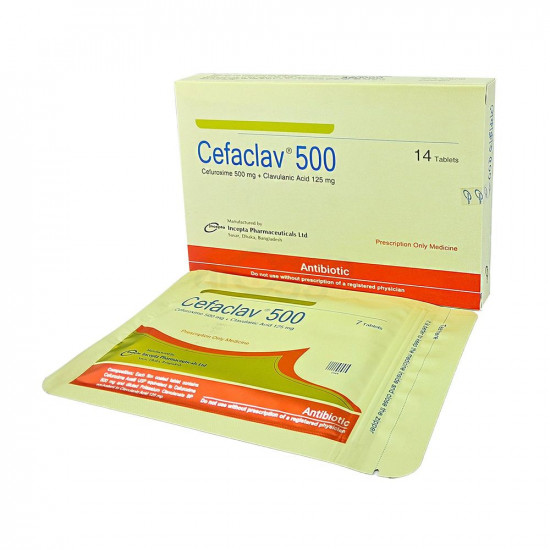
Cefaclav 500 | 7pcs Tablet
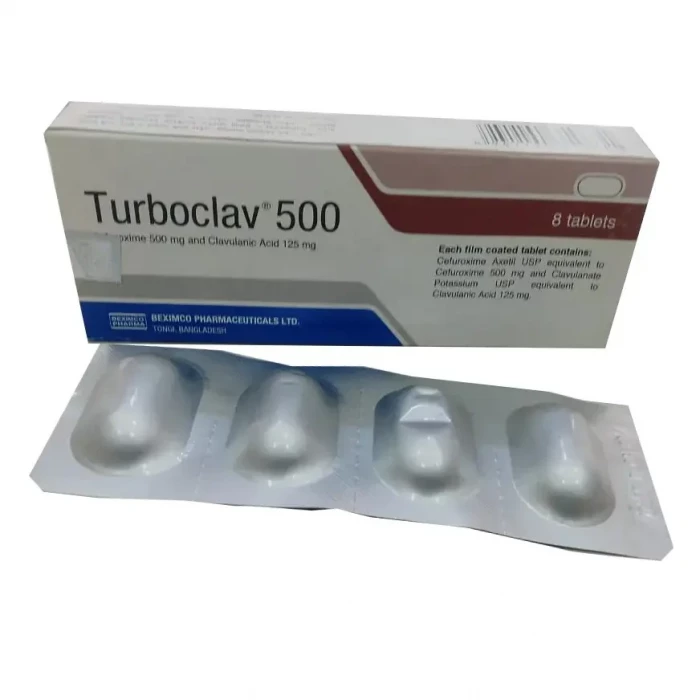
Turboclav 500mg 4pcs Tablet
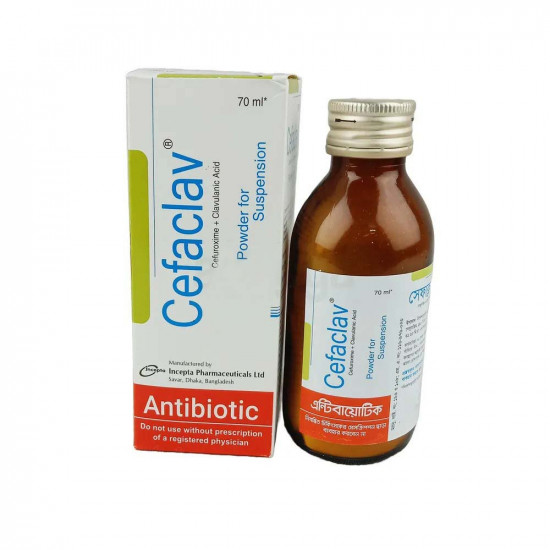
Cefaclav Powder For Suspension | 70ml
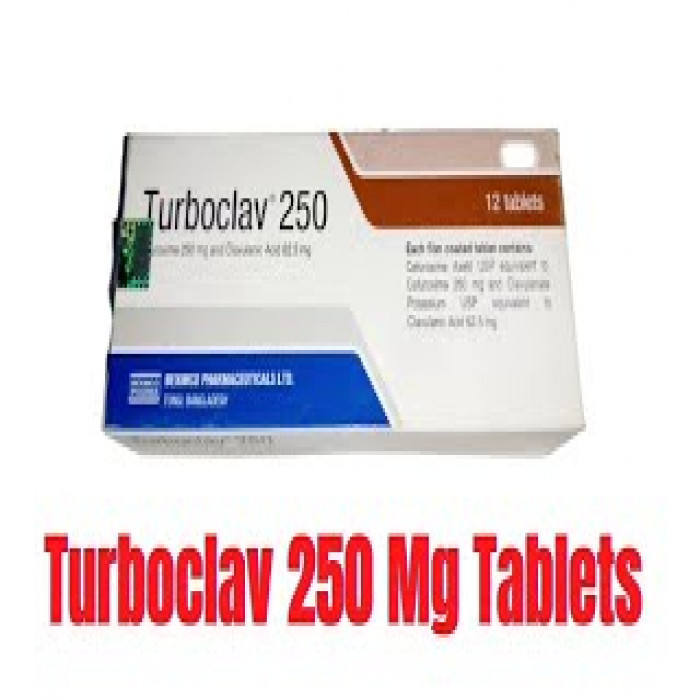
Turboclav 250mg Tablet 4pcs
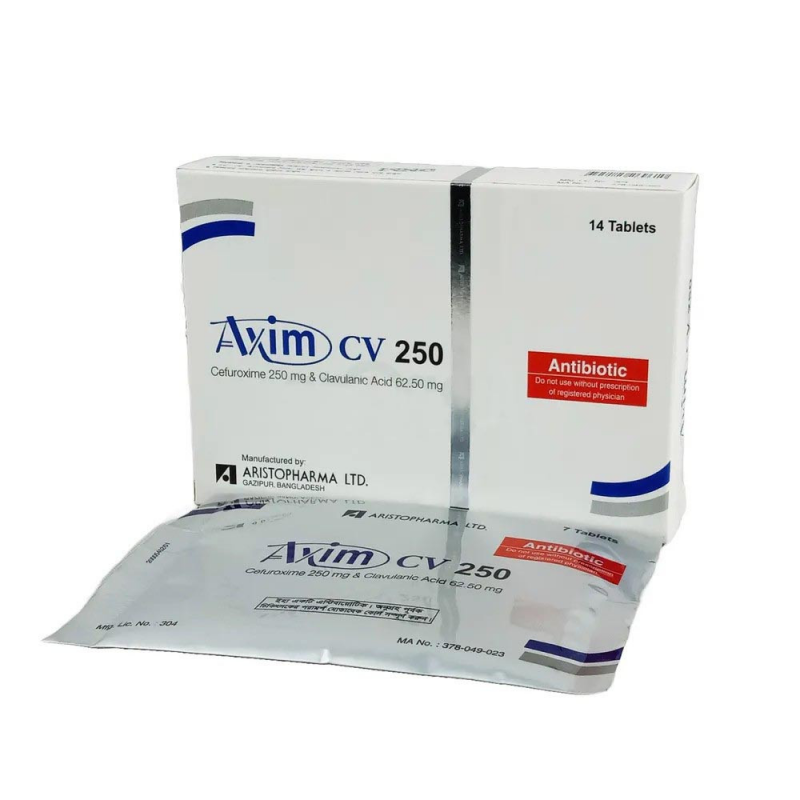
Axim CV 250mg Tablet 1 Strip
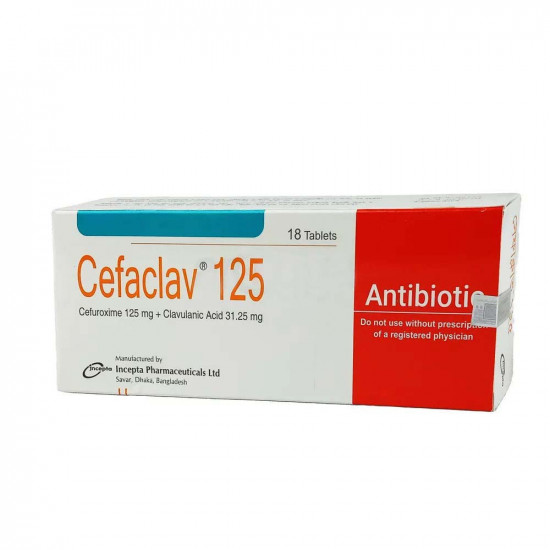
Cefaclav 125 | 6pcs
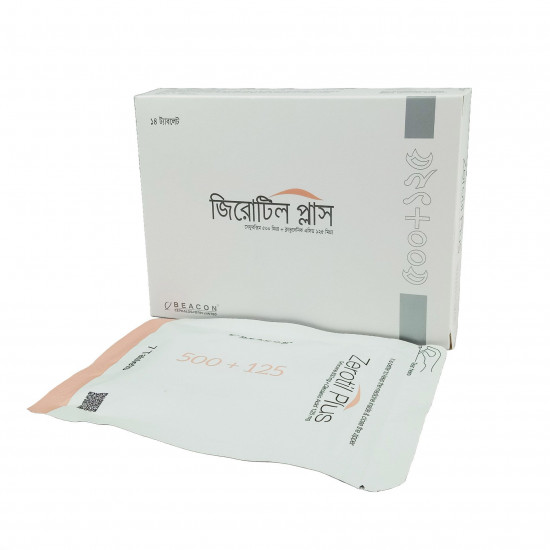
Zerotil Plus | 500mg+125mg
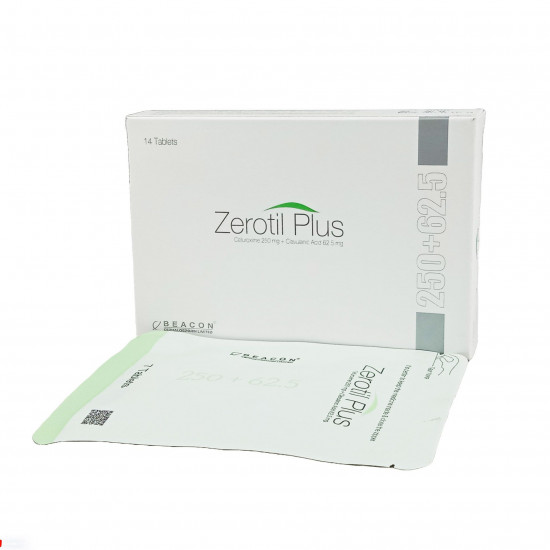
Zerotil Plus | 250mg+62.5mg
More From Renata Limited
Popular products from this manufacturer/brand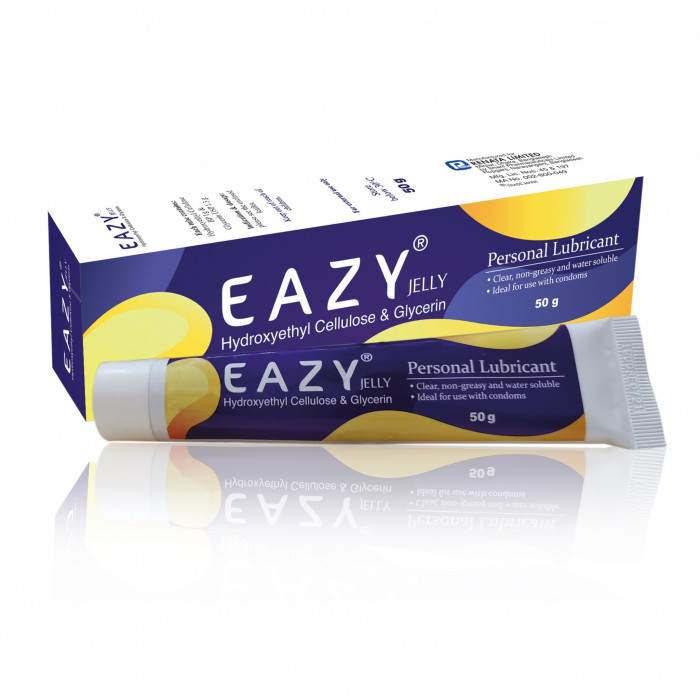
Eazy Jelly 50gm
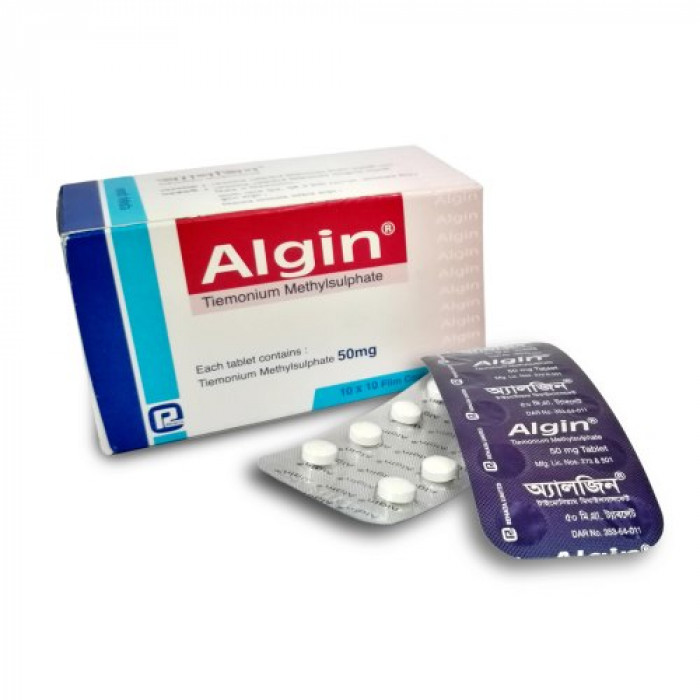
Algin 50mg Tablet
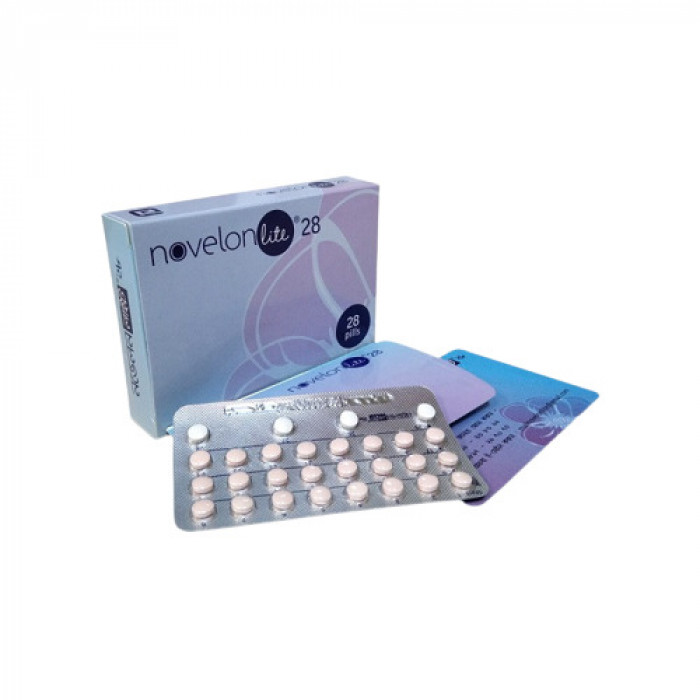
Novelon Lite
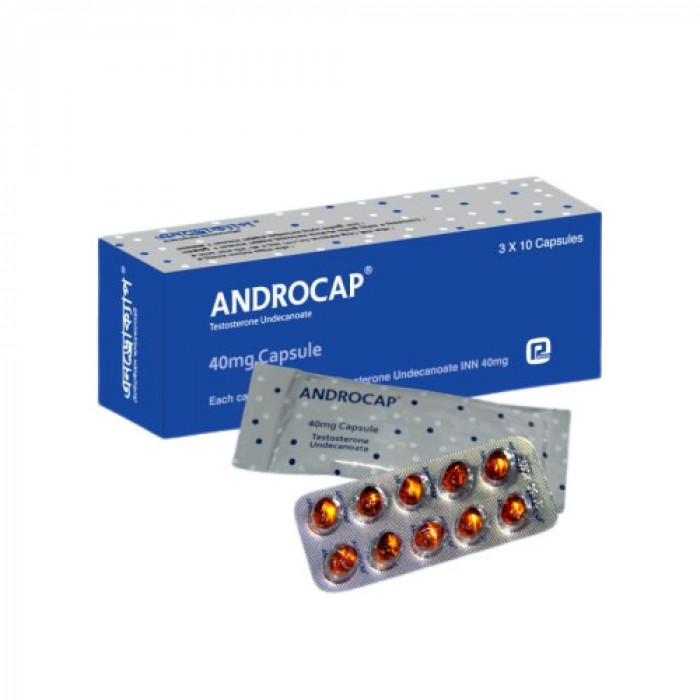
Androcap 40mg Capsule
Maxpro Mups 20mg Tablet
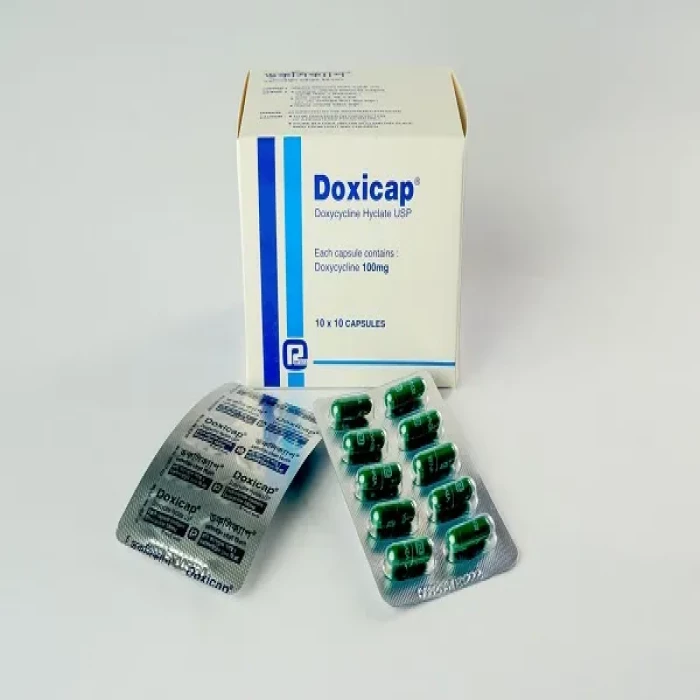
Doxicap 100mg Capsule 1 Strip
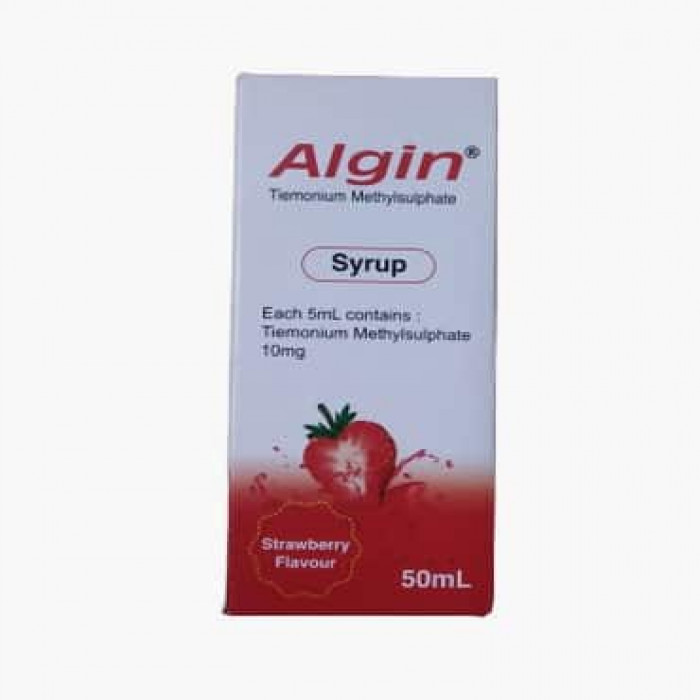
Algin Syrup
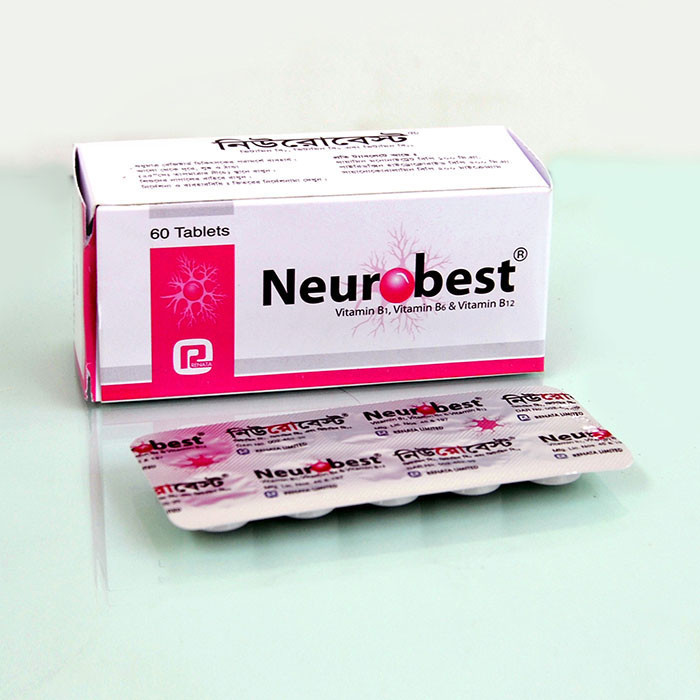
Neurobest Tablet 1 Strip
Related Posts
⚠️Disclaimer:
At ePharma, we’re committed to providing accurate and accessible health information. However, all content is intended for informational purposes only and should not replace medical advice from a qualified physician. Please consult your healthcare provider for personalized guidance. We aim to support, not substitute, the doctor-patient relationship.
📦Pricing Information, Availability:
Product Availability & Pricing Notice
Please note that pricing, availability, and service offerings are subject to change due to: Market fluctuations, Manufacturer or supplier adjustments, Product discontinuation or temporary unavailability, Advertising errors. All orders depend on stock availability and staff resources. If services are provided on a time-and-materials basis, any shared estimates are for planning purposes only.

Reliable
All products displayed on ePharma are procured from govt. approved pharmaceuticals and verified licensed pharmacies from 2016.

Secure
ePharma uses Secure Sockets Layer (SSL) 128-bit 🔒 encryption and is Payment Card Industry DataSecurity Standard (PCI DSS) compliant.

Affordable
Find affordable medicine substitutes, save up to 50% on health products, up to 30% off on doctor consultations.

Social
Providing health care services under the health and beauty category with more than 170K Facebook audience and 10M+ reach.







Get more features!
Download the app now
✓ Doctor consultation ✓ 24/7 helpline