


✔ ১০০% অরিজিনাল পণ্য
👁️ 2059 বার দেখা হয়েছে
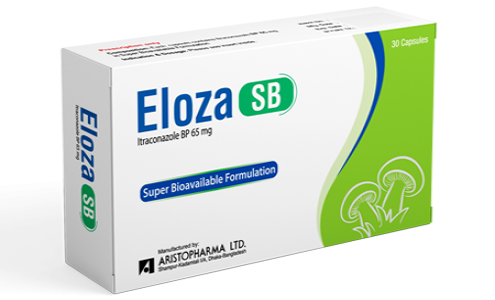
Eloza SB 65mg Capsule
Eloza SB is used for the treatment of various fungal infections, including:
- Oropharyngeal candidiasis
- Vulvovaginal candidiasis
- Pityriasis versicolor
- Tinea pedis
- Tinea cruris
- Tinea corporis
- Tinea manuum
- Onychomycosis
- Histoplasmosis
Itraconazole is also indicated for systemic fungal infections such as candidiasis, aspergillosis, and cryptococcosis, including cryptococcal meningitis. It may also be used as maintenance therapy in patients with AIDS to prevent relapse of underlying fungal infections and for prophylaxis against fungal infections during prolonged neutropenia.
অফার মূল্য: ৳ 143
MRP:
৳
150
5%
ছাড়
১০০% অরিজিনাল পণ্যের নিশ্চয়তা

Safe & Secure Payments, Always

Fast, Secure & Efficient Delivery
Proper Packaging
 Cash on Delivery - All over Bangladesh
 Regular Delivery: 24-48 Hours, Dhaka City* Charge Tk.39-59
- Regular Delivery: 48-96 Hours, Other Cities* Charge Tk.99-125
 ফ্রি ডেলিভারিঃ - ১৪৯৯ টাকা+ অর্ডারে, ঢাকা
শহরে
ফ্রি ডেলিভারিঃ - ১৪৯৯ টাকা+ অর্ডারে, ঢাকা
শহরে- ফ্রি ডেলিভারিঃ - ৪৯৯৯ টাকা+ অর্ডারে, ঢাকার
বাহিরে
📲 মোবাইল অ্যাপ অর্ডারে সাশ্রয় বেশী
-
Google Play Store থেকে ডাউনলোড
-
Apple Store থেকে ডাউনলোড
১০০% অরিজিনাল পণ্যের নিশ্চয়তা
Safe & Secure Payments, Always
Fast, Secure & Efficient Delivery
Proper Packaging
- Cash on Delivery - All over Bangladesh
- Regular Delivery: 24-48 Hours, Dhaka City* Charge Tk.39-59
- Regular Delivery: 48-96 Hours, Other Cities* Charge Tk.99-125
- ফ্রি ডেলিভারিঃ - ১৪৯৯ টাকা+ অর্ডারে, ঢাকা
শহরে
- ফ্রি ডেলিভারিঃ - ৪৯৯৯ টাকা+ অর্ডারে, ঢাকার
বাহিরে
- Google Play Store থেকে ডাউনলোড
- Apple Store থেকে ডাউনলোড
📲 মোবাইল অ্যাপ অর্ডারে সাশ্রয় বেশী
✅ বিবরণ:
Itraconazole is an orally active triazole antifungal agent with broad-spectrum antifungal activity. It inhibits fungal cytochrome P450-dependent enzymes involved in the biosynthesis of ergosterol, an essential component of the fungal cell membrane.
Inhibition of ergosterol synthesis disrupts fungal cell membrane integrity and function, resulting in impaired membrane permeability, altered membrane-bound enzyme activity, abnormal cell-wall formation, and inhibition of fungal growth.
Eloza SB uses SUBA (Super Bio-available) technology, in which itraconazole is formulated as a solid dispersion in a polymer. This technology improves the dissolution and bioavailability of the poorly water-soluble drug compared with conventional crystalline itraconazole formulations.
| Indication | Recommended Dose |
|---|---|
| Vulvovaginal candidiasis | 130 mg twice daily for 1 day |
| Pityriasis versicolor | 65 mg twice daily for 7 days |
| Tinea corporis / Tinea cruris | 65 mg once daily for 15 days or 65 mg twice daily for 7 days |
| Tinea pedis / Tinea manuum | 65 mg once daily for 30 days |
| Oropharyngeal candidiasis | 65 mg once daily for 15 days; 65 mg twice daily for 15 days may be used in AIDS or neutropenic patients because of impaired absorption |
| Onychomycosis | 65 mg twice daily for 3 months, or pulse therapy with 130 mg twice daily for 7 days, with subsequent courses repeated after a 21-day interval. Fingernail infection generally requires 2 courses and toenail infection 3 courses. |

প্রাসঙ্গিক পণ্য
একই জেনেরিকের বিকল্প পণ্য, গ্রাহকের আগ্রহ অনুযায়ী সাজানো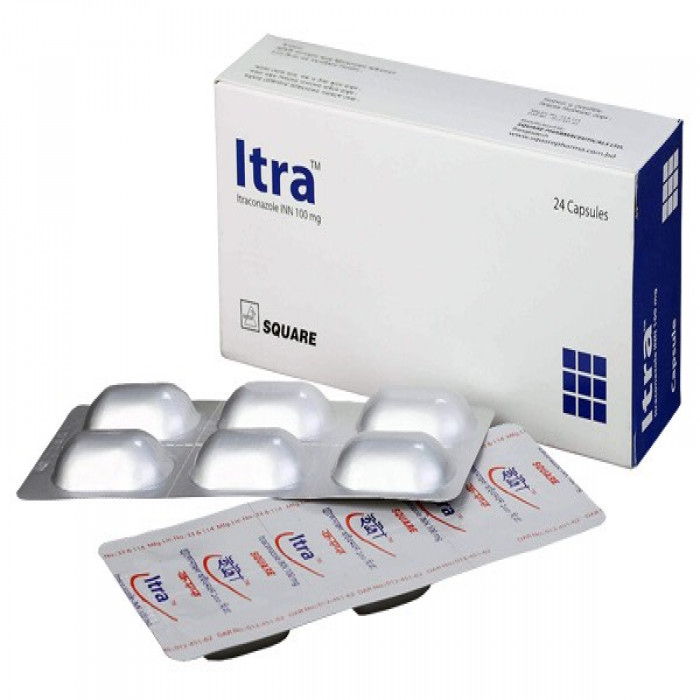
Itra 100mg Capsule
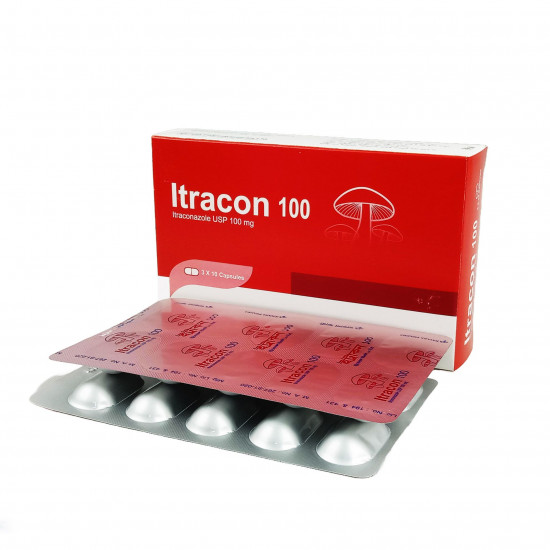
Itracon 100 | 1 Strip
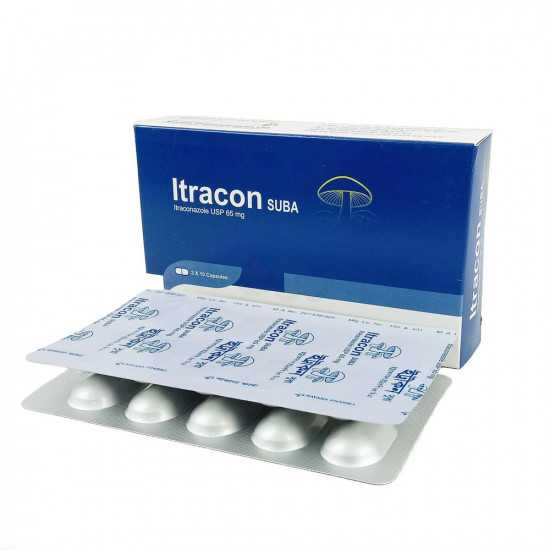
Itracon Suba 65 | 10 Capsules
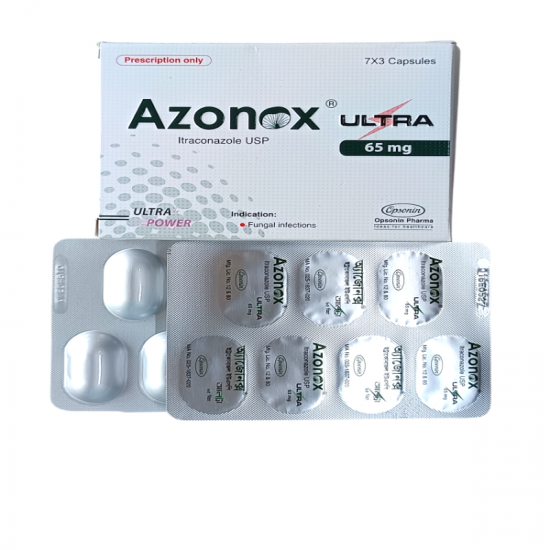
Azonox Ultra 65mg Capsule | 1 Strip
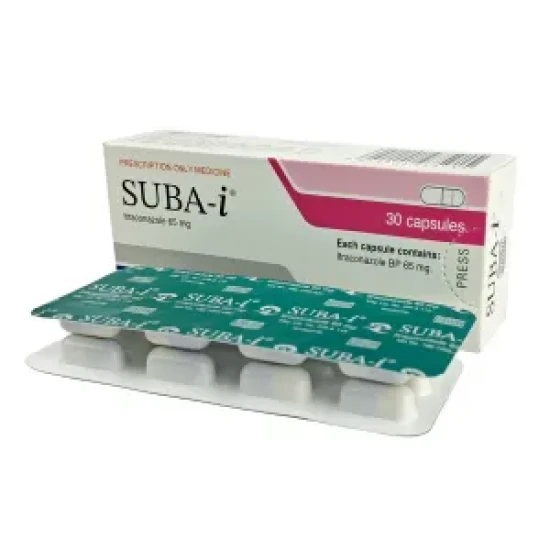
Suba I 65mg Capsule
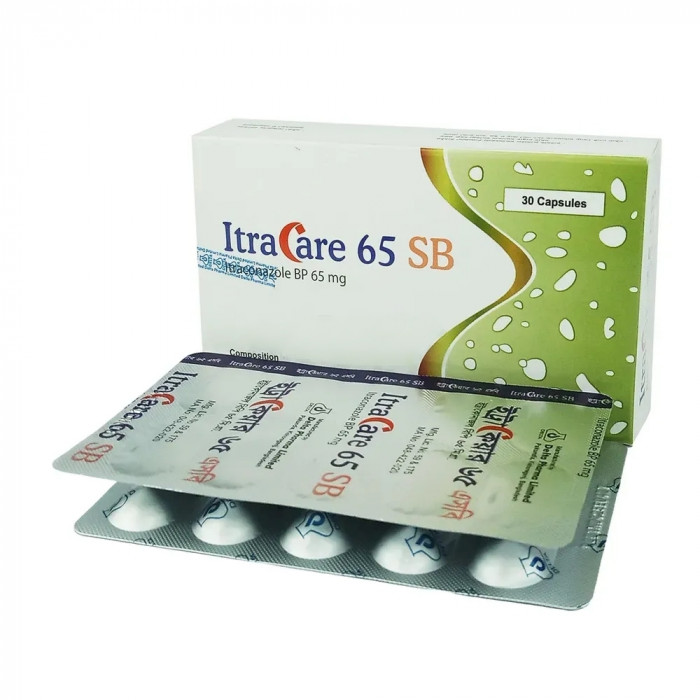
Itracare SB 65mg Capsule 1 Strip
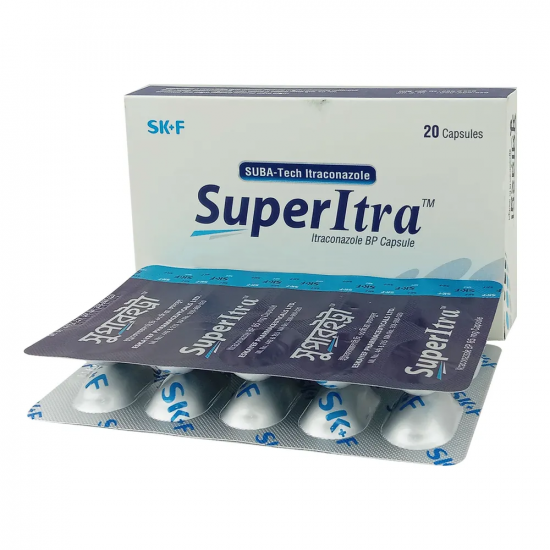
SuperItra 65 Capsule | 1 Strip
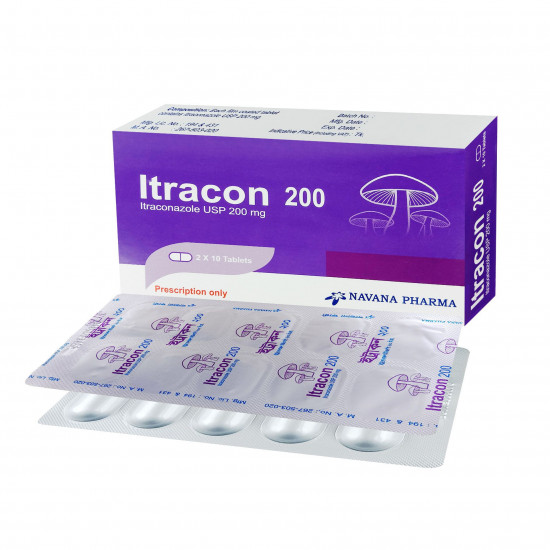
Itracon 200 | 10 Tablets
Drug International Ltd-এর আরও পণ্য
এই প্রস্তুতকারক বা ব্র্যান্ডের জনপ্রিয় পণ্য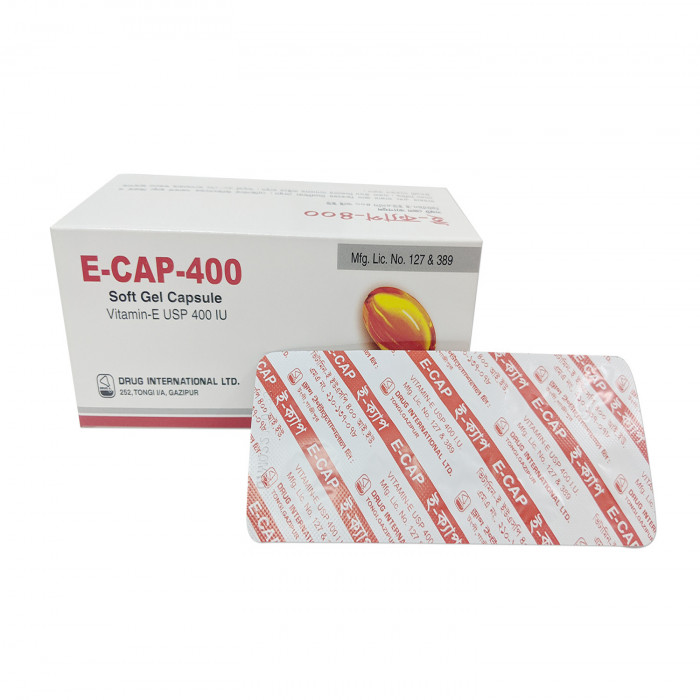
E-Cap 400IU Softgel
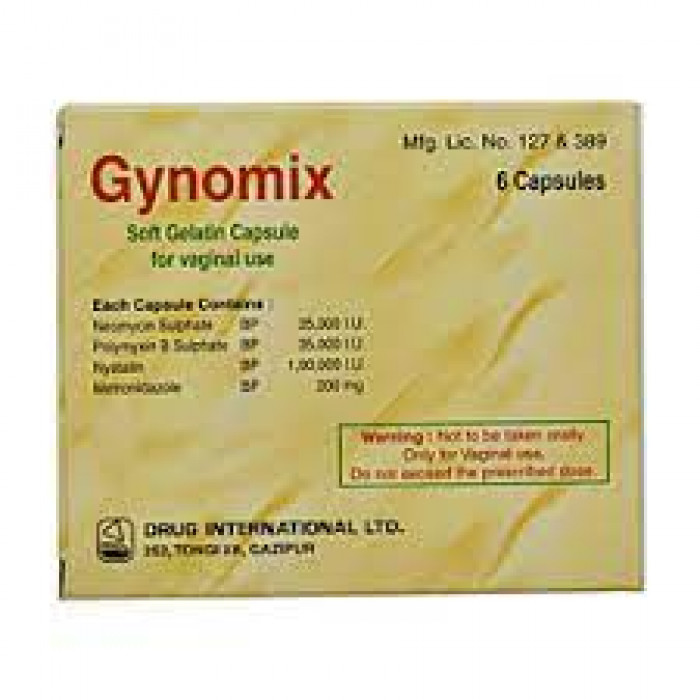
Gynomix Vaginal Suppository 6Pcs
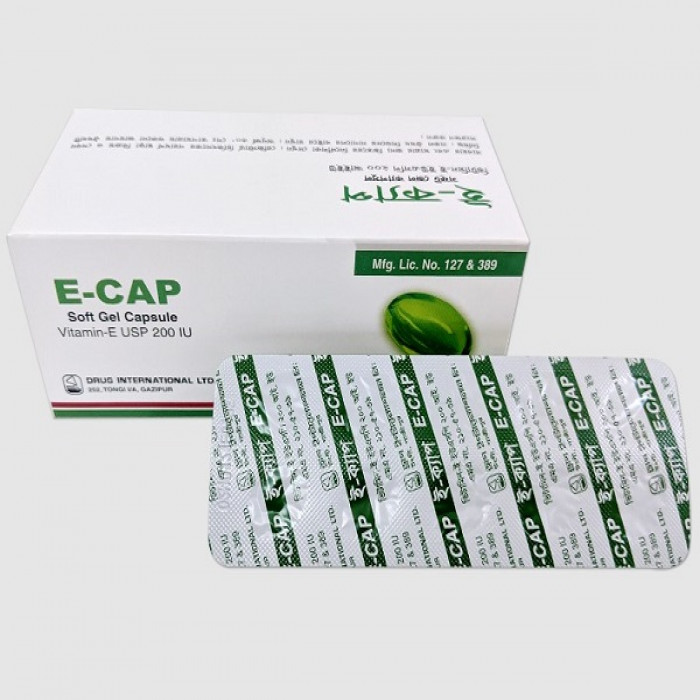
E-Cap 200IU Softgel
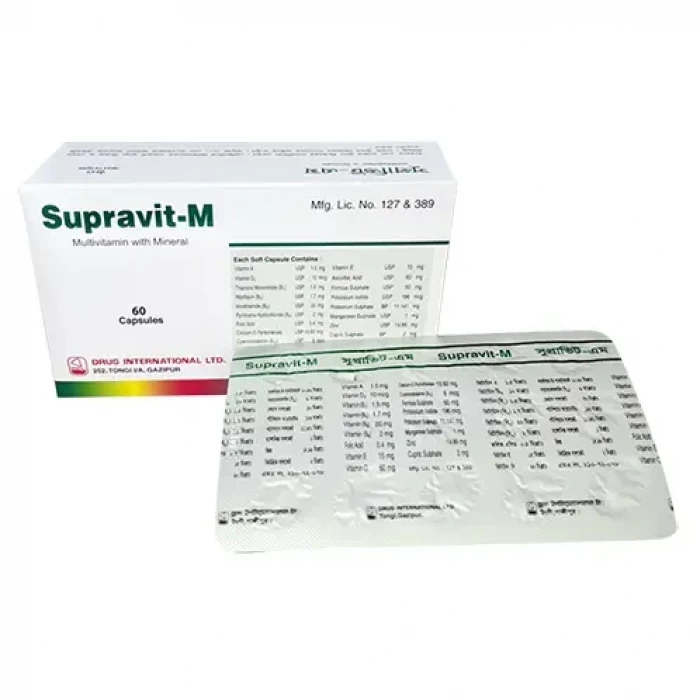
Supravit-M Capsule 15pcs
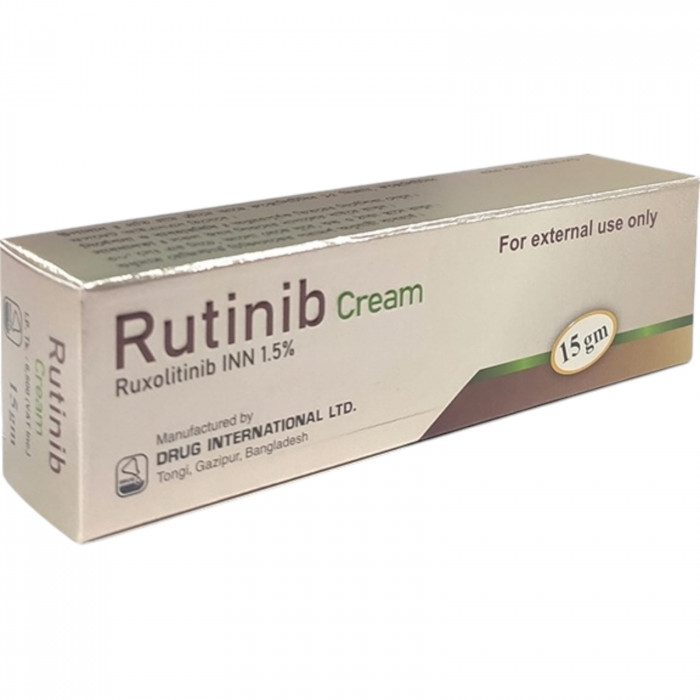
Rutinib Cream 15gm
Cod Liver Oil Capsule
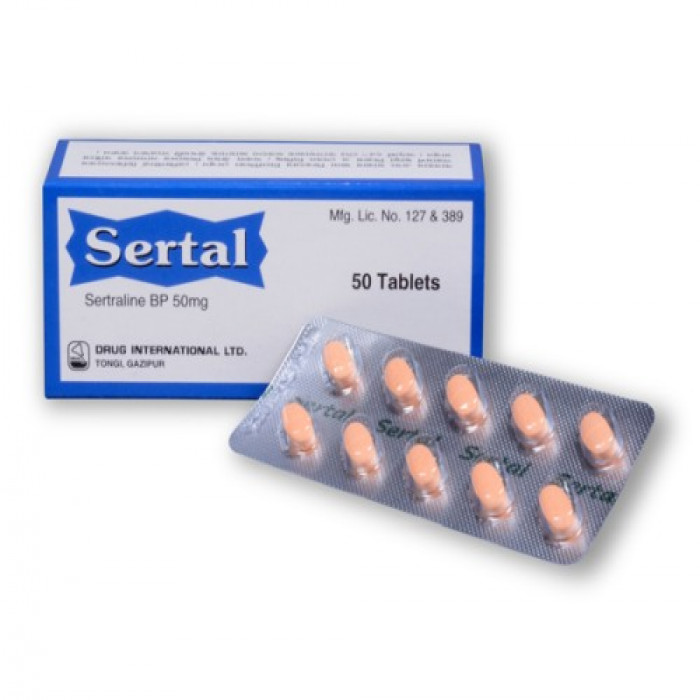
Sertal 50mg Tablet 10pcs
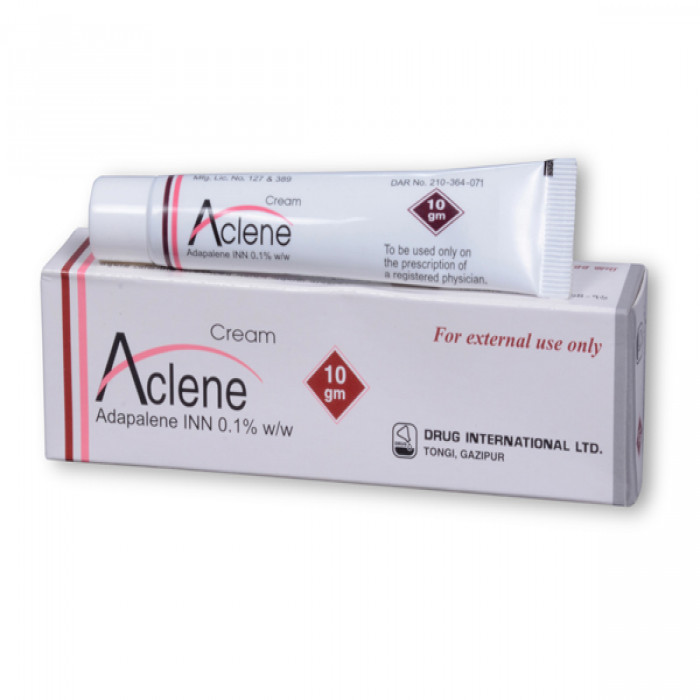
Aclene 0.1% Cream
কীভাবে অর্ডার করবেন?কীভাবে অর্ডার করবেন?
How to Orderওয়েবসাইট থেকে অর্ডার করার সহজ ভিডিও গাইড।
অ্যাপ থেকে অর্ডারের সহজ ভিডিও গাইড
অ্যাপ ডাউনলোডePharma অ্যাপ ডাউনলোড বিস্তারিত গাইড ›অ্যাপে অর্ডারের বিস্তারিত গাইড✔️ Side Effects
Common or reported adverse effects include:
- Nausea
- Abdominal pain
- Dyspepsia
- Constipation
- Headache
- Dizziness
- Elevated liver enzymes
- Menstrual disorders
Less common but potentially serious reactions include:
- Allergic reactions, including pruritus, rash, urticaria, and angioedema
- Hepatitis
- Cholestatic jaundice
- Peripheral neuropathy
- Stevens-Johnson syndrome
- Hypokalaemia
- Oedema
- Hair loss, particularly with prolonged treatment
Patients should seek medical attention if symptoms of severe allergic reaction, liver injury, heart failure, or severe skin reaction
✔️ 100 mg & 200 mg Preparations
Non-Systemic Fungal Infections
| Indication | Recommended Dose |
|---|---|
| Vulvovaginal candidiasis | 200 mg twice daily for 1 day |
| Pityriasis versicolor | 200 mg once daily for 7 days |
| Tinea corporis / Tinea cruris | 100 mg once daily for 15 days or 200 mg once daily for 7 days |
| Tinea pedis / Tinea manuum | 100 mg once daily for 30 days |
| Oropharyngeal candidiasis | 100 mg once daily for 15 days. In patients with AIDS or neutropenia, 200 mg once daily for 15 days may be used because of impaired absorption. |
| Onychomycosis | 200 mg once daily for 3 months, or pulse therapy with 200 mg twice daily for 7 days. Pulse courses are repeated after a 21-day interval. Fingernail infection generally requires 2 courses and toenail infection 3 courses. |
✔️ Systemic Fungal Infections
| Indication | Recommended Dose |
|---|---|
| Aspergillosis | 65 mg twice daily for 2–5 months; increase to 130 mg twice daily for invasive or disseminated disease |
| Candidiasis | 65–130 mg once daily for 3 weeks to 7 months; increase to 130 mg twice daily for invasive or disseminated disease |
| Non-meningeal cryptococcosis | 65 mg twice daily for 10 weeks |
| Cryptococcal meningitis | 130 mg twice daily for 2–6 months |
| Histoplasmosis | 130 mg once or twice daily for 8 months |
| Maintenance therapy in AIDS | 65 mg twice daily until immune recovery |
| Prophylaxis during neutropenia | 65 mg twice daily until immune recovery |
The dose and duration should be determined by the treating physician based on the clinical condition and response to therapy.
✔️ 65 mg & 130 mg Preparations
Non-Systemic Fungal Infections
| Indication | Recommended Dose |
|---|---|
| Vulvovaginal candidiasis | 130 mg twice daily for 1 day |
| Pityriasis versicolor | 65 mg twice daily for 7 days |
| Tinea corporis / Tinea cruris | 65 mg once daily for 15 days or 65 mg twice daily for 7 days |
| Tinea pedis / Tinea manuum | 65 mg once daily for 30 days |
| Oropharyngeal candidiasis | 65 mg once daily for 15 days; 65 mg twice daily for 15 days may be used in AIDS or neutropenic patients because of impaired absorption |
| Onychomycosis | 65 mg twice daily for 3 months, or pulse therapy with 130 mg twice daily for 7 days, with subsequent courses repeated after a 21-day interval. Fingernail infection generally requires 2 courses and toenail infection 3 courses. |
✔️ Systemic Fungal Infections
| Indication | Recommended Dose |
|---|---|
| Aspergillosis | 200 mg once daily for 2–5 months; increase to 200 mg twice daily for invasive or disseminated disease |
| Candidiasis | 100–200 mg once daily for 3 weeks to 7 months; increase to 200 mg twice daily for invasive or disseminated disease |
| Non-meningeal cryptococcosis | 200 mg once daily for 10 weeks |
| Cryptococcal meningitis | 200 mg twice daily for 2–6 months |
| Histoplasmosis | 200 mg once or twice daily for 8 months |
| Maintenance therapy in AIDS | 200 mg once daily until immune recovery |
| Prophylaxis during neutropenia | 200 mg once daily until immune recovery |
The dose and duration of systemic antifungal treatment should be individualized according to the patient's clinical response and the treating physician's assessment.
✔️ Drug Interactions
Itraconazole is a potent inhibitor of CYP3A4 and can cause clinically significant interactions with numerous medicines.
Concomitant use may be contraindicated or require specialist management with medicines such as:
- Terfenadine
- Astemizole
- Cisapride
- Simvastatin and certain other HMG-CoA reductase inhibitors
- Oral midazolam
- Triazolam
Significant interactions may also occur with:
- Rifampicin/rifampin
- Phenytoin
- Phenobarbital
- Digoxin
- Calcium-channel blockers
- Other medicines metabolized through CYP3A4
Patients should inform their doctor about all prescription medicines, over-the-counter medicines, vitamins, and herbal products they are taking before starting itraconazole.
✔️ Safety Information:
- Absorption of some itraconazole formulations may be reduced when gastric acidity is decreased.
- Acid-neutralizing medicines such as aluminium hydroxide may interfere with absorption. When appropriate, antacids should be taken at least 2 hours after itraconazole.
- Some formulations should be taken immediately after a full meal; administration instructions may vary by formulation. Follow the product-specific instructions provided by the doctor or pharmacist.
- Liver injury, including hepatitis and jaundice, has rarely been reported, particularly during prolonged treatment.
- Liver function should be monitored in patients receiving continuous treatment for more than one month or when clinically indicated.
- Itraconazole can cause clinically important drug interactions because it strongly inhibits CYP3A4.
- Patients with heart failure or risk factors for heart failure should be evaluated carefully before treatment because itraconazole has been associated with negative inotropic effects.
- Treatment of systemic fungal infections should be supervised by an experienced physician.
✔️ Eloza SB is contraindicated in patients with:
- Known hypersensitivity to itraconazole or any component of the formulation
- Certain serious drug interactions where concomitant administration is contraindicated
- Pregnancy, except when specifically prescribed for serious or life-threatening fungal infections where the potential benefits outweigh the risks
✔️ 50 mg Capsule – Pediatric Use
Pediatric itraconazole dosing should be prescribed by a specialist and may require therapeutic drug monitoring.
For children >4 weeks to <12 years, a commonly used treatment dose is 1.25–2 mg/kg per dose twice daily, up to a maximum initial dose of 100 mg per dose. For severe infections, the dose may be increased under specialist supervision.
The dose should be rounded appropriately to facilitate administration.
For children ≥12 years, a usual dose may be 50–100 mg once daily, with higher doses considered for severe infections under medical supervision.
For prophylaxis in children ≥2 years, a dose of 2.5 mg/kg once daily, up to a maximum initial dose of 200 mg daily, may be used with therapeutic drug monitoring.
Because pediatric dosing varies according to the infection, formulation, age, weight, and clinical condition, itraconazole should not be administered to children without appropriate medical supervision.
✔️ Pregnancy & Lactation
Itraconazole should generally not be used during pregnancy unless specifically prescribed for a serious fungal infection when the potential benefit justifies the potential risk.
Breastfeeding is generally not recommended during treatment with itraconazole unless specifically advised by a healthcare professional.
✔️ Storage:
- Store below 25°C.
- Keep in a cool and dry place.
- Protect from light.
- Keep out of reach of children.
- Store the medicine according to the specific product label, particularly where the formulation has special storage requirements.
⚠️Disclaimer:
At ePharma, we’re committed to providing accurate and accessible health information. However, all content is intended for informational purposes only and should not replace medical advice from a qualified physician. Please consult your healthcare provider for personalized guidance. We aim to support, not substitute, the doctor-patient relationship.
📦Pricing Information, Availability:
Product Availability & Pricing Notice
Please note that pricing, availability, and service offerings are subject to change due to: Market fluctuations, Manufacturer or supplier adjustments, Product discontinuation or temporary unavailability, Advertising errors. All orders depend on stock availability and staff resources. If services are provided on a time-and-materials basis, any shared estimates are for planning purposes only.

নির্ভরযোগ্য
All products displayed on ePharma are procured from govt. approved pharmaceuticals and verified licensed pharmacies from 2016.

নিরাপদ
ePharma uses Secure Sockets Layer (SSL) 128-bit 🔒 encryption and is Payment Card Industry DataSecurity Standard (PCI DSS) compliant.

সাশ্রয়ী
Find affordable medicine substitutes, save up to 50% on health products, up to 30% off on doctor consultations.

সামাজিক
Providing health care services under the health and beauty category with more than 170K Facebook audience and 10M+ reach.







Get more features!
Download the app now
✓ Doctor consultation ✓ 24/7 helpline